
Qiaokou Container Mobile Toilet
The container mobile toilet in Qiaokou District is an environmentally friendly facility centered around prefabricated and modular design, rapidly deployed through leasing at construction sites, temporary event venues, and renovation sites of old communities.
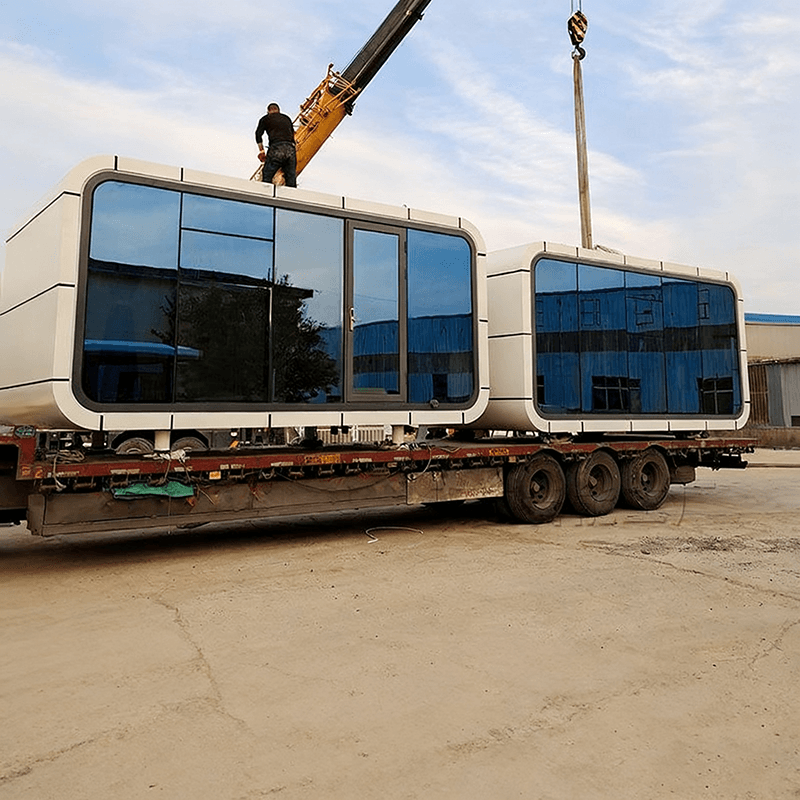
I. Structural Design
Based on standard 20-foot or 40-foot shipping containers, internal functional divisions (such as toilet areas and handwashing areas) and reservations for water and electricity pipeline interfaces are completed in the factory. On-site deployment only requires ground leveling and connection to sewage pipelines for quick commissioning. The container's steel plate undergoes multiple layers of anti-corrosion treatment, with the inner wall featuring a high-density polyurethane foam insulation layer and the outer surface coated with anti-rust primer and weather-resistant topcoat, ensuring long-term use under Wuhan's climatic conditions. The floor is made of non-slip fiberglass grating or patterned aluminum plate, and hardware components are made of stainless steel or hot-dip galvanized materials, balancing safety and durability.
II. Sewage Disposal and Water Supply Systems
Qiaokou District adopts two sewage disposal technical solutions:
- Vacuum Sewage Collection System: Utilizes negative pressure to suction waste into a 1.5-3 cubic meter storage tank, suitable for high-density usage scenarios, reducing the frequency of cleaning.
- Septic Tank + Sewage Suction Truck Model: Initially treats waste through anaerobic fermentation, regularly transported by sewage suction trucks, suitable for areas without sewage pipeline coverage.
The water supply system integrates an elevated water tank of over 0.5 tons, working with gravity or micro booster pumps for recycling, reducing water consumption.
III. Application Scenarios and Service Models
Primarily serving scenarios such as leasing mobile toilets for construction sites and renting temporary toilets for music festivals, providing a one-stop solution from design and production to installation. Its modular design supports flexible combinations, such as expanding functional areas (such as management rooms and accessible toilets) by splicing multiple containers to meet the needs of different-scale events. The leasing model reduces users' initial investment costs, while the supplier is responsible for regular maintenance, sewage disposal, and equipment updates, ensuring long-term stable operation of the facilities.
IV. Environmental Protection and Adaptability Advantages
The container materials and treatment processes comply with environmental standards, with anti-corrosion and insulation properties adapting to Wuhan's hot and humid summers and cold winters. The dual-solution choice of the vacuum sewage collection system and the septic tank model balances efficiency and cost, especially suitable for areas with weak sewage infrastructure, such as renovations of old communities.



