
Prefabricated Panel Structure Finished Housing
Prefabricated panel structure finished housing refers to houses built primarily with prefabricated panels. These panels are cement components prefabricated in factories and come in various types, materials, and construction techniques. There are some issues with existing houses, and China has corresponding renovation policies.
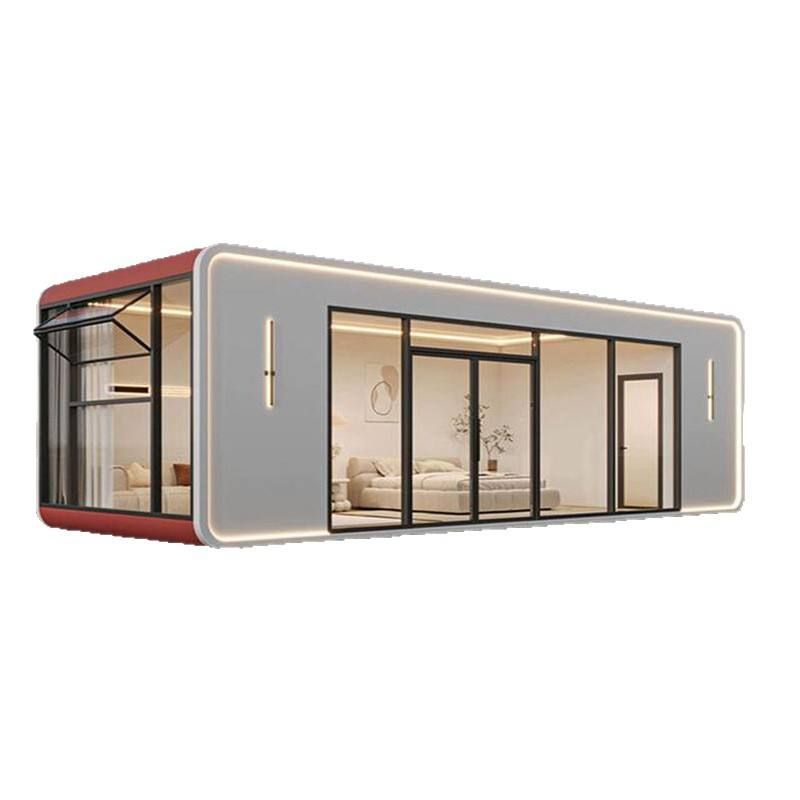
Types and Materials: Prefabricated panels are divided into two types: solid and hollow. The hollow structure achieves lightweighting by reducing the non-load-bearing concrete. Their materials are diverse, including concrete, color-coated steel, cement, rock wool panels, etc. There are also various styles, such as light steel movable houses and two-story movable houses.
Construction Techniques: Different techniques are suitable for different scenarios. The traditional technique involves nailing wooden models, arranging steel bars, and pouring cement to form prefabricated panels. There is also a rapid construction technique, such as a prefabricated house with its main structure completed in 14 days. It uses prefabricated components for assembly, with 5-ton foundation piles fixed only by base plates. The crossbeams are quickly connected using mortise-and-tenon joints, stairs are hoisted like building blocks, a 5-centimeter-thick floor slab is laid, and the gaps between components are grouted. In addition, there are welding and assembly techniques.
Existing Issues: This architectural form originated in the early 20th century, and most residential buildings constructed in China before 1985 adopted this structure. Existing prefabricated panel houses generally have many problems. They have weak earthquake resistance, and their structures are easily damaged during earthquakes and other natural disasters. They have poor sound insulation and thermal insulation, affecting living comfort. Their service life is about 30 - 50 years, and their performance gradually declines over time.
Renovation Policies: Since 2022, China has implemented a policy of renovating old buildings, focusing on repairing and renovating prefabricated panel houses and only demolishing buildings that meet the criteria for dangerous buildings. For example, in the Shahu Xuefu project at Hubei University, the old housing for faculty and staff was of prefabricated panel structure and had issues such as water leakage. After cooperative renovation of the dilapidated houses, the faculty and staff moved into new houses.



