
How Long Does a Prefabricated Panel House Last?
The lifespan of a prefabricated panel house typically ranges from 30 to 50 years, depending on design standards, construction quality, and maintenance conditions.
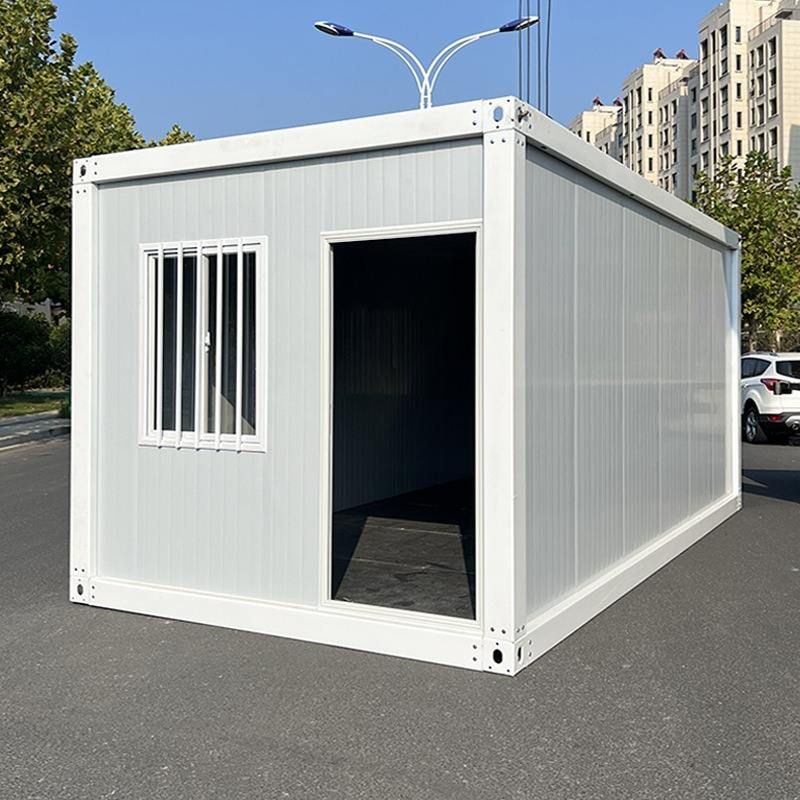
From a design perspective, the expected lifespan of a prefabricated panel house is generally 30 to 40 years. This figure is based on early building codes' basic requirements for the durability of prefabricated components, primarily considering factors such as material aging and structural fatigue. However, it's important to note that the design lifespan is a theoretical value, and the actual service life may vary due to environmental conditions and usage patterns. For example, in humid or highly corrosive environments, prefabricated panels may experience premature issues such as steel reinforcement corrosion and concrete carbonation, shortening the structural lifespan.
If the construction process strictly adheres to standards and subsequent maintenance is adequate, the service life of a prefabricated panel house can be significantly extended. According to national standards for ordinary residential buildings, the design service life is 50 years, meaning that under normal construction and maintenance conditions, the house should not require major structural repairs within 50 years. This standard takes into account material performance, load effects, and environmental impacts, enhancing durability through measures such as optimizing concrete mix ratios and increasing the thickness of steel reinforcement protective layers. For instance, prefabricated panels made of high-strength concrete and corrosion-resistant steel reinforcement exhibit stronger crack resistance and corrosion resistance, effectively extending the structural lifespan.
The post-expiry handling method directly affects the house's continued usability.
When a house reaches its design service life, professional inspections are required to assess structural safety. If the inspection is satisfactory, the house can continue to be used after repairs and reinforcements (such as replacing aged components and strengthening joint connections). Repairs and reinforcements must be carried out in accordance with current standards, such as grouting the joints of prefabricated panels and adding seismic supports to restore or enhance structural load-bearing capacity. If the inspection reveals serious safety hazards (such as damage to the main structure or insufficient load-bearing capacity), the house must be demolished and rebuilt.
Maintenance level is the key factor determining the house's lifespan.
Regular inspections for cracks or deformations in the prefabricated panels, timely repairs to the roof waterproofing layer to prevent leaks, and avoiding unauthorized modifications that could compromise structural stability can significantly slow down the aging process of the house. For example, a residential community built 35 years ago underwent a comprehensive inspection and found minor cracks in some prefabricated panels. After carbon fiber reinforcement, the house has continued to be used to this day, exceeding its original design lifespan. This demonstrates that scientific maintenance can enable the actual lifespan of a prefabricated panel house to surpass its theoretical value.



