
Exterior Wall Colors of Prefabricated Panel Houses
The exterior wall colors of prefabricated panel houses are usually relatively consistent, with common colors including cement gray, earthy yellow, and other plain hues, depending on the architectural style and historical context. The following provides an explanation from three aspects: color characteristics, formation reasons, and typical cases.
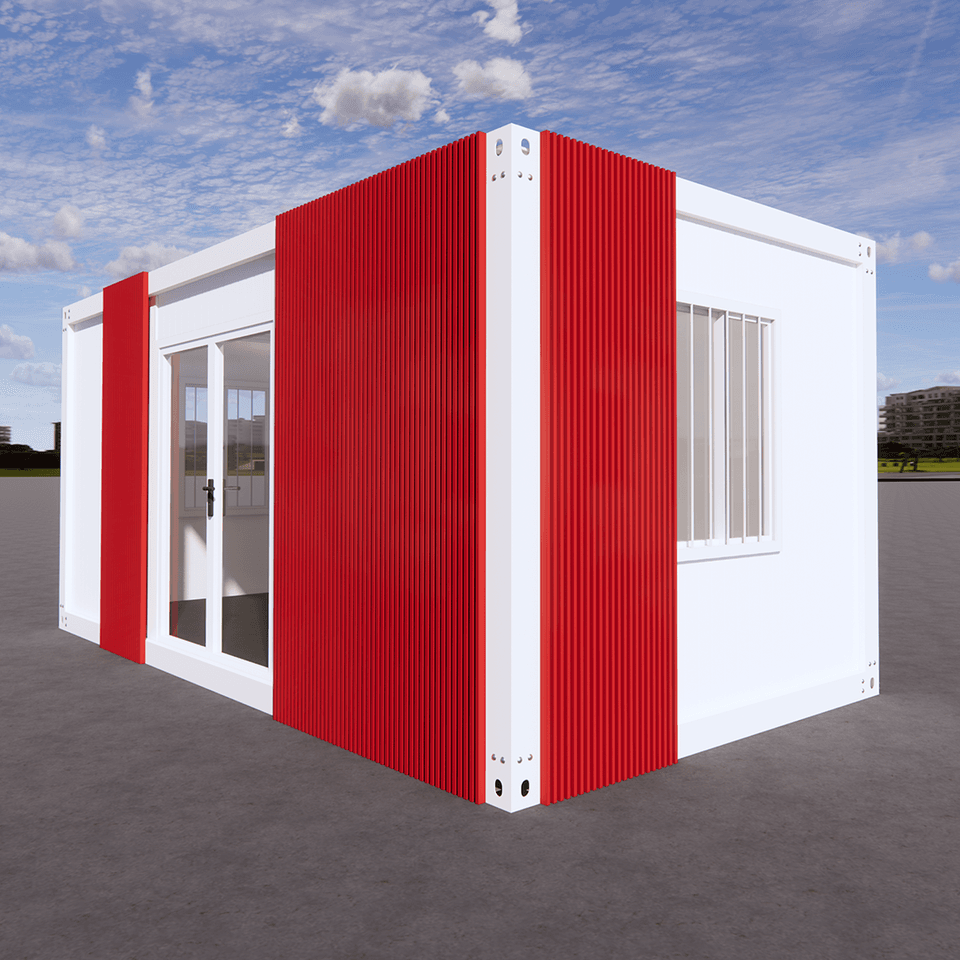
Color Characteristics: Predominantly Neutral, Emphasizing Practicality and Durability
The exterior wall colors of prefabricated panel houses mostly adopt neutral color schemes, such as cement gray, off-white, earthy yellow, or light brown. These colors offer two major advantages: First, they have strong weather resistance, being able to better withstand ultraviolet rays, wind, and rain erosion, reducing the risk of fading. Second, they are cost-effective, as uniform spraying processes can reduce material and labor costs, meeting the needs of industrial mass production. For example, the exterior walls of early Soviet Khrushchyovka buildings were generally cement gray, reflecting the functionalist design philosophy and aligning with the resource-saving social context of the time.
Formation Reasons: Driven by Industrial Production and Standardized Design
The consistency in the exterior wall colors of prefabricated panel houses stems from their construction logic. When prefabricating components in factories, it is necessary to ensure visual harmony through uniform spraying or coloring processes, avoiding color differences caused by environmental variations (such as humidity and temperature) during on-site construction. Additionally, standardized design requires that exterior wall colors match the overall architectural style. For example, modern minimalist styles prefer gray and white tones, while regional architecture may adopt earthy yellow or brick red to blend into the environment. This industrial model not only improves efficiency but also reduces long-term maintenance costs.
Typical Cases: Comparison Between Khrushchyovka Buildings and Regional Architecture
- Khrushchyovka Buildings: As typical prefabricated panel buildings in the Soviet Union during the 1950s and 1960s, their exterior walls were primarily cement gray, with some later renovation projects adopting earthy yellow or light beige. This choice not only aligned with the policy goal of "quickly addressing housing shortages" but also conveyed a pragmatic value through plain colors.
- Regional Architecture: In hot climates, prefabricated panel houses may adopt light yellow or off-white exterior walls to reflect sunlight and reduce indoor temperatures. In cold regions, they may choose dark gray or brown to enhance heat absorption. For example, some prefabricated houses in Nordic countries incorporate local traditional colors, adding wooden decorative strips to a gray and white base to balance industrialization and humanistic care.
It should be noted that with the development of building technology, the choice of exterior wall colors for modern prefabricated panel houses has become more diverse. However, uniformity and durability remain core principles. Designers enhance architectural aesthetic value through color combinations while meeting functional requirements.



