
Prefabricated Panel House: 30 Years
Prefabricated panel houses will not be mandatorily scrapped after 30 years of use. Their designed service life is 50 years, and the actual lifespan is influenced by multiple factors.
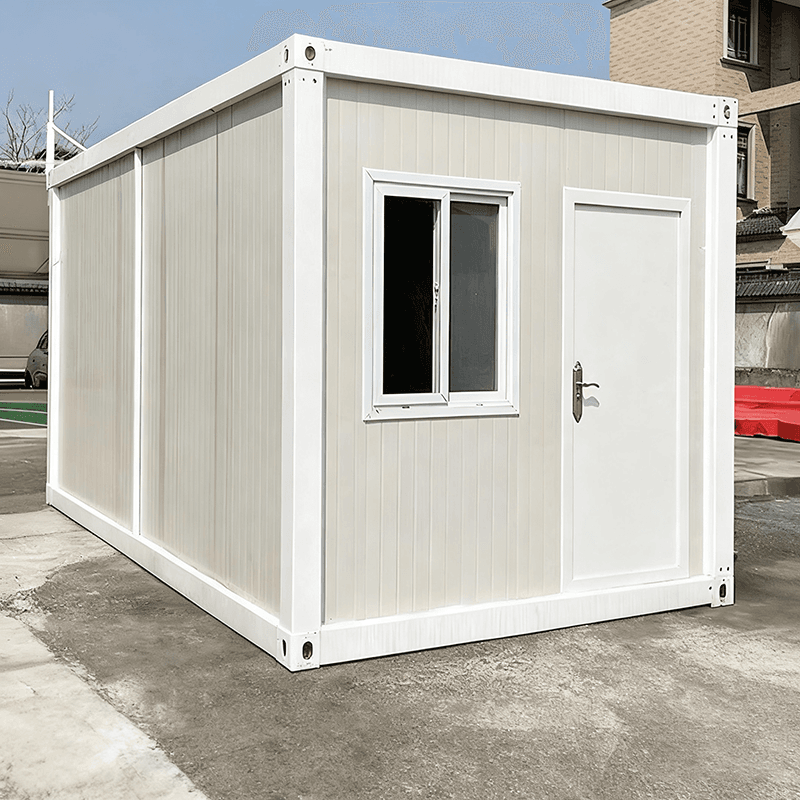
1. The “30-year lifespan” is a misconception; the design standard is 50 years The claim of a “30-year lifespan” originated from the reference values for the inspection and maintenance cycles of some temporary factory buildings and simple ancillary buildings in the early years. Later, through word-of-mouth and selective quoting in short videos, it was misrepresented as the mandatory scrapping lifespan for ordinary residential buildings. According to the current national standard, the Unified Standard for Reliability Design of Building Structures (GB50068 - 2018), the designed service life of ordinary houses (including prefabricated panel buildings) is 50 years. This period refers to the expected safe service life of the building under the conditions of normal construction, compliant materials, and proper post-construction maintenance, not the mandatory scrapping lifespan. Even if the building exceeds 50 years, as long as its structure is safe, it can still be used after passing an assessment.
2. The actual lifespan depends on construction quality, environment, and maintenance The actual lifespan of prefabricated panel buildings is affected by multiple factors:
- Construction quality: If the construction is carried out in accordance with standards and the materials are qualified, the building structure will be more stable, and its lifespan may exceed the designed service life. Conversely, if there is shoddy workmanship and the use of substandard materials, potential hazards may emerge in advance.
- Surrounding environment: Long-term exposure to a humid or corrosive environment (such as near chemical plants) will accelerate structural aging, while a dry and less polluted environment is conducive to extending the lifespan.
- Post-construction maintenance: Regular inspections, timely repair of cracks, and prevention of steel bar corrosion and other maintenance measures can significantly improve the building's durability. For example, the main structures of some prefabricated panel buildings that are over 40 years old are still stable, while buildings that are only 20 years old may also have hidden dangers if not properly maintained.
3. Dangerous building assessment requires professional evaluation, not just surface aging The peeling of wall plaster and fine cracks that are widely circulated online are mostly signs of surface aging and not indicators of dangerous buildings. What really needs to be guarded against are the following situations:
- 45-degree diagonal cracks in load-bearing walls: These may be caused by foundation settlement or abnormal structural stress and require immediate investigation.
- Sagging or deformation of floor slabs: This indicates insufficient load-bearing capacity of the floor slabs and may pose a risk of collapse.
- Exposed and corroded steel bars: Corrosion reduces the strength of steel bars and affects structural safety.
After discovering the above problems, a safety assessment should be carried out by a formal institution (such as a testing unit designated by the housing and urban-rural development department) instead of making a self-assessment. The state classifies buildings into four grades from A to D. The vast majority of prefabricated panel buildings belong to Grade A (structurally safe) and can continue to be used after renovation and maintenance. Only Grade D dangerous buildings (completely dangerous) will be scheduled for demolition.



