
Prefabricated Modular Integrated Housing
Prefabricated modular integrated housing is a form of construction where building modules are prefabricated in factories and then transported to the site for rapid assembly. It offers advantages such as short construction periods, environmental friendliness, and quality control.
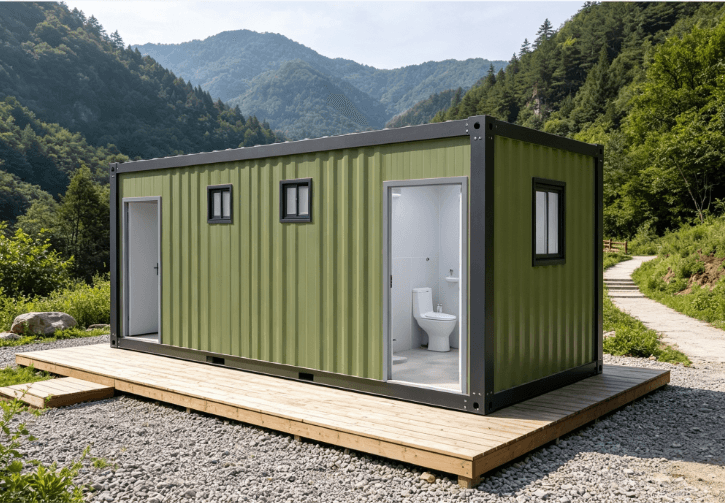
Core Features and Advantages
The core features of prefabricated modular integrated housing can be summarized as the “three modernizations”: standardized design, industrialized production, and modular construction. The main structure, interior decoration, and equipment pipelines are all prefabricated in factories, with individual rooms serving as module units. On-site assembly is as efficient as “building with blocks”. Compared to traditional construction methods, its advantages are significant:
- Short Construction Period: Factory prefabrication can reduce the construction period by more than 50%-60%, making it particularly suitable for emergency scenarios (such as post-disaster temporary housing).
- Environmental Friendliness: With reduced on-site operations, the amount of construction waste is significantly reduced, and materials can be recycled, aligning with sustainable development principles.
- Quality Control: Standardized processes and precision equipment in factories (such as steel frame accuracy up to +3mm) ensure component quality and reduce human errors.
- Flexibility and Recyclability: Modules can be disassembled and reassembled, suitable for both temporary and permanent buildings. The steel frame supports dual-condition load design, ensuring structural strength during transportation and after assembly.
Product Forms and Application Areas
The product comes in various forms, ranging from steel-structure cabins and container houses to high-tech space capsules, meeting different scenario needs:
- Temporary Applications: Such as post-disaster housing, overseas engineering camps, and commercial pop-up stores, requiring rapid deployment and mobility.
- Permanent Applications: Including residential buildings, schools, and tourist homestays, achieving long-term functionality through module combinations.
- Special Scenarios: Such as high-tech forms like space capsules, suitable for extreme environments or innovative design needs.
Technical Implementation and Structural Assurance
Modular housing adopts a fully prefabricated production model, with over 90% of the processes completed in factories, including steel structure systems, exterior facades, and pre-embedded water and electricity interfaces. Structurally, standardized modules are designed with steel frames (accuracy up to +3mm) and dual-condition load design to ensure stability during transportation and load-bearing capacity after on-site assembly. This industrialized production method not only improves efficiency but also reduces overall costs through economies of scale.



