
Prefabricated Modular Housing
Prefabricated modular housing is a construction model that breaks down buildings into independent modules, prefabricates them in factories, and then transports them to the site for assembly. It offers advantages such as short construction periods, environmental friendliness, controllable quality, and ease of maintenance, and is widely applied in various scenarios, though it requires a strong industrial foundation.
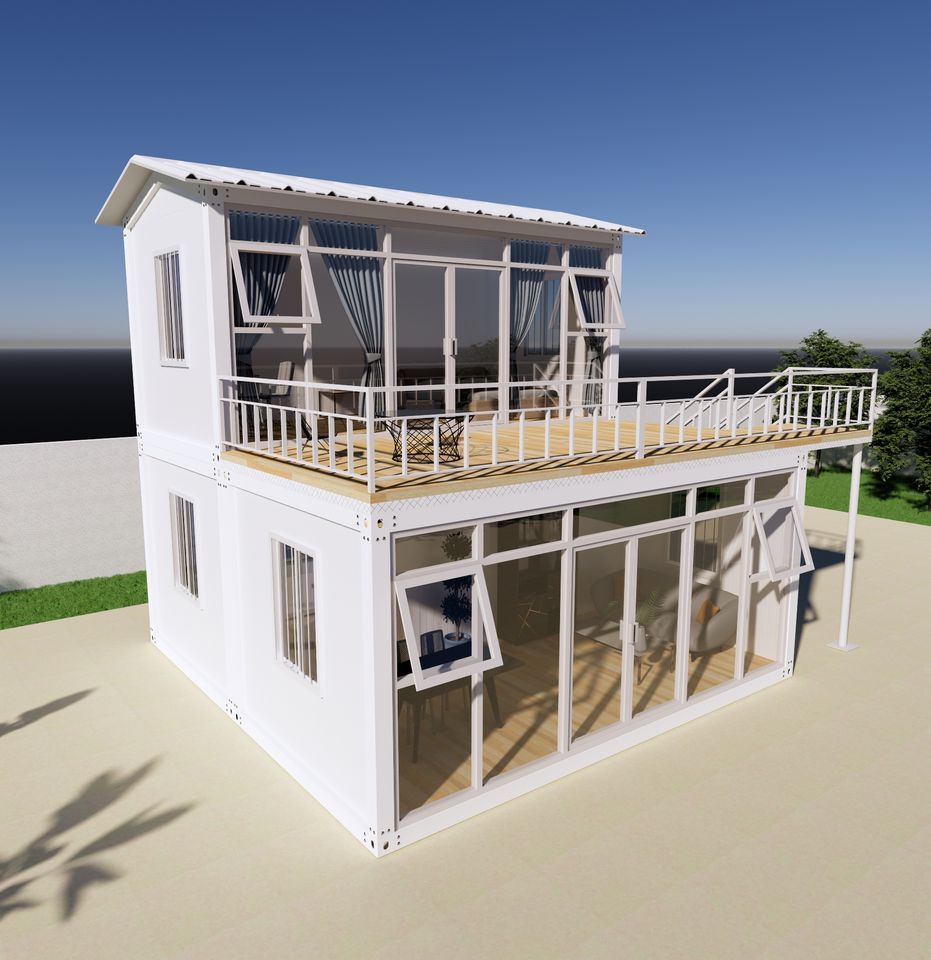
Construction Model and Core Features
Prefabricated modular housing divides buildings into independent modules through standardized design, covering the main structure, enclosure system, equipment pipelines, and interior decoration. All components are prefabricated on factory assembly lines, including ceilings, floors, and water and electricity pipelines. On-site, modular assembly is carried out using bolts or welding to form a complete building. Its core features are standardized design, factory-based production, and assembly-based construction, enabling precise control over the entire building lifecycle through industrial production methods.
Main Advantages
- Significantly Shortened Construction Period: Factory prefabrication and on-site construction occur simultaneously, reducing the total cycle by 50%-60%. For example, a rural house can be built in 14 days, and a social housing project in Shanghai compressed the construction period from 2.5-3 years to 1 year using 6,028 concrete modules.
- Outstanding Environmental Benefits: It reduces construction waste by approximately 80% and significantly lowers noise, dust, and traffic pressure from on-site casting, aligning with low-carbon construction trends.
- Highly Controllable Quality: Each module is equipped with an 'ID card' recording project information, production date, and steel bar positioning data, with millimeter-level error control for industrial-grade precision.
- Improved Maintenance Convenience: Modular design supports rapid local replacement, offering greater maintenance flexibility than traditional buildings.
Application Scenarios and Market Prospects
This technology has been widely applied in residential, school, hospital, and other fields. At the policy level, Guangzhou and Shenzhen have introduced promotion measures, with the Dinghui Temple North Plot social housing project in Beijing's Haidian District becoming a benchmark for concrete modular housing in the city. According to predictions, the global modular construction market is expected to exceed $142.8 billion by 2030, indicating strong growth potential.
Industry Challenges
Modular construction relies on a complete technical system, production system, and industrial cluster support, imposing high requirements on supply chain coordination, transportation logistics, and on-site assembly technology. Cost reduction and standard system improvement require large-scale application.



