
Prefabricated Integrated Mobile Housing
Prefabricated integrated mobile housing is mainly divided into three categories: modular buildings (prefabricated houses), movable panel houses, and new energy mobile houses, each with its own characteristics and application scenarios.
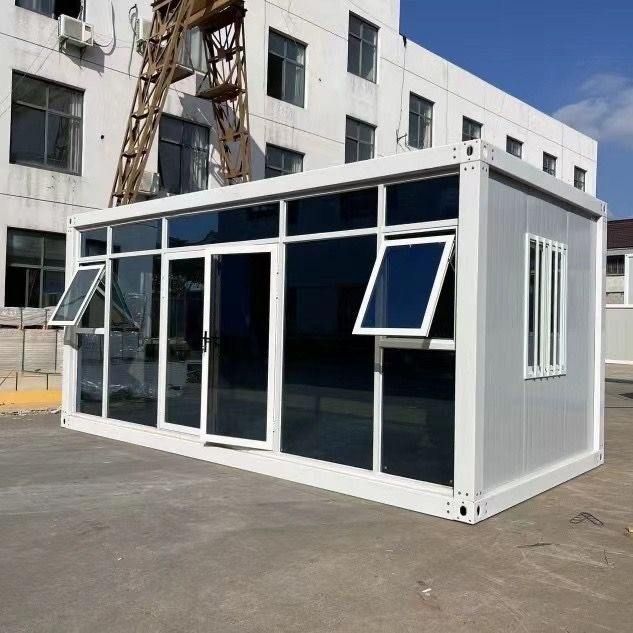
Modular Buildings (Prefabricated Houses): These buildings are disassembled into independent modules, with ceilings, floors, water and electricity pipelines, etc., manufactured in factories, and then transported to the site for assembly, much like building with blocks. Compared to traditional construction methods, they offer shorter construction periods, with the ability to reduce the construction cycle by more than 60%; controllable quality, as factory assembly-line production ensures quality; energy efficiency and environmental protection, reducing noise, dust, construction waste, and traffic congestion at construction sites; and ease of maintenance, facilitating later inspections and repairs. There are numerous application cases. For example, in a public housing project in Shenzhen, Guangdong, five residential buildings nearly 100 meters high were assembled from 6,028 concrete modules, reducing the completion and delivery time from 2.5 to 3 years to just 1 year, and reducing on-site labor by about 50%. In a remote mining camp in Australia, the cost of modular housing imported from China was about 30% lower than local construction. In the Philippines, developer RGJ built a 12-story fully furnished apartment building in just 9 days. A 50-meter-high residential building project in the UAE was valued at up to $125 million. A 72-square-meter prefabricated cottage ordered by an American couple cost less than $30,000 and was ready to live in after connecting to water and electricity. In terms of the market, in the first half of 2026, China's total exports of prefabricated buildings reached $2.79 billion, a year-on-year increase of 45%, with the Shenzhen port alone exporting $245 million worth of mobile houses. In terms of industrial support, this model requires a high level of industrial foundation. China, with the world's most complete industrial system, has achieved a leap from 'selling products' to 'selling systems,' supporting the '出海' (going global) of 'prefabricated houses.'
Movable Panel Houses: These are environmentally friendly and economical temporary buildings with light steel frames and sandwich panels as enclosure materials. They adopt standard modular design and bolt connections, featuring detachability and convenient transportation. Components are prefabricated in factories and then assembled on-site in a standardized manner. The area can be customized from 15 to 160 square meters, suitable for various terrains such as hillsides and grasslands. The main types include cement movable houses with steel structure bearings, lightweight and low-cost phosphorus-magnesium movable houses, and color steel plate movable houses with excellent thermal insulation performance. Prices are affected by materials and regions. Commonly, a 5-centimeter 950-type EPS sandwich panel costs about 35 yuan per meter, a single-slope flat-top color steel house costs about 230 yuan per square meter, and galvanized components can be recycled for 20 years.
New Energy Mobile Houses: In addition to the advantages of factory prefabrication, they can generate their own electricity, offering both convenience and energy efficiency and environmental protection. There are multiple styles to choose from, and the interior layout can be freely customized, starting from five figures.



