
Prefabricated Housing Production
Prefabricated housing production is an industrial construction method that involves manufacturing building components in a factory through standardization and modularization, and then transporting them to the site for assembly. It offers advantages such as high efficiency, environmental friendliness, and quality control.
I. Production Process of Prefabricated Components
The core components of prefabricated housing (such as beams, slabs, walls, and columns) are manufactured in the factory. Taking prefabricated beams as an example, the production process includes:
- Installation of Reinforcing Bars and Embedded Parts: Bind the reinforcing bar framework according to design requirements and embed water and electricity pipelines, connectors, etc.
- Formwork Assembly and Release Agent Application: Install the side formwork and apply a release agent to ensure a smooth surface of the component during demolding.
- Concrete Pouring and Vibration: Pour concrete evenly through a concrete spreader and use a vibrating rod to remove air bubbles, ensuring density.
- Curing and Demolding: Use steam curing to accelerate the growth of concrete strength. After demolding, conduct quality inspections on the components.
- Labeling and Storage: Attach an 'ID card' (containing project name, model, production date, etc.) to the component and store it by category, waiting for transportation.
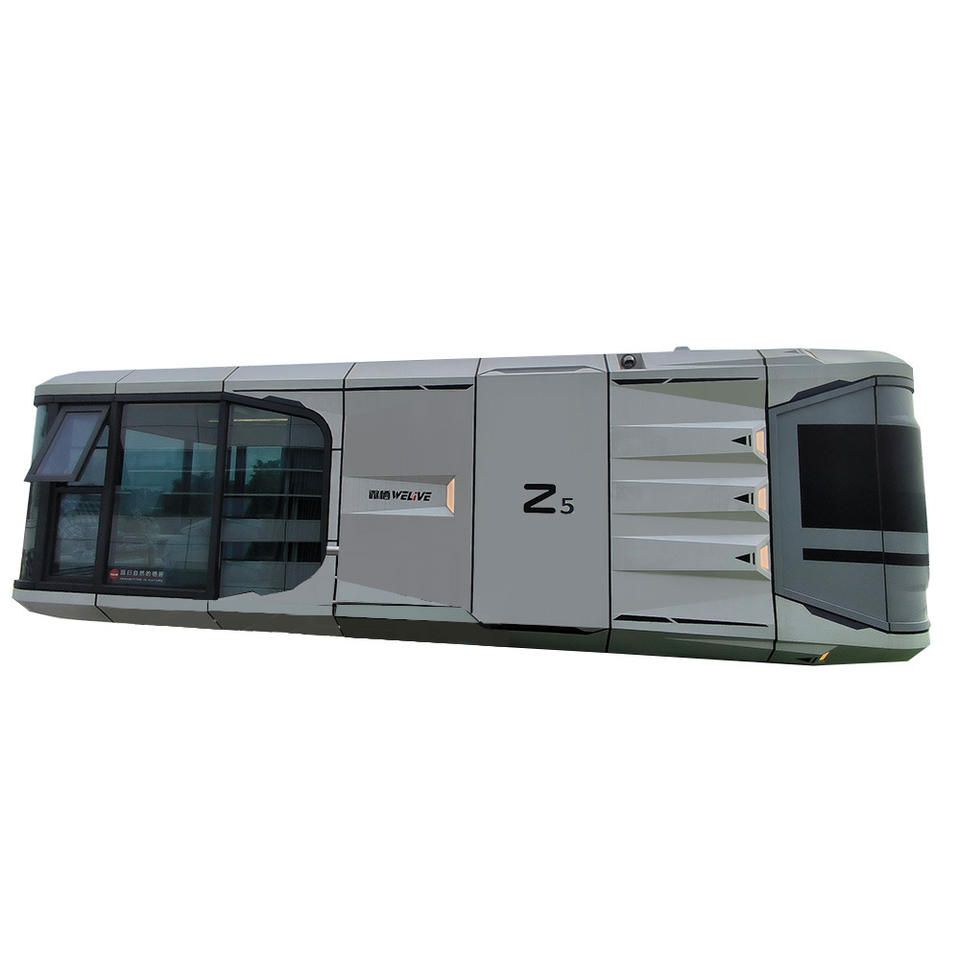
Modular construction further breaks down buildings into independent modules (such as bathrooms and kitchens), completing the prefabrication of all contents including ceilings, floors, and water and electricity pipelines in the factory, achieving 'building houses like making cars'.
II. Technical Characteristics and Advantages
- Industrial Production Mode:
- Standardized design is adopted, with uniform component sizes, reducing on-site processing errors.
- Factory production is not affected by weather conditions, allowing for 24-hour continuous operation and improving efficiency.
- Information management (such as BIM technology) enables collaboration throughout the design, production, and construction processes.
- Construction Period and Quality Advantages:
- Through parallel operations and automated production lines, modular construction reduces the construction period by more than 60% compared to traditional construction.
- Strict quality inspections in the factory (such as strength tests and leakage tests) ensure the pass rate of components and reduce on-site rework.
- Environmental Protection and Sustainability:
- Reduce on-site wet operations, lowering dust and noise pollution.
- Components can be disassembled and reused, meeting green building standards.
III. Application Scenarios and Development
Prefabricated housing production has been widely applied in fields such as residential buildings, schools, and hospitals. Modular construction is highly favored in overseas emergency housing and hotel scenarios due to its short construction period and controllable quality. With technological upgrades, intelligent applications (such as robot welding and 3D-printed components) are driving the industry towards higher precision and lower costs.



