
Prefabricated House with Fine Decoration
Prefabricated houses with fine decoration are a type of prefabricated building. They refer to houses where building components are prefabricated in factories and internal decoration is completed before being transported to the site for assembly. These houses have characteristics such as low prices, short construction periods, controllable quality, and diverse forms, and the industry is in a stage of rapid development.
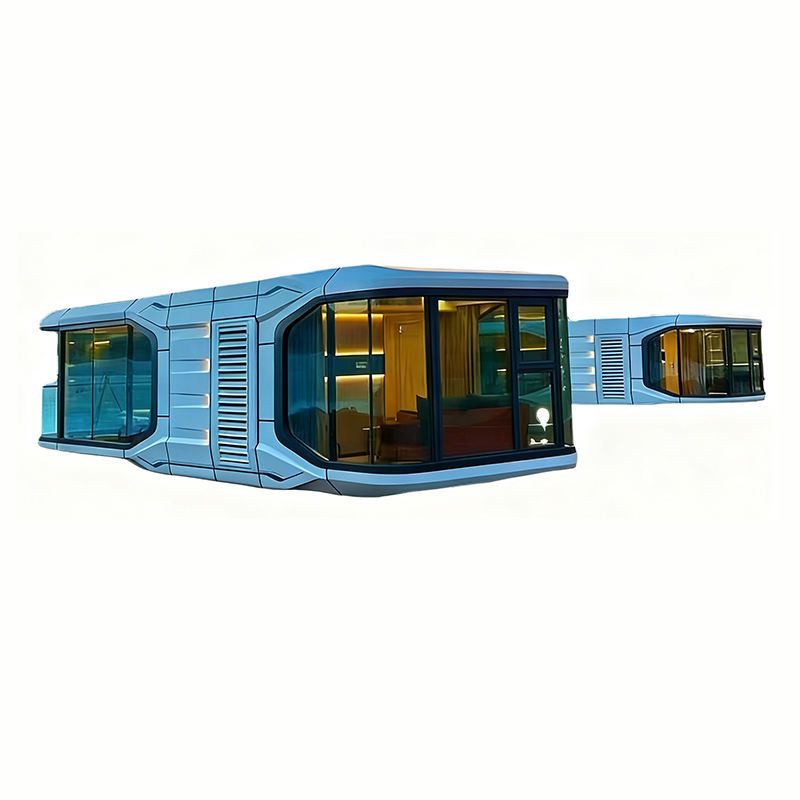
Significant Core Advantages:
Prefabricated houses with fine decoration significantly reduce costs and construction periods through factory-prefabricated components and internal decoration. For example, the complete cost of a 70-square-meter prefabricated house with fine decoration, from production to assembly, is less than $30,000 (approximately 200,000 yuan). Moreover, the construction period is greatly shortened, typically involving "one month of production, one month of transportation, and one day of assembly". Compared with traditional construction methods, the construction period can be shortened to within one year (for example, a certain affordable housing project in China was reduced from 2.5 - 3 years to one year). The on-site labor force is reduced by about 50%, and factors such as noise and dust that disturb residents are also reduced, with outstanding energy-saving and environmental protection effects.
Technical Implementation and Quality Control:
Prefabricated houses adopt a modular design. Components are fully assembled in factories through highly automated methods, with errors controlled in millimeters to ensure stable quality. For example, a certain affordable housing project in China was assembled from 6,028 concrete modules, achieving efficient construction and quality assurance through a standardized production process. In addition, factory production avoids the uncertainties of on-site construction. Facilities such as water and electricity pipelines, cabinets, and bathrooms are all installed in advance, allowing users to move in directly.
Diverse Forms and Structural Options:
Prefabricated houses come in three forms: steel structures, concrete structures, and wooden structures. Steel structures are lightweight and have high strength, suitable for ocean transportation and high-rise buildings; concrete structures are closer to the traditional living experience and have high acceptance in the domestic market; wooden structures are mostly used for low-rise residential buildings or holiday villas. Currently, Chinese enterprises have comparative advantages in the fields of steel structures and concrete structures, and exported products are mainly of these two types.
Rapid Industry Development:
The export volume of China's prefabricated housing industry increased from $1.472 billion in 2015 to $4.339 billion in 2025, nearly tripling in a decade. In the first quarter of 2026, the growth rate reached 45%. In the first four months, enterprises in the Guangzhou Customs area exported movable houses worth 1.4 billion yuan, a year-on-year increase of 38.1%, indicating that the industry is in a period of rapid growth. This trend benefits from technological maturity, cost advantages, and the increasing global demand for green buildings.



