
Prefabricated House Wall Surface
There are mainly two types of prefabricated house wall surfaces: cement prefabricated panel walls and prefabricated walls in modular buildings.
Cement Prefabricated Panel Walls
Cement prefabricated panel walls are primarily made of Portland cement and steel keels, pre-fabricated into panel shapes using molds. The walls come in two types: solid and hollow. Hollow prefabricated panels can reduce weight and cost, offering the advantages of simple construction and lower costs. They were commonly used in brick-concrete structural buildings in the early days, with standard specifications including a maximum span of 4.2 meters, widths typically of 500mm or 600mm, and thicknesses mainly of 120mm and 150mm. However, cement prefabricated panel walls have some significant drawbacks. Their thermal insulation performance is poor, making it difficult to meet indoor temperature regulation needs in cold or hot regions, which increases additional energy consumption for heating or cooling. Their structural stability is insufficient, making them prone to damage under long-term use or external impact. Their load-bearing capacity is weak, limiting their application in buildings with high load-bearing requirements. Moreover, the gaps between panels can easily lead to cracking and water leakage, affecting the service life and living comfort of the house. Due to these issues, cement prefabricated panel walls have been banned in the construction field, and current buildings generally use cast-in-place slabs instead of prefabricated panel walls. However, as one of the prefabricated building components, prefabricated concrete wall panels are still used in some projects.
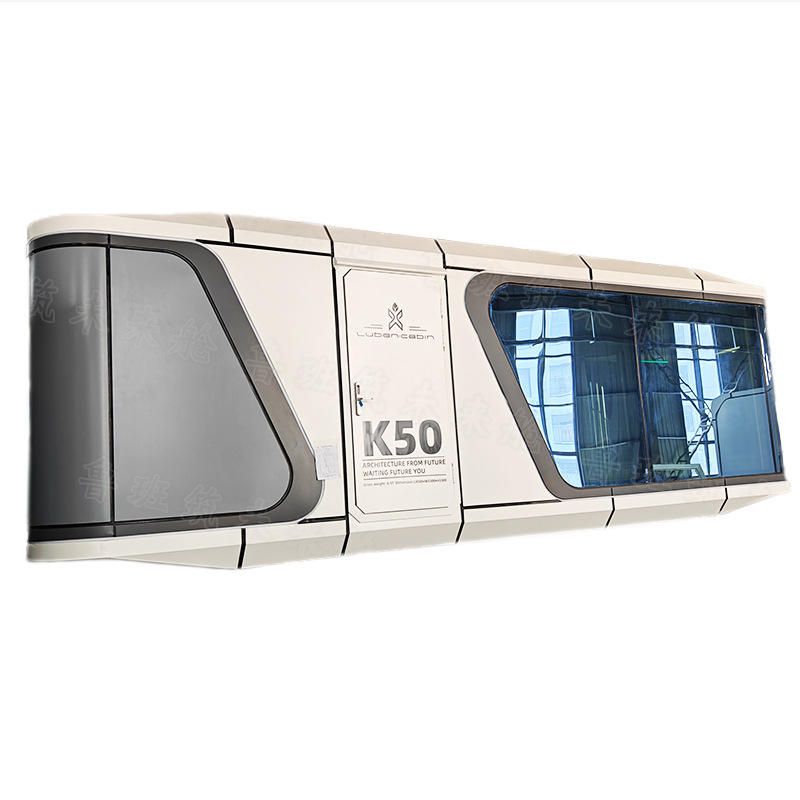
Prefabricated Walls in Modular Buildings
Modular buildings are disassembled into independent modules, manufactured in factories, and then transported to construction sites for assembly. The ceilings, walls, and other components of the house are all prefabricated on factory assembly lines. Taking the China Construction Haolong Intelligent Construction Industrial Park in Shenzhen, Guangdong as an example, walls are produced here using parallel operations, along with the application of automated three-dimensional warehouses and intelligent production lines. Compared to traditional buildings, the construction period of modular buildings can be shortened by more than 60%. These prefabricated walls are efficient and precise, ensuring stable quality and performance of the walls while reducing wet operations and construction waste on-site, making them more environmentally friendly and energy-efficient.



