
Prefabricated House Solar Power
Prefabricated houses can integrate solar power generation systems, enabling self-sufficiency and zero-carbon living. Here is a detailed analysis of the application of solar power in prefabricated houses:
1. Integration Methods and Functional Realization
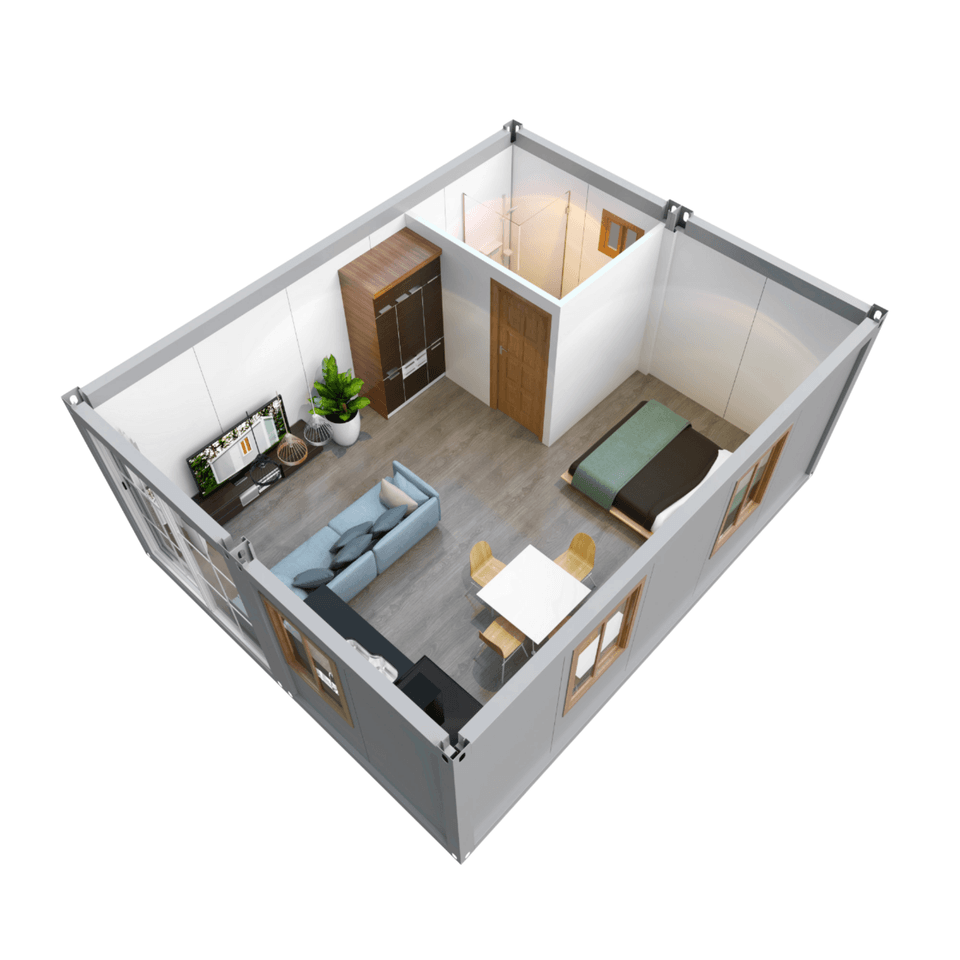
Prefabricated houses, through modular design, can directly integrate solar photovoltaic panels onto their roofs or exterior walls, forming an integrated power generation structure. For example, a 12-square-meter modular prefabricated house adopts a model of photovoltaic power generation during the day and energy storage for nighttime power supply. By using energy storage devices such as lithium batteries to store excess electricity, it achieves stable 24-hour power supply. Such houses not only possess complete living functions (such as separate wet and dry bathrooms, kitchens, and bedrooms) but also meet lighting and appliance power needs through the solar system, reducing reliance on the traditional power grid.
2. Off-Grid Power Supply and Customized Services
There are various solar container mobile homes on the market, with core configurations including photovoltaic power generation systems, energy storage devices, and intelligent control systems. These products support independent off-grid operation, making them particularly suitable for remote areas or emergency scenarios. Some manufacturers offer customized processing services, allowing adjustments to the photovoltaic panel capacity, energy storage battery specifications, and interior layout of the house according to user needs, such as adding supporting equipment like solar water heaters or ground-source heat pumps to further enhance energy self-sufficiency.
3. Technological Advantages and Environmental Benefits
The advantages of solar-integrated prefabricated houses are reflected in three aspects:
- Energy Efficiency: Photovoltaic panels directly convert solar energy into electricity, reducing transmission losses; the energy storage system can smooth out power output, avoiding intermittency issues.
- Environmental Friendliness: Zero carbon emissions throughout the process, complying with green building standards; some products use recyclable materials, reducing environmental impact over their entire lifecycle.
- Economic Efficiency: Long-term use can save on electricity bills, especially suitable for areas with abundant sunlight resources; modular design shortens construction periods and reduces labor costs.
4. Typical Cases and Application Scenarios
A company has launched a 12-square-meter modular house that combines a 400W photovoltaic panel with a 10kWh energy storage battery, achieving an average daily power generation of 2.5kWh, which meets basic power needs. Such houses have been applied in tourist attractions, temporary office spaces, and post-disaster reconstruction, demonstrating their technical feasibility and market adaptability. In the future, with the application of new photovoltaic materials like perovskite, the power generation efficiency and cost-effectiveness of prefabricated houses are expected to further improve.



