
Quay lại blog
Bài viết
Pros and Cons of Prefabricated Houses
Quản trị 18 tháng 9, 2026
Prefabricated houses have both advantages and disadvantages, and are generally suitable for users who have requirements for construction speed, cost, and environmental protection, and can accept certain limitations. Details are as follows:
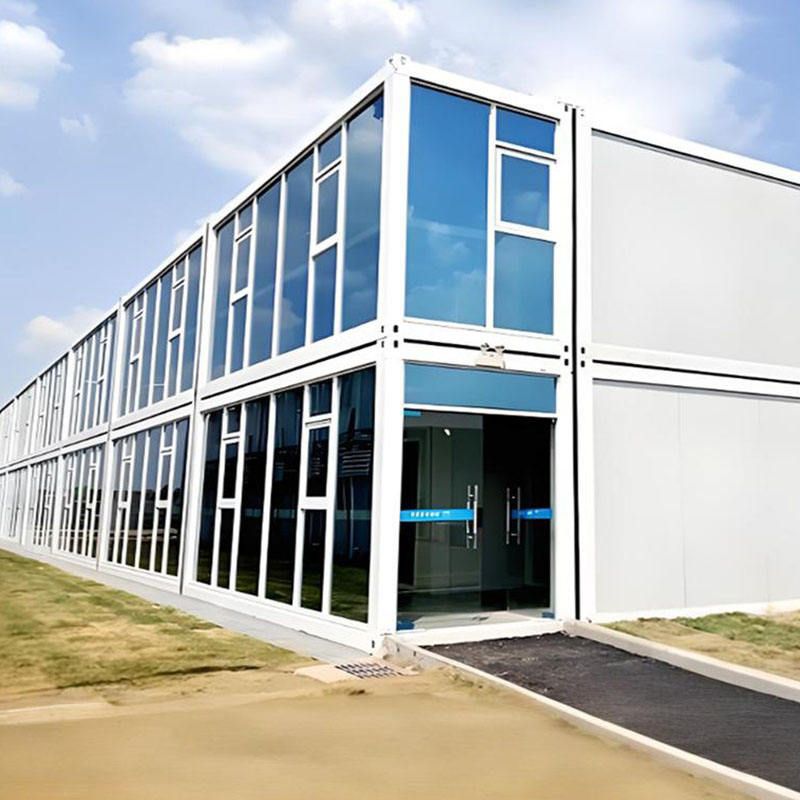
Advantages:
- Fast Construction Speed: The components of prefabricated houses are produced in advance in factories, and on-site assembly is like 'building with building blocks'. Modules can be shipped from the factory in 7 days, and the house frame construction is 60-70% faster than traditional house building, with the construction period shortened by 50% to 70%. This efficient model can significantly shorten the construction period and reduce time costs.
- Lower Cost: The main structure is about 30% cheaper than brick houses, saving ordinary families 20,000 to 50,000 yuan. Factory-unified production reduces material waste, and large-scale production reduces material costs by 20% to 40%, with labor costs reduced by about 60%. However, after the price increase of cement, the cost advantage of prefabricated houses has narrowed, being only 5% cheaper than traditional buildings, and freight in remote areas may account for 5% of the total cost.
- Good Environmental Performance: 80% of construction waste can be recycled, and carbon emissions are directly reduced by half, with some projects obtaining international environmental certifications. The use of recyclable materials reduces construction waste by 80%, with a material recycling rate of over 90%, in line with green building trends.
- Guaranteed Quality: The factory prefabrication error does not exceed 1 millimeter, and it can withstand a magnitude 7 earthquake in seismic tests. After adopting the reinforced concrete integral pouring process, the seismic performance can be upgraded to a magnitude 8 standard, with less overall settlement than ordinary houses and strong structural stability.
- Low Maintenance Cost: The later maintenance cost is 40% lower than that of traditional houses, with better long-term economic efficiency.
Disadvantages:
- Quality Risks: If the construction is not standardized, there is a 7% probability of foundation settlement or wall cracks within 5 years, and construction in low-temperature environments is more prone to problems. Some cases show that maintenance costs after 5 years account for a quarter of the original construction cost, and annual maintenance costs increase by 1,500 to 3,000 yuan after 20 years.
- Poor Sound Insulation and Waterproofing: The sound insulation effect of prefabricated panels is 20 decibels worse, and noises from upstairs are clearly audible; the water leakage rate at joints is nearly twice that of traditional buildings, requiring regular leak-proof treatment and high maintenance frequency.
- Design Limitations: Currently, they can only be built for houses with two floors or less, and the exterior surface is prone to color differences of 15% to 20%, which become more pronounced after 5 years, requiring frequent maintenance of the appearance.



