
Prefabricated House Grouting
Prefabricated house grouting is a crucial step in connecting components and ensuring structural stability, primarily including sleeve grouting, cement grouting, and high-strength non-shrink grout reinforcement techniques. Different techniques are suitable for various scenarios, collectively ensuring the safety and durability of prefabricated houses.
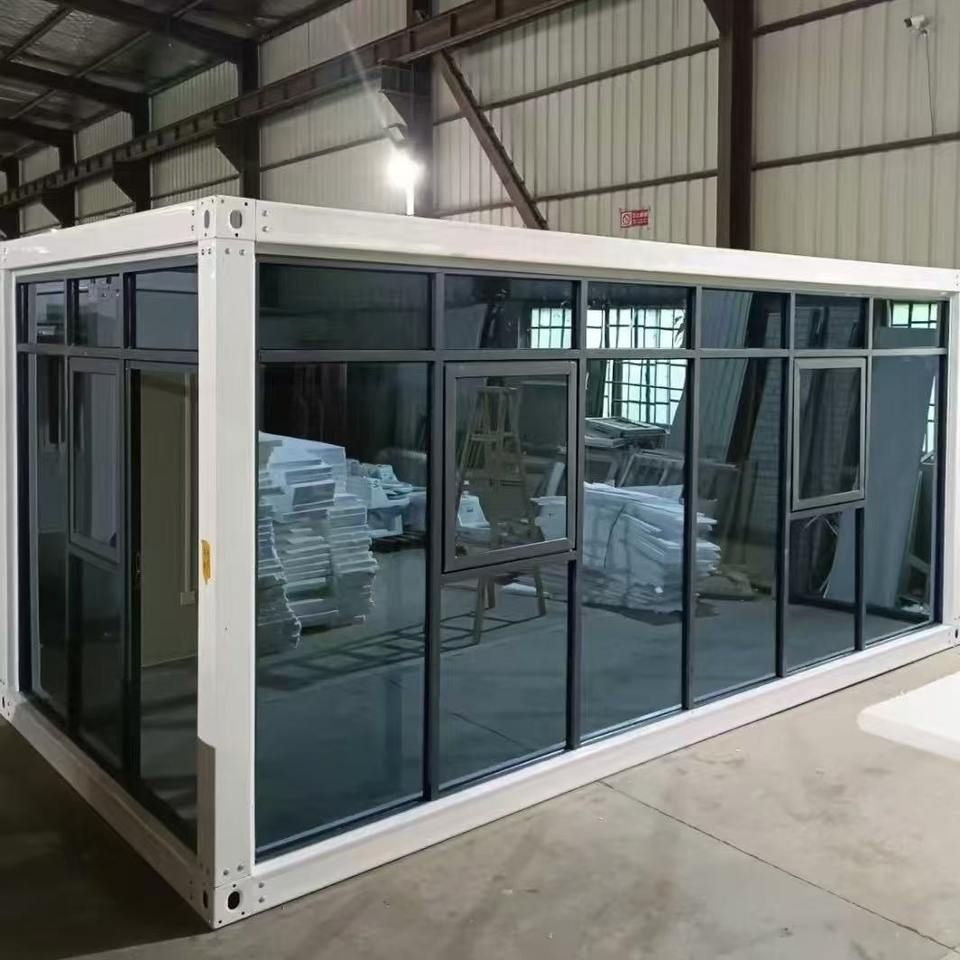
In prefabricated assembled buildings, sleeve grouting technology is the core method for connecting vertical components (such as shear walls and frame columns) and horizontal components (such as frame beams). The principle involves inserting ribbed steel bars into steel sleeves with grooved inner cavities, followed by pouring high-strength, non-shrink grout. After the grout hardens, its strength can match or even exceed that of the parent steel bar material, ensuring a stable mechanical connection between components. This technology places extremely high demands on the fluidity and early strength of the grout, requiring pressure grouting to ensure no voids remain in the sleeve and to prevent connection failure.
Cement grouting is mostly used during the component production stage of prefabricated panel houses. Manufacturers inject cement slurry into specific molds and use vibration or pressurization techniques to fully fill the mold space, forming building components (such as floor slabs and wall panels) that meet design dimensions. After the cement sets and reaches the design strength, the mold can be removed. This process requires strict control of the water-cement ratio and curing conditions to prevent cracking or insufficient strength in the components. After being transported to the construction site, these components are assembled into a complete building through bolts, welding, or secondary grouting.
The high-strength non-shrink grout reinforcement technique is widely applied in the connection of components and structural renovation of assembled buildings. This grout uses high-strength mineral aggregates and Portland cement as base materials, with the addition of high-flow, micro-expansion, and anti-segregation additives. It possesses characteristics such as self-leveling, micro-expansion to compensate for shrinkage, and early and high strength. During construction, the grout can automatically fill narrow gaps between prefabricated components (such as the gaps between sleeves and steel bars, and cavities in joint areas). Through micro-expansion, it eliminates shrinkage cracks and ensures a tight bond between the reinforcement layer and the original concrete substrate. This technique significantly enhances the overall structural safety and is particularly suitable for seismic fortification areas or renovation projects of old buildings.
In summary, prefabricated house grouting technology achieves efficient connection and structural reinforcement between components through the combination of material science and construction techniques, serving as an important support for the industrialized and standardized production of modern assembled buildings.



