
The English Introduction to Export Prefabricated Houses
The English introduction to export prefabricated houses covers terminology, features, applications, industry trends, and typical cases, providing a comprehensive overview for international trade.
Core Terminology
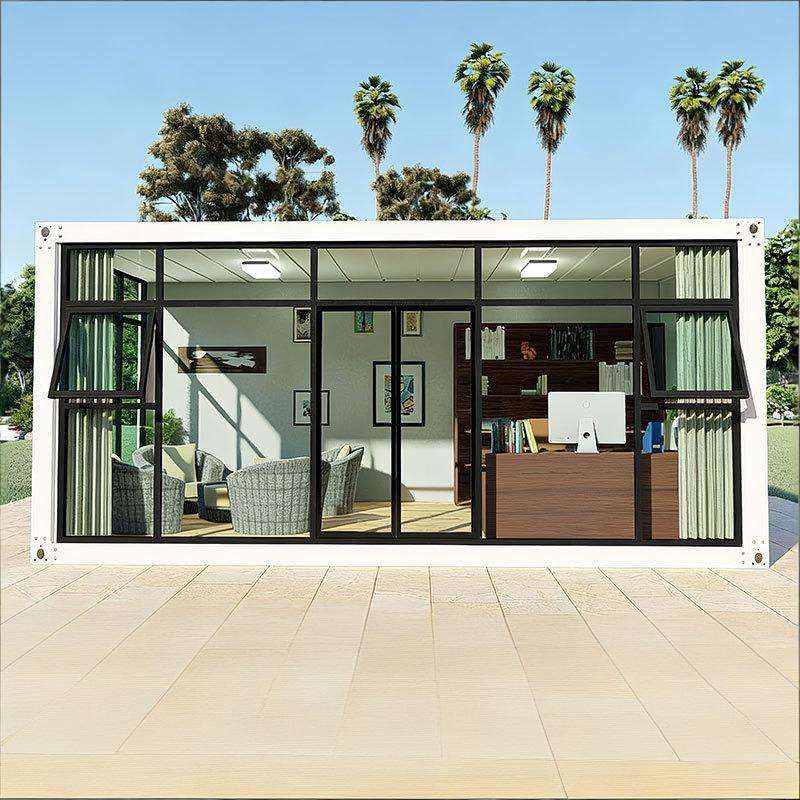
Export prefabricated houses are referred to by multiple terms in international trade. "Export prefabricated house" and "Prefab housing for overseas markets" are commonly used to describe products designed for global sales. "Modular export home" emphasizes modular design, while "International prefab dwelling" is preferred in engineering contexts. "Integrated House" highlights integrated structural solutions for export, and "Modular Housing" denotes prefabricated units optimized for rapid assembly and transportation.
Product Features and Advantages
- Rapid Assembly and Eco-Friendliness: These houses are designed for quick installation, reducing labor costs and construction time. For example, "This export prefab house is quick to assemble and eco-friendly."
- Modular Design: Modular components simplify shipping and on-site assembly, as stated in "The modular design makes shipping and installation very convenient."
- Cost-Effectiveness: They cater to overseas clients seeking affordable yet modern housing solutions, with high value for money.
- Safety Enhancements: Fire-resistant materials and structural durability ensure compliance with international safety standards ("Constructed with fire-resistant materials for enhanced safety.").
- Climate Adaptability: Multiple styles and materials (e.g., double-glazed windows, foam insulation) allow adaptation to diverse climates ("Available in multiple styles to suit different climate zones.").
Applications
Prefabricated houses are widely used in vacation homes, site offices, temporary housing, and disaster relief. For instance, Integrated House solutions are ideal for post-disaster reconstruction due to their rapid deployment. Modular housing is also gaining traction in urban development projects for its scalability and efficiency.
Industry Trends and Data
China’s prefabricated building exports surged from $1.472 billion in 2015 to $4.339 billion in 2025, with a 45% growth rate in Q1 2026. Overseas buyers increasingly purchase via e-commerce platforms (e.g., Alibaba.com), shortening the process from order to occupancy to 61 days (30 days production, 30 days shipping, 1 day assembly).
Typical Case
A U.S. couple purchased a 70㎡ fully furnished Chinese prefab house for $28,700, including a bedroom, kitchen, bathroom, and provisions for split air conditioning. The house featured double-glazed windows, foam insulation, and built-in fixtures (cabinets, toilet, water heater), demonstrating cost-effective, high-quality solutions for international markets.
This introduction integrates technical precision with practical insights, aligning with global trade standards and consumer needs.



