
Prefabricated House Construction Process
The construction process of prefabricated houses mainly consists of two core stages: factory production and on-site assembly, achieving efficient and environmentally friendly construction goals through modular design.
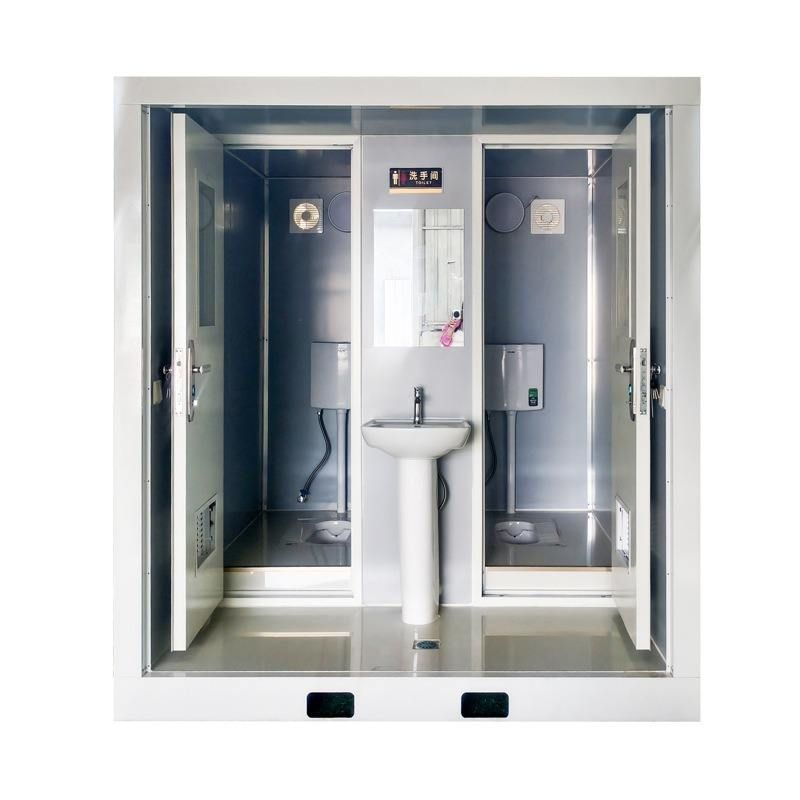
Factory Production: Integrated Manufacturing and High-Precision Control
The modules of prefabricated houses are fully produced in the factory, covering everything from structural components to decorative finishes. First, structural elements such as ceilings, walls, and waterproofing layers, as well as mechanical and electrical systems, interior finishes, and exterior decorations, are integrated into independent modules through an integrated process. The production process draws on the automotive industry model, where individual components are manufactured separately and then assembled on a final assembly line. For example, the China Construction HaiLong Intelligent Construction Industrial Park uses welding robots and highly automated equipment to deliver 20,000 to 30,000 modules annually, with over 70% of the processes completed in the factory.
The core advantage of factory production lies in millimeter-level precision control. Through standardized assembly line operations, the dimensions, interfaces, and performance parameters of the modules all meet strict standards, avoiding error accumulation common in traditional construction. Additionally, the controlled factory environment reduces material waste by over 25%, cuts construction waste emissions by 75%, and lowers energy consumption through centralized management, reducing on-site electricity usage by 60% and water usage by 66%.
On-Site Assembly: Rapid Construction and Recyclability
After being transported to the construction site, the prefabricated modules are assembled using a “building block” approach. Each module is equipped with a unique “ID card” that records information such as the project name, product model, and production date, ensuring traceability throughout the assembly process. The assembly phase significantly shortens the construction timeline, reducing the overall building time by more than 60%, while also alleviating traffic pressure on the construction site and minimizing space occupation.
Another advantage of modular design is enhanced performance and recyclability. Building waterproofing, sound insulation, and seismic resistance are optimized through standardized factory prefabrication processes; modules can be disassembled and stacked, supporting flexible expansion to meet future functional adjustment needs. More importantly, the module reuse rate exceeds 90%, with materials capable of being disassembled and reassembled multiple times, greatly reducing the total lifecycle cost.
Prefabricated houses, through collaborative operations between the factory and the site, achieve a combination of industrialized construction and sustainable development, providing efficient solutions for urban renewal and emergency construction.



