
Construction of Prefabricated Houses
The construction process of prefabricated houses achieves efficient construction through modular design and factory production, with core steps including module prefabrication, transportation and assembly, and structural connection, featuring short construction periods, high precision, and strong environmental protection.
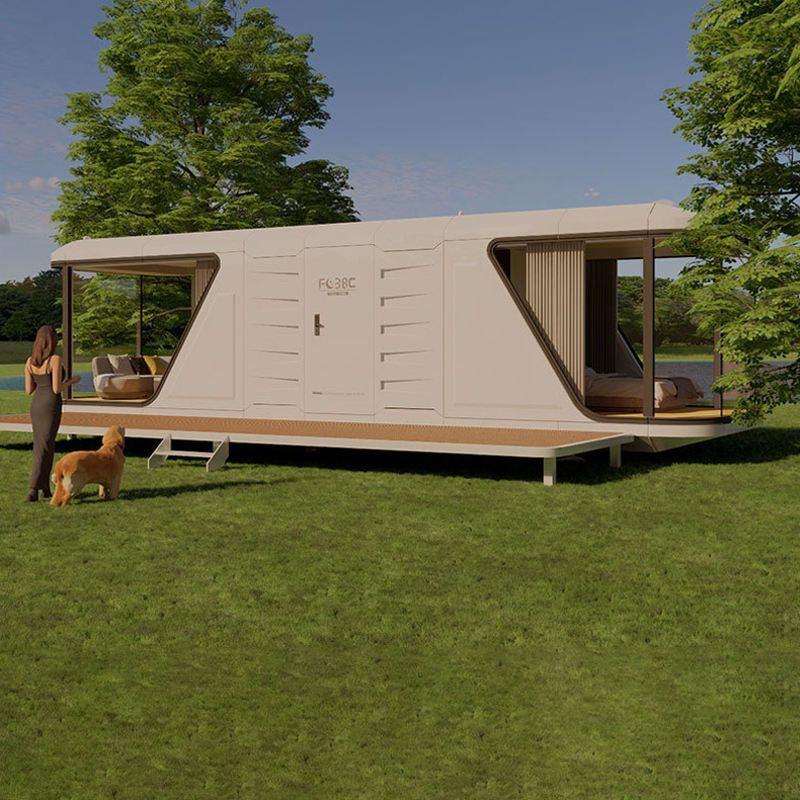
I. Module Prefabrication: Factory Production Ensures Precision and Efficiency
The construction of prefabricated houses begins by breaking down the building into independent modules, with components such as ceilings, floors, walls, and plumbing and electrical lines all prefabricated on factory assembly lines. Taking the China State Construction Hailong Intelligent Construction Industrial Park in Shenzhen, Guangdong, as an example, it achieves standardized production of complex components such as bathroom waterproof layers and wall decorative layers through automated production lines and intelligent management. The factory adopts a parallel operation model, where different modules can be produced simultaneously, significantly shortening the construction period compared to the serial construction method used on traditional construction sites. For example, a real estate project in Shanghai reduced its construction period by more than 60% through the assembly of prefabricated modules; some projects can even complete the main structure construction within 14 days, quickly connecting beams through mortise-and-tenon joints, hoisting stairs, and pouring floor slabs before grouting the gaps between components.
In terms of technical details, modular construction places extremely high demands on precision. The position of each steel bar must be controlled with millimeter-level accuracy, and prefabricated components usually carry detailed labels, including project name, product model, and production date, to facilitate on-site assembly and quality traceability.
II. Transportation and On-Site Assembly: Rapid Connection and Structural Stability
After the prefabricated modules are manufactured, they need to be transported to the construction site using professional transportation tools. During the assembly phase, a "building block" approach is adopted, such as the rapid construction of rural self-built houses using 5-ton foundation piles and mortise-and-tenon beam structures, while some high-rise residential projects use hoisting equipment to precisely position concrete modules. To enhance structural stability, some projects adopt cast-in-place connection technology, where concrete is poured at the module joints to form an overall load-bearing system. This connection method not only reduces on-site noise, dust, and construction waste but also lowers the risk of human error through factory production.
III. Application Scenarios: Covering Multi-Field Demands
Prefabricated houses have been widely applied in areas such as affordable housing, high-rise residential buildings, and rural self-built houses. For example, an affordable housing project in Shenzhen was assembled from 6,028 concrete modules, compressing the completion and delivery period from 2.5-3 years to 1 year; rural self-built houses meet the demands for rapid construction and cost control through standardized module design. Their advantages lie in reducing material waste through large-scale production and minimizing post-construction maintenance costs through precise construction, aligning with the development trend of green buildings.



