
Quay lại blog
Bài viết
Prefabricated House Camp
Quản trị 17 tháng 9, 2026
Prefabricated houses are a type of housing where some or all building components are prefabricated in a factory and then transported to the site for assembly. The following is an introduction from different aspects:
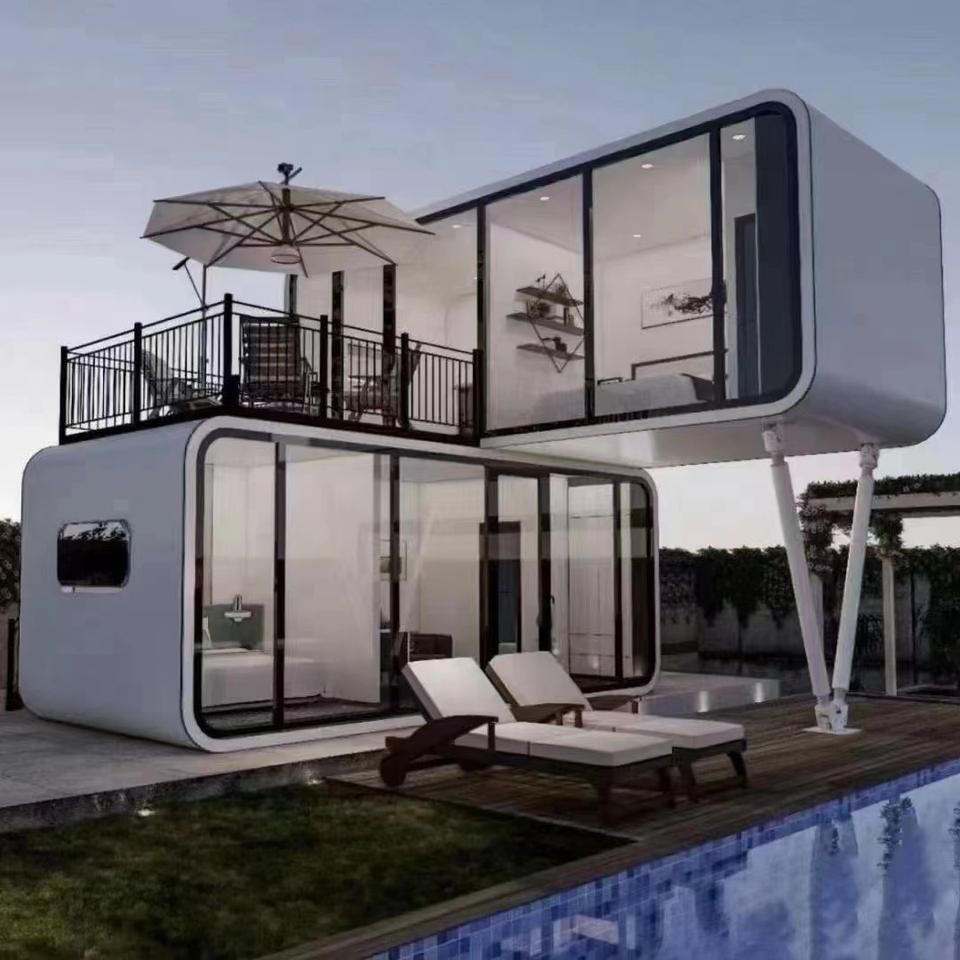
Production and Sales Enterprises
- Foshan Hege Steel Structure Integrated Housing Co., Ltd.: Established in 2005 (registration authority shows January 11, 2007), located in Foshan, Guangdong, it is a comprehensive private sole-proprietorship enterprise. It mainly deals in mobile villas, container houses, prefabricated houses, and other products. It has passed multiple quality system certifications and won numerous honorary certificates.
- Heshi Integrated Housing Co., Ltd.: Located in Hengshui, Hebei, it conducts foreign trade business of prefabricated houses relying on Alibaba International Station. In 2023, its annual sales reached 21 million US dollars, with a cumulative sales volume of about 3,000 sets, and its products are sold to multiple countries. The production cycle of the houses is 25 to 30 days, and the delivery from production to completion usually takes less than three months. The houses are basically decorated when leaving the factory.
Modular Buildings (a form of prefabricated houses)
- Construction Mode: The building is disassembled into independent modules, which are manufactured in the factory, including ceilings, floors, water and electricity pipelines, etc., and then transported to the construction site for assembly.
- Advantages
- Short Construction Period: Compared with traditional buildings, the construction period can be shortened by more than 60%. For example, in the public housing project in Shenzhen, Guangdong, the completion and delivery period was significantly shortened, and the on-site labor force was reduced by about 50%.
- Controllable Quality: The positioning error and accuracy of each steel bar are controlled in millimeters, and each prefabricated component has a detailed 'ID card'.
- Energy Conservation and Environmental Protection: The factory operates in parallel and uses automated three-dimensional warehouses and intelligent production lines, which are conducive to energy conservation and environmental protection.
- Easy Maintenance: The seismic fortification intensity of regular prefabricated concrete or steel structures can reach magnitude 8, and the seismic performance of steel structures is more than 50% better than that of brick-concrete structures.
- Disadvantages
- Rigid House Layout: Standardized construction makes it difficult to freely modify the house layout, and home renovation is difficult.
- Difficulty in Modifying Water and Electricity Pipelines: The water and electricity pipelines are fixedly arranged when leaving the factory, and it is extremely difficult to change the wiring and add or remove points later.
- Cost: The initial cost is 10% to 30% higher than that of brick-concrete structures, but the cost over the entire life cycle is lower. For example, the actual comprehensive cost of a 200-square-meter light-steel house is about 356,000 yuan, while that of a brick-concrete house is about 390,000 yuan. The service life of a steel structure is 90 years, and the recovery rate is more than 90%.
- Market Size Forecast: According to market research institutions, the global modular building market size is expected to exceed 142.8 billion US dollars by 2030.



