
Prefabricated House Assembly
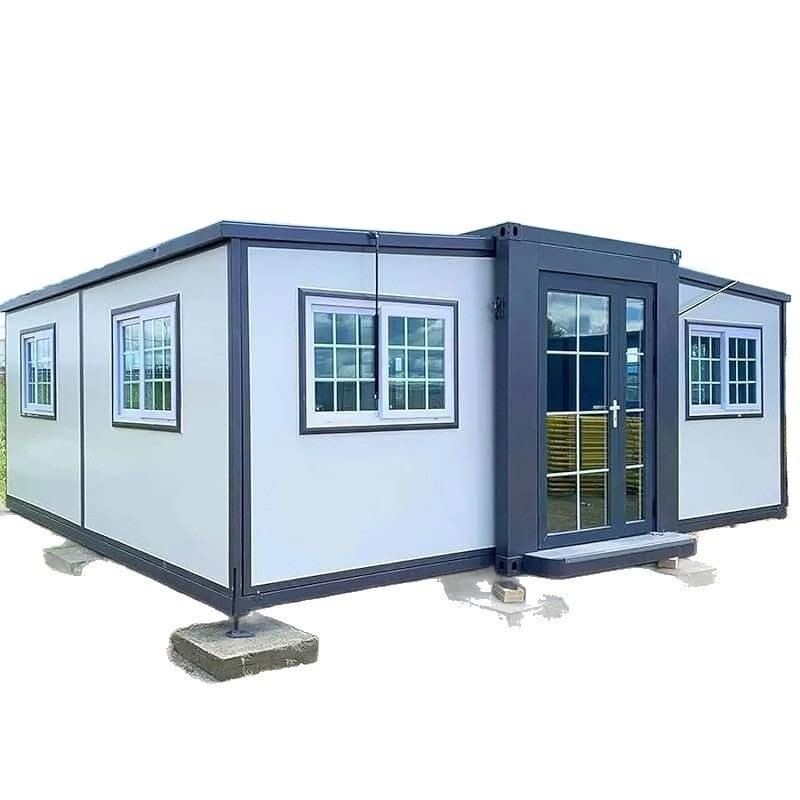
Prefabricated house assembly is a construction method that involves disassembling a building into independent modules, prefabricating them in a factory, and then transporting them to the site for assembly. This approach offers advantages such as short construction periods, controllable quality, and energy conservation and environmental protection.
I. Assembly Process
- Factory Prefabrication: The ceilings, walls, bathroom waterproof layers, water and electricity pipelines, etc., of the house are all completed on the factory assembly line. After individual production of scattered components, overall assembly is carried out at the final assembly station. For example, walls, floors, decoration, and water and electricity systems are integrated and formed in the workshop; components such as wall panels, floor slabs, and stairs are manufactured using precise molds to ensure dimensional accuracy.
- On-site Assembly: After the prefabricated modules are transported to the construction site, they are quickly assembled using cranes. It takes only about 20 minutes for a single module to be lifted and precisely positioned, and workers only need to perform simple operations such as screwing and connecting pipelines. For example, in a project in Henan, it takes only 4 hours to lift and assemble a set of houses; in the Guangdong Shenzhen affordable housing project, through the assembly of 6,028 modules, the completion period for five nearly 100-meter-high buildings was shortened from 2.5 - 3 years to 1 year.
II. Core Advantages
- Significantly Shortened Construction Period: Compared with traditional construction methods, the construction period can be shortened by more than 60%. For example, a 16-story building assembled from 298 modules only takes 120 days from the first lifting to delivery; the 30-story high-rise building in the Anju Jingxinyuan project was capped with fine decoration in only 148 days.
- High Quality Controllability: The factory environment is enclosed, and component production is less affected by the weather. Moreover, quality stability is ensured through standardized processes and quality inspection systems. Procedures such as the embedding of water and electricity pipelines and decoration are completed in the workshop, reducing on-site construction errors.
- Outstanding Energy Conservation and Environmental Protection Benefits: The on-site labor force is reduced by about 50%, and noise, dust, and construction waste emissions are decreased, significantly alleviating traffic congestion problems. Modular production reduces material waste and is in line with the concept of green buildings.
- Improved Maintenance Convenience: Components are prefabricated in the factory with inspection ports or standardized interfaces reserved, so later maintenance does not require damage to the overall structure, reducing maintenance costs.
III. Application Scenarios
This method is suitable for projects with high requirements for construction period and quality, such as affordable housing, schools, and hospitals, especially in areas with tight land resources or complex construction environments. With technological progress, prefabricated house assembly is gradually expanding into the fields of high-rise buildings and personalized design.



