
Prefabricated Concrete House
Prefabricated concrete houses are a new type of building form that uses factory-prefabricated components for rapid on-site assembly, offering advantages such as efficiency, cost-effectiveness, and safety, though with limitations in custom design, making them suitable for rapid construction scenarios.
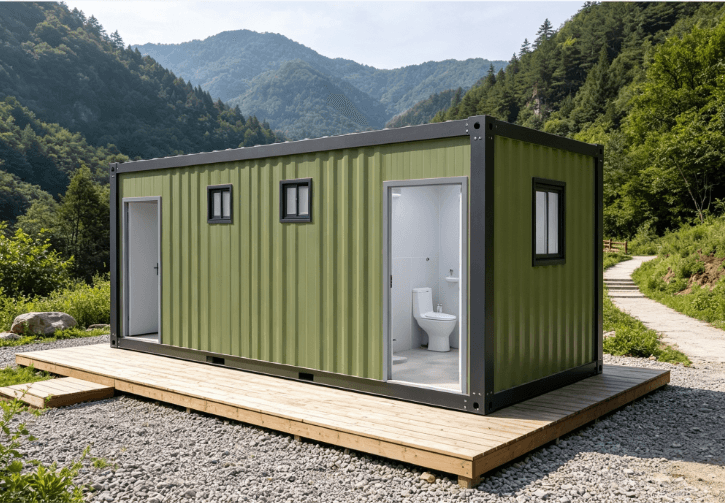
1. Significantly Improved Construction Efficiency
The core advantage of prefabricated concrete houses lies in their extremely fast construction speed. Standard components such as wall panels and floor slabs are pre-cast with reinforced concrete in the factory and then transported to the site for direct assembly using lifting equipment. The main structure of a 200-square-meter villa can be completed in just 4 hours. Compared to the several months required for traditional brick-and-mortar construction, this represents a 90% increase in efficiency, making it particularly suitable for post-disaster reconstruction, temporary housing, or emergency housing needs. For example, after the Gansu Jishishan earthquake, 2,000 prefabricated houses were built and put into use within 72 hours, fully demonstrating their rapid response capability.
2. Outstanding Cost Advantages
The main construction cost of these houses is relatively low, with the cost for a 100-square-meter house main structure being approximately 100,000 to 120,000 yuan, about 30% cheaper than brick-and-mortar structures. The market price range is 210 to 650 yuan per square meter, with some brands offering prices as low as over 300 yuan per square meter, and providing a 70-year warranty. The cost advantages stem from reduced material waste through factory standardized production, lower labor costs, and decreased indirect expenses due to shortened construction periods.
3. Strong Structural Safety
The houses use C35 high-strength concrete and thickened steel reinforcement frames, with structural stability verified through actual measurements: they can withstand typhoons of up to Category 12, and in simulated earthquake tests, the house displacement is only 3 centimeters. Their seismic performance is outstanding in earthquake-prone areas, as evidenced by the rapid deployment and safe use of housing in the Jishishan earthquake relief efforts, further proving their reliability.
4. Excellent Energy Efficiency and Environmental Performance
Insulation layers are pre-embedded in the prefabricated components, reducing winter heating costs by 50%; formaldehyde content is only one-third of the national standard, ensuring better indoor air quality. Factory-based production reduces on-site wet operations, lowering dust and noise pollution, aligning with green building trends.
5. Limitations in Custom Design
Standard components are primarily straight and rectangular, so custom designs such as rounded balconies or irregular structures require an additional 20% customization fee and may extend the production cycle. Therefore, these houses are more suitable for standardized construction scenarios that prioritize efficiency and cost.
6. Diverse Market Brand Options
Currently, mainstream brands in the market include Xinwei Hongtu, Xinsheng, Wufang Yiju, Yongchang, Shengxin, Xiangyun, etc. Consumers can make comprehensive choices based on budget, regional service capabilities, and warranty terms.



