
Prefabricated Cement House in Hainan
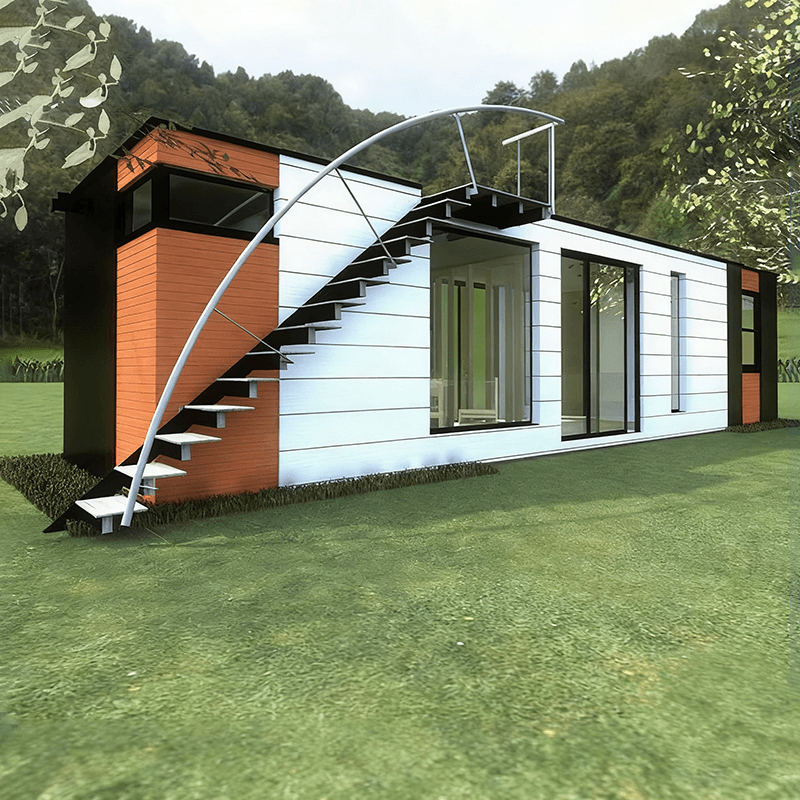
Prefabricated cement houses in Hainan have significant application advantages and are an ideal building form that adapts to tropical climates and ecological needs.
I. Climate Adaptability Advantages
Hainan has a humid and hot climate with frequent typhoons, posing core requirements for buildings such as wind resistance, moisture resistance, and rapid construction. Prefabricated cement houses (prefabricated integrated houses) can withstand winds of over 12 levels through a high-strength lightweight structural system and typhoon-resistant connection node design. The steel structures or concrete prefabricated components have excellent seismic performance, ensuring structural safety under extreme weather conditions. Meanwhile, an integrated waterproof and thermal insulation system effectively isolates humid and hot air, reducing indoor condensation and mold growth, and extending the building's service life. For high-salt-mist and high-humidity environments, the factory's self-developed anti-corrosion coatings and ventilation structures further enhance durability and reduce long-term maintenance costs.
II. Industrialized Construction Advantages
Prefabricated integrated houses adopt a factory-standardized production model, where components are processed on automated production lines with precision errors controlled within millimeters. This reduces on-site wet operations (such as concrete pouring) and significantly lowers dust and noise pollution. The on-site assembly period is shortened by more than 50% compared to traditional buildings. For example, emergency shelters can be erected within a few days, quickly responding to post-disaster reconstruction or peak tourist season demands. Additionally, BIM technology for full-process digital management enables collaborative optimization of design, production, transportation, and installation, avoiding construction errors and material waste, aligning with the requirements for green construction in Hainan's ecological civilization pilot zone.
III. Functional Flexibility and Ecological Benefits
Modular design supports the flexible combination and expansion of houses, adapting to Hainan's dispersed islands and diverse terrain conditions. It can be applied to multiple scenarios such as tourist homestays, public service facilities, and rural revitalization projects. Integrated pipeline embedding and energy-efficient doors and windows improve building energy efficiency, reducing air conditioning energy consumption by more than 30% and meeting energy-saving needs in tropical regions. Factory production reduces construction interference with the tropical ecological environment, such as avoiding on-site excavation that damages vegetation, aligning with Hainan's sustainable development orientation.
IV. Localized Industry Support
The core area of Hainan's Free Trade Port has established a prefabricated house factory with an annual production capacity exceeding 100,000 square meters, which has passed ISO9001 quality management system certification and leads the industry in technological maturity and localized adaptability. The factory provides one-stop services from scheme design to construction delivery and has collaborated with multiple local projects, verifying its reliability in humid and hot environments. For example, cement houses constructed with integrated steel reinforcement pouring have higher structural strength than ordinary brick-and-mortar houses, further consolidating the market recognition of prefabricated buildings in Hainan.



