
Prefabricated Cabin and Civil Engineering Building
There are significant differences between prefabricated cabins and civil engineering buildings in terms of construction methods, structural characteristics, costs, functional features, as well as definitions and characteristics.
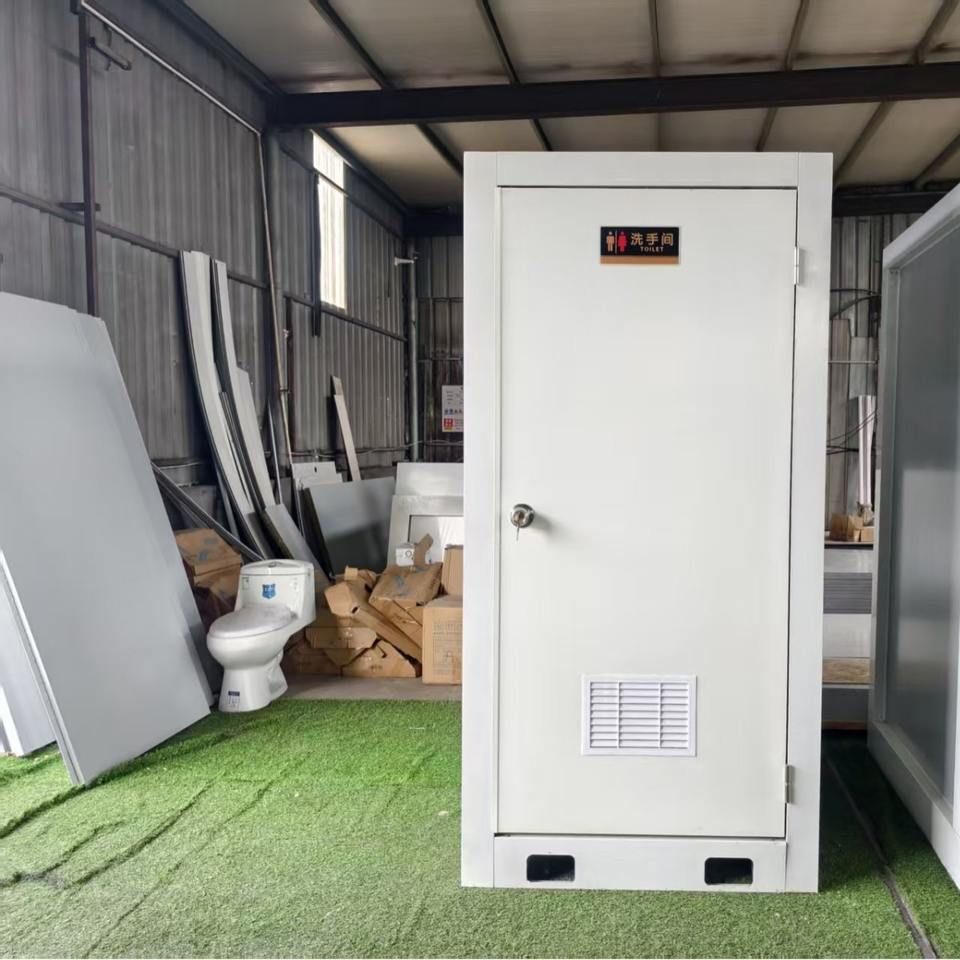
In terms of construction methods, prefabricated cabins adopt a factory-prefabricated and on-site assembly model. In the factory, various components and equipment are pre-designed and manufactured, and then transported to the site for assembly. This construction method significantly shortens the construction period, often allowing completion within a few weeks. In contrast, civil engineering buildings require a series of on-site construction processes such as pouring and masonry, from foundation construction to the completion of the main structure, followed by subsequent decoration, which can take several months or even longer.
Regarding structural characteristics, prefabricated cabins employ a modular design and have the ability to be moved or disassembled as a whole. This means that when the usage location needs to be changed, the prefabricated cabin can be easily relocated and reused without causing significant resource waste. In comparison, civil engineering buildings are fixed structures, and once built, their positions are basically fixed. If demolition is required, the process is not only complex but also the materials after demolition are difficult to reuse, mostly ending up as construction waste.
In terms of costs, the initial investment in prefabricated cabins is relatively balanced. Although there may be certain costs associated with factory prefabrication and transportation, the overall short construction period reduces labor and time costs. Civil engineering buildings, on the other hand, require detailed design in the early stages, including architectural design and structural design, resulting in relatively high design fees. Additionally, on-site construction requires a large amount of manpower, materials, and time, leading to relatively high construction costs.
Regarding functional features, prefabricated cabins integrate equipment installation and supporting systems. During the factory prefabrication process, various electrical, electronic, communication, and environmental control equipment systems are already installed and debugged, allowing for quick commissioning upon delivery to the site. Civil engineering buildings, after completion, require subsequent decoration and equipment installation to meet usage requirements and are more suitable for long-term fixed-use scenarios.
In terms of definitions and characteristics, prefabricated cabins are a new type of structural form介于建筑物和设备之间 (between buildings and equipment), featuring mobility, flexibility, and scalability. They employ modern, intelligent, and integrated technological means in terms of structure and decoration. Civil engineering buildings, on the other hand, usually have fixed positions and forms, belonging to traditional buildings that can meet people's long-term needs for living, working, or activities.



