
Prefabricated Assembly of Building Foundations
Prefabricated assembly of building foundations is a construction method that involves industrial production of building components followed by on-site assembly, offering advantages such as short construction periods, controllable quality, and energy efficiency and environmental protection.
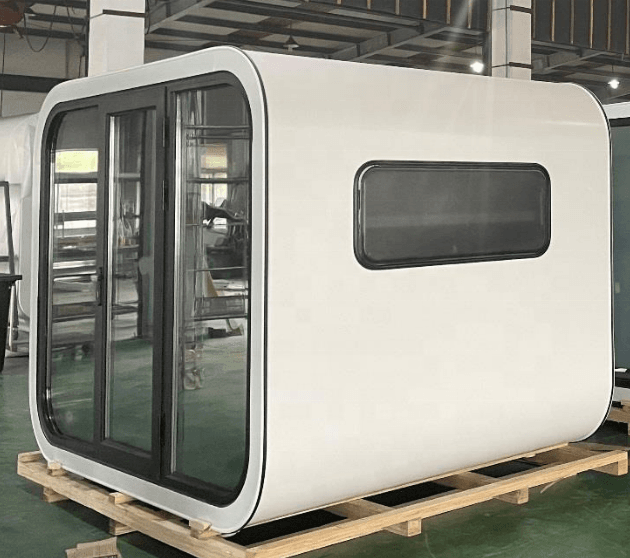
Prefabricated construction encompasses various technical systems, including panel assembly, box assembly, and frame assembly, with modular construction representing a higher level of integration. The core of this approach lies in breaking down the building into independent modules, which are fully manufactured in factories, including structures, pipelines, and finishes, and then transported to the site for assembly. For example, a public housing project in Shenzhen, Guangdong, utilized 6,028 concrete modules to construct five residential buildings nearly 100 meters tall, with each 70-square-meter unit assembled from two half-modules. By completing over 90% of the work in the factory, the project required only on-site casting of connection nodes, reducing the construction and delivery period from the traditional 2.5-3 years to just 1 year, cutting labor requirements by about 50%, and significantly reducing environmental impacts such as noise, dust, construction waste, and traffic congestion.
Technical Advantages and Industrial Support Prefabricated construction demands a high level of industrial foundation, requiring coordinated development of technical systems, production systems, and industrial clusters. Its advantages are manifested in three aspects:
- Construction Period and Efficiency: Standardized factory production allows for parallel operations, while on-site assembly reduces cross-construction, shortening the construction period by 30%-50% compared to traditional methods;
- Quality and Environmental Protection: Components are produced in enclosed workshops with millimeter-level dimensional accuracy, minimizing human errors. Additionally, dust and wastewater emissions are reduced by over 60%, and material waste is decreased by about 30%;
- Maintenance and Upgrades: Modular design facilitates later pipeline replacement or spatial renovation, extending the building's service life.
Development History and Current Applications China's prefabricated concrete technology originated in the 1950s, initially used for factory and residential construction, but fell into disuse due to technical limitations. In the 21st century, with rising labor costs and stricter environmental policies, the technology has experienced a resurgence. Companies like Vanke Group have developed prefabricated shear wall residential structural systems and applied prefabricated frame technology in Beijing, Shanghai, and other cities, driving the industry toward standardization and scale. Currently, prefabricated construction is widely used in public housing, schools, hospitals, and other public welfare projects, becoming a key direction for the transformation and upgrading of the construction industry.



