
Prefabricated Assembled House Customization
Customization of prefabricated assembled houses requires comprehensive consideration of factors such as brand, material, style, load capacity, price, and industrial foundation.
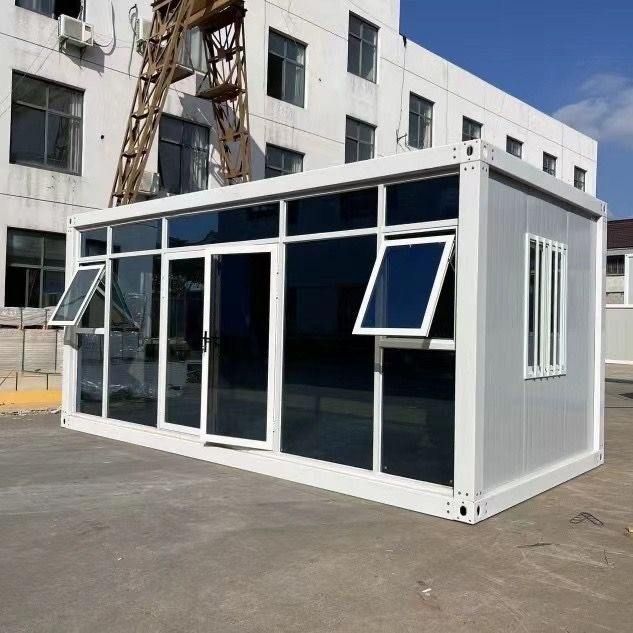
Brand and Material Selection: Currently, there are various brands of prefabricated cement assembled houses on the market, such as Dingshun, Xinwei Hongtu, and Xiangfeng. The main materials used are concrete and color-coated steel. Concrete structures offer high strength and durability, making them suitable for long-term fixed use scenarios. Color-coated steel, on the other hand, is lightweight and easy to install, ideal for projects with strong temporary or mobile needs.
Style and Assembly Methods: Prefabricated assembled houses come in a variety of styles, including light steel movable houses and fully welded structures. Assembly methods are mainly divided into hoisting and modular assembly. Hoisting is suitable for the overall installation of large modules, offering high construction efficiency. Modular assembly is more flexible, allowing for step-by-step assembly based on site conditions, making it suitable for scenarios with limited space or requiring phased construction.
Load Capacity and Customization Needs: When customizing, it is essential to select an appropriate load capacity standard based on the actual use. Common load capacity grades include 500kg, 600kg, and 1500kg. For example, houses used for storage require higher load capacities, while those for office or residential purposes can have lower standards to optimize costs.
Price Factors: Prices are significantly influenced by region, brand, and specifications. For instance, in Baoding, Hebei, prices range from 220 to 1000 yuan per square meter, while in Jining, Shandong, there are finished assembled cement movable houses priced at 7500 yuan per set. Before customization, a comprehensive assessment should be conducted based on budget and needs to avoid cost overruns due to specification differences.
Characteristics of Modular Buildings: As an advanced form of prefabricated assembled buildings, modular buildings break down the structure into independent modules. All components, including ceilings, floors, and water and electrical pipelines, are prefabricated in the factory, with assembly errors controlled to the millimeter on-site. This model requires extremely high design precision, necessitating advance planning of details such as steel bar positions and pipeline layouts. However, it can significantly shorten construction time and enhance quality controllability.
Industrial Foundation Requirements: Customization of prefabricated assembled houses relies on a well-developed technical system, production system, and industrial cluster. The technical system must ensure standardization and compatibility of modular designs; the production system must possess high-precision manufacturing capabilities; and the industrial cluster can reduce logistics costs and improve supply chain efficiency. Regions lacking industrial support may face long customization cycles and high costs.



