
Portable Mobile Toilet
A portable mobile toilet is a facility that can be moved as a whole and placed in fixed or temporary locations to provide toilet services for the public and customers.
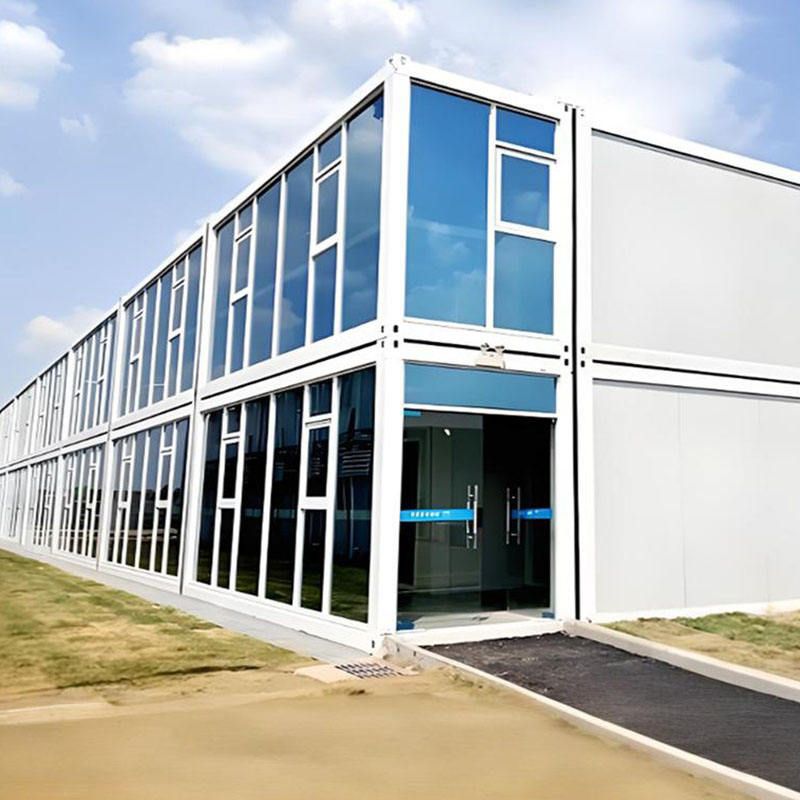
I. Composition Structure A portable mobile toilet generally consists of a fecal sewage storage tank (or fecal sewage treatment device), flooring, sanitary ware, walls, washing equipment, a water tank, a roof, a mobile device, and other parts. Initially, they were mostly made of materials like wood, with simple structures and functions, and were prone to absorbing odors. With technological development, materials such as fiberglass-reinforced plastic and polyethylene have gradually been adopted, improving durability and odor resistance.
II. Classification Methods
- By structural form: They are divided into single-structure mobile toilets and composite-structure mobile toilets. Single-structure toilets are usually independent units suitable for spaces with limited room; composite-structure toilets are composed of multiple units and can expand service scale.
- By mobility method: They are divided into lifting and handling-type mobile toilets and powered and trailer-type mobile toilets. The former rely on lifting equipment or manual handling, while the latter achieve mobility through vehicle traction or self-contained power, offering higher flexibility.
- By sewage treatment method: They are divided into water-flush and waterless-flush suction types, circulating water-flush types, and dry-packing types. Water-flush types rely on a water source and discharge sewage through pipes; waterless-flush suction types use vacuum or negative pressure to suction feces; circulating water-flush types reuse water resources through filtration and disinfection technologies; dry-packing types use biodegradable bags to collect feces, requiring no water source or sewage pipes.
III. Core Features The core advantages of portable mobile toilets lie in their mobility, combinability, and convenient transportation. Their design allows for rapid deployment to locations such as stations, docks, tourist attractions, and large construction sites, especially suitable for temporary events or densely populated areas. Additionally, their modular design supports adding or removing units according to needs, adapting to service scenarios of different scales.
IV. Application Scenarios They are suitable for stations, docks, tourist attractions, villa areas, newly built residential areas, large construction sites, squares, densely populated public places, and bustling commercial streets. Moreover, modular portable public toilets built like building blocks achieve flexible layouts through modular assembly, while portable toilets like the Miaobeiyou elderly toilet are designed for specific groups (such as the elderly, pregnant women, and patients) to meet temporary bedroom use needs.



