
Portable Container House
Container houses are portable and can achieve efficient assembly and disassembly as well as mobility through modular design, foldable structures, lightweight materials, and standardized transportation. Here is a detailed analysis:
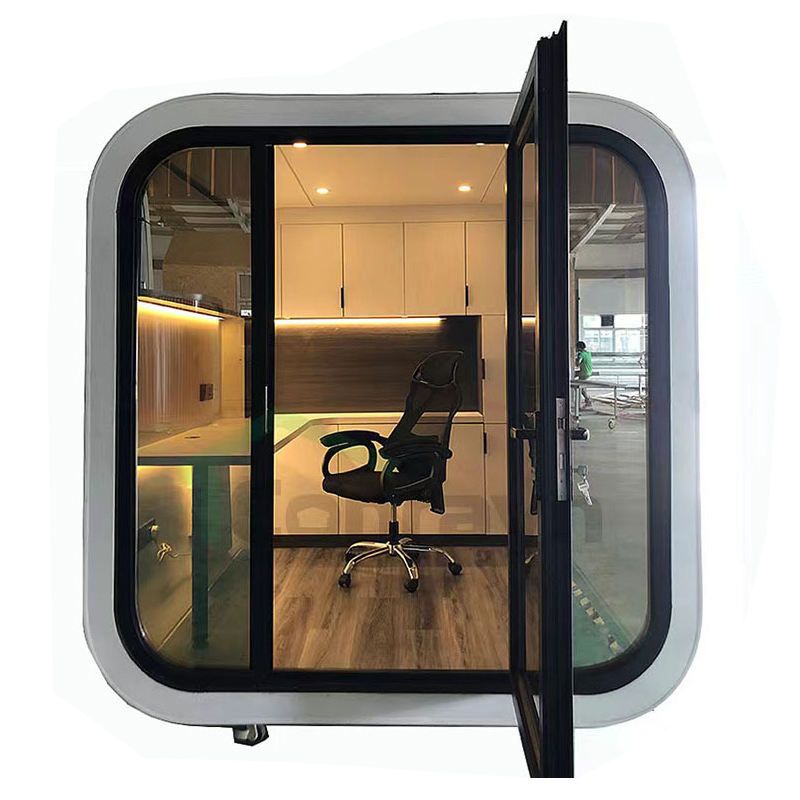
Modular Design for Rapid Assembly and Disassembly
The core portability of container houses stems from their modular structure. Standard container units adopt uniform dimensions (such as 20 feet or 40 feet) and are connected via bolts or quick-installation interfaces. Systems like walls, circuits, and pipelines can be prefabricated in factories, and on-site assembly only requires simple joining. For example, the quick-assembly container products from Suzhou Zhongnan Steel Structure Co., Ltd. take just 2 hours for a single unit installation, and a 100-unit camp can be set up in just 7 days, significantly shortening construction time. Modular design also supports flexible expansion. By increasing or decreasing the number of containers or adjusting the layout, it can quickly adapt to different scenario requirements, such as engineering camps, commercial pop-up stores, or emergency support housing.
Foldable Structures to Reduce Transportation Costs
Some container houses adopt foldable designs, further enhancing portability. When folded, their volume can be reduced to 1/5 to 1/3 of the expanded state, greatly improving transportation efficiency. For example, the foldable container mobile homes from Suzhou Zhongnan can be loaded with 20 units per standard freight truck, reducing transportation costs by 40%. When stored, they can be stacked up to 8 layers, increasing space utilization by 60%. Such designs are particularly suitable for short-term turnover or frequently relocated scenarios, such as emergency rescue and temporary exhibitions.
Lightweight Materials and Standardized Transportation
Modern container houses widely use lightweight steel frames, aluminum-magnesium alloys, or composite panels, which reduce self-weight while ensuring structural strength, facilitating manual handling or mechanical lifting. For example, the all-steel frame container mobile homes from Suzhou Zhongnan have a wind resistance rating of 12 and an earthquake resistance intensity of 8 degrees, but the frame deformation rate is only 0.2%, balancing safety and portability. In addition, the standardized dimensions of containers (such as ISO standards) enable seamless integration with truck, train, or ship transportation, achieving rapid global deployment.
Compliance and Full Lifecycle Management
Portability is not only reflected in physical movement but also requires meeting cross-border compliance and recycling requirements. Products from leading manufacturers pass domestic and international certifications (such as CE and ISO), support multiple assembly and disassembly cycles, with an average of more than 8 times, and reduce construction waste emissions by about 90%. For example, the products from CIMC Modular Building Investment Co., Ltd. can maintain long-term structural stability under proper use and regular maintenance, aligning with low-carbon circular economy policy guidelines.



