
Portable Container House
The portable container house features mobility, strong scalability, a sturdy structure, and diverse functions.
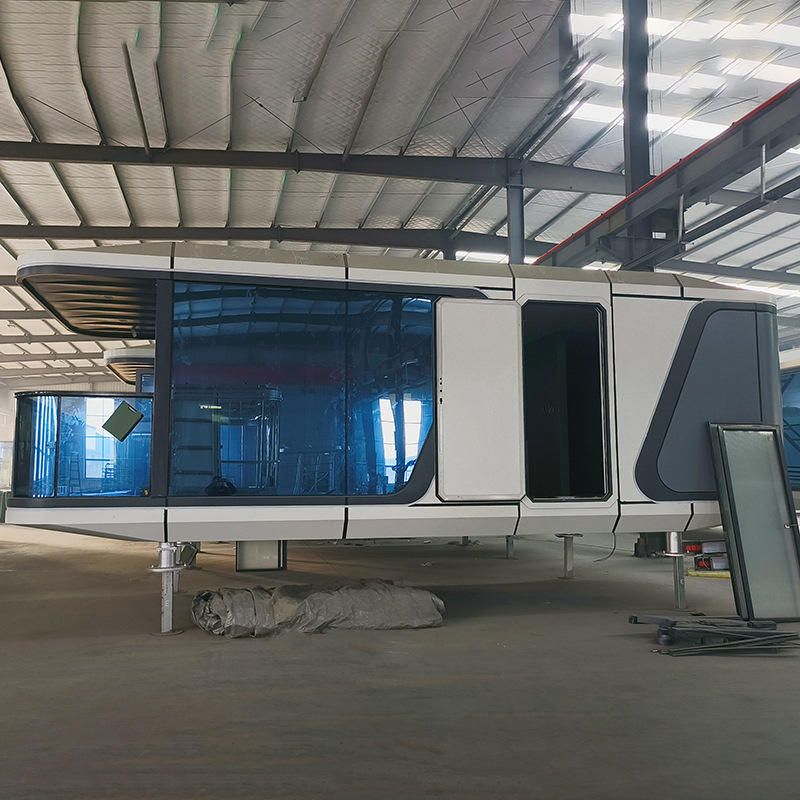
1. Mobility The core advantage of the portable container house lies in its mobility. These houses typically adopt a modular design, with the main structure transformed from standardized containers. They can be quickly transported to different sites through lifting and towing methods. For example, some products are equipped with foldable or quick-assembly structures, such as the "customized two-story office prefabricated temporary building with foldable integrated housing for foreign trade mobile container houses", which can be assembled or disassembled in a short time, meeting the frequent relocation needs of construction sites, temporary offices, and emergency rescue scenarios. Additionally, some products support 48-hour delivery, further shortening the deployment cycle.
2. Spatial Expansion and Flexibility Portable container houses can achieve spatial expansion through splicing or stacking. For instance, a single-story house can be stacked into a two-story structure to meet the layered needs of offices or residences; horizontal splicing can expand the usable area, creating an open activity space. Taking the "customized container-type prefabricated temporary building" as an example, its standard size is 2 meters by 3 meters, but through modular combination, it can be flexibly adjusted into larger functional areas, such as construction site dormitories, conference rooms, or storage spaces. This scalability enables it to meet both short-term needs and long-term use scenarios through long-term modifications.
3. Structural Sturdiness and Safety Although emphasizing mobility, portable houses do not compromise on structural strength. Most products adopt a steel frame structure with corrugated metal sheets on the exterior, providing wind and earthquake resistance. For example, the steel frame of customized prefabricated temporary buildings can withstand winds of over magnitude 8, while the metal sheets offer fire and corrosion protection. Meanwhile, the houses are equipped with doors and windows with guardrails, ensuring both lighting and enhanced safety, suitable for long-term use in complex environments.
4. Functional Integration and Rapid Deployment Portable container houses usually come pre-installed with water and electricity systems, enabling "plug-and-play" functionality. For example, the interior walls of customized prefabricated temporary buildings are smooth, allowing direct installation of lighting, sockets, and other facilities, reducing on-site construction time. Some products also offer a 7-day replacement service, lowering user maintenance costs. Additionally, the interior of the houses can be customized into functional zones according to needs, such as office areas, rest areas, or bathrooms, meeting diverse use scenarios.
In summary, the portable container house balances mobility and practicality through modular design, structural optimization, and functional integration, becoming an efficient solution in the field of temporary buildings.



