
Platform Mobile Toilet
Platform mobile toilets are a type of mobile toilet, characterized by their ability to be moved as a whole and to meet the needs of both fixed and temporary locations. The following provides an introduction from three aspects: classification, design principles, and applicable scenarios.
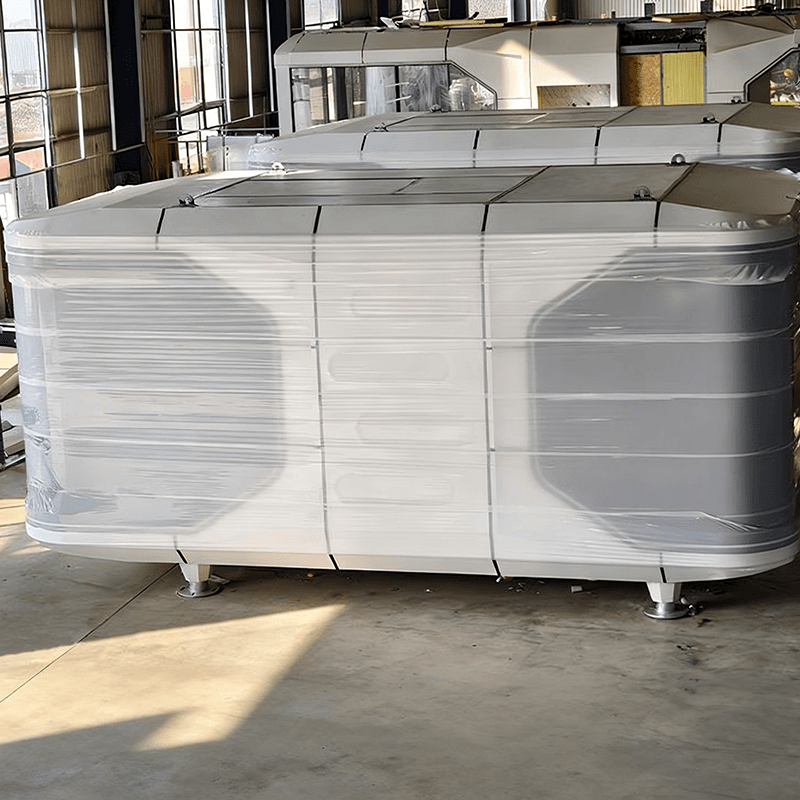
From the perspective of classification, mobile toilets can be divided into hoisting and handling mobile toilets, as well as powered and towed mobile toilets, based on their mobility methods. Platform mobile toilets may be a specific implementation form of the towed or powered type. Towed types are usually moved by vehicle traction, and their structures may include a chassis that can be connected to a traction device, facilitating rapid transfer between different sites. Powered types, on the other hand, may come with their own power systems, such as small engines or electric drive units, enabling them to travel autonomously to designated locations, offering greater flexibility.
In terms of design principles, platform mobile toilets adhere to core principles of mobility convenience, economic durability, and environmental ecology. Mobility convenience is reflected in the compact overall structural design, with components that are firmly connected and easy to disassemble and assemble, along with suitable support or walking devices for movement, ensuring efficient and effortless transportation and installation. Economic durability requires the selection of cost-effective materials, such as high-strength plastics and lightweight metal alloys, which not only ensure the stability of the toilet structure but also reduce manufacturing and maintenance costs, extending service life. The principle of environmental ecology runs through the entire design process, such as the use of water-saving flushing devices or waterless flushing technology to reduce water consumption; the installation of fecal collection and treatment systems to prevent environmental pollution, with some advanced designs even capable of converting feces into organic fertilizers for resource recycling.
In terms of applicable scenarios, platform mobile toilets are suitable for public places such as stations, docks, and tourist attractions. Stations and docks have high passenger volumes, and the demand for sanitary facilities is sudden and periodic. Platform mobile toilets can be flexibly adjusted in position and quantity according to passenger flow changes to meet the toilet needs at different times. Tourist attractions are usually large in area and have complex terrain, making the construction of fixed toilets costly and layout-restricted. Platform mobile toilets can be quickly deployed in areas where tourists gather, improving the quality of tourism services. In addition, at temporary locations such as large-scale events and construction sites, platform mobile toilets also play an important role, providing convenient sanitary facilities for personnel.



