
Pingzhuang Mobile Toilet
There is no specific direct information about "Pingzhuang Mobile Toilet", but we can introduce the general situation of mobile toilets.
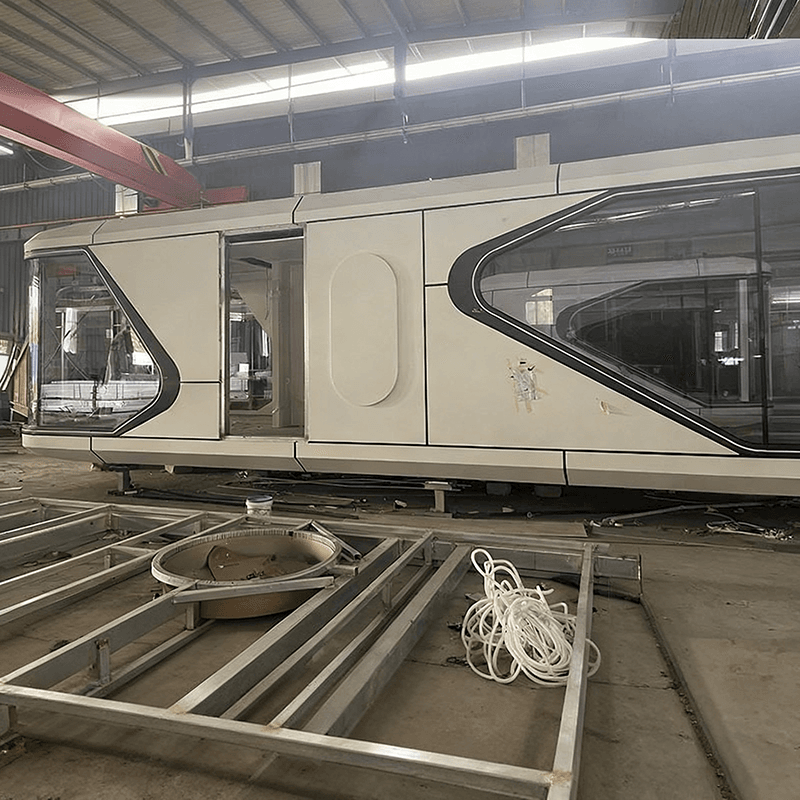
Mobile toilets are portable and flexible public toilet facilities with many advantages and characteristics, suitable for various locations.
Suitable Locations
Mobile toilets are suitable for stations, docks, tourist attractions, newly built residential areas, large construction sites, squares, densely populated public places, and bustling commercial streets. In these places, traditional fixed toilets may be restricted due to high construction costs, difficulties in site selection, or inability to meet temporary needs. Mobile toilets, on the other hand, can be quickly deployed to promptly solve people's toilet problems. For example, at large construction sites, as the project progresses, the distribution of personnel and work areas constantly change. Mobile toilets can be flexibly moved according to actual needs, facilitating use by workers. At tourist attractions, the number of tourists increases significantly during holidays. Mobile toilets can rapidly increase the number of toilets, alleviating toilet pressure.
Classification by Structural Form
- Single-unit mobile toilets: Generally have a relatively simple structure and a small size, making them easy to move and install. They usually consist of a single independent toilet unit equipped with basic toilet facilities such as a toilet bowl and a sink. This type of mobile toilet is suitable for places with limited space or a low demand for the number of toilets.
- Composite-structure mobile toilets: Composed of multiple toilet units, they have a more complex structure and more complete functions. They can be flexibly combined according to actual needs to increase the number of toilets and functional areas, such as setting up a management room or a toilet for the disabled. They are suitable for large-scale events, squares, and other densely populated places.
Classification by Mobility Method
- Lifting and handling mobile toilets: Mainly lifted and handled by equipment such as cranes, they are suitable for places that require frequent movement over short distances. The structural design of these mobile toilets is usually relatively sturdy to withstand the external forces during lifting and handling.
- Powered and towed mobile toilets: Equipped with a power system themselves or capable of being moved by being towed by a vehicle. Powered mobile toilets can drive autonomously, offering higher flexibility. Towed mobile toilets can be towed to the designated location by a tractor, suitable for long-distance movement and places that require rapid deployment.
Classification by Sewage Treatment Method
- Flush and non-flush suction mobile toilets: Flush mobile toilets use water to flush feces, providing good cleaning effects but requiring a connection to a water source and sewage pipes. Non-flush suction mobile toilets collect feces into a storage tank through vacuum suction, without the need for a water source, but requiring regular cleaning of the storage tank.
- Recirculating flush mobile toilets: By filtering and disinfecting the used water, they achieve water recycling, saving water resources while ensuring the flushing effect.
- Dry-packing mobile toilets: Feces are packed in biodegradable plastic bags, without the need for water. They are easy to handle and have a relatively small impact on the environment.



