
Quay lại blog
Bài viết
Pingyi Prefabricated House Finished Products
Quản trị 18 tháng 9, 2026
Currently, no direct information related to 'Pingyi Prefabricated House Finished Products' has been found, but the following features and cases of prefabricated house finished products can be used as references:
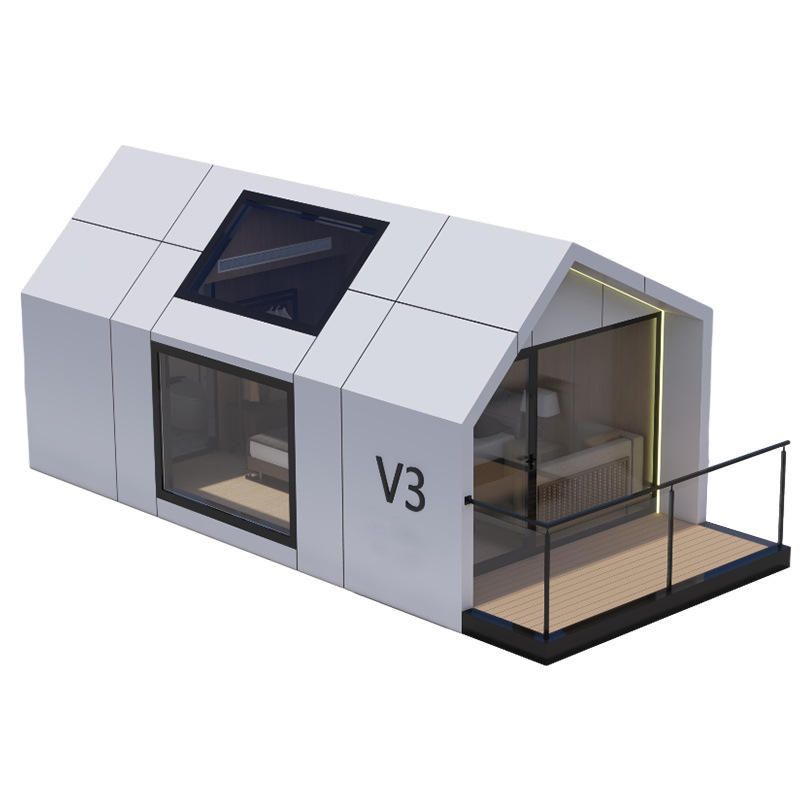
I. General Characteristics of Prefabricated House Finished Products
Prefabricated house finished products typically adopt a factory-standardized production model, where core components (such as walls, floors, roofs, etc.) are prefabricated in workshops and then transported to the site for assembly. Their notable advantages include:
- Superior Performance: Taking the products of Huacheng Cement House Factory as an example, prefabricated house finished products possess characteristics such as earthquake and pressure resistance, fire and flame retardancy, meeting building safety standards in different regions. Some products, through special processing techniques, can also achieve functions such as sound insulation, heat insulation, and moisture resistance, adapting to complex climatic environments.
- Flexible Customization: They support personalized design, allowing users to adjust the house size, layout, appearance (such as color, decorative lines), and internal configurations (such as door and window types, circuit layouts) according to their needs. For instance, the packing-box units provided in Taizhou, Zhejiang, can be quickly transformed into temporary office or living spaces, while the self-built villa cement panel houses in Hebei can integrate traditional architectural styles with modern functional requirements.
- Efficient Construction: The on-site assembly time is reduced by more than 50% compared to traditional construction, and it is less affected by weather conditions, making it suitable for emergency housing or projects with tight schedules.
II. Differences in Finished Product Types Across Different Scenarios
Prefabricated house finished products have a wide range of application scenarios, and products from different merchants vary due to their different positioning:
- Temporary Housing: Such as packing-box units, which adopt a modular design and can be quickly disassembled, assembled, and reused. They are commonly used in scenarios such as construction site dormitories and post-disaster resettlement. Their structure is lightweight, and transportation costs are low, but their thermal insulation performance is relatively weak.
- Permanent Residences: Such as cement panel houses, which use reinforced concrete as the main material, have a sturdy structure, and a service life of up to several decades. Some merchants offer 'turnkey' services, including foundation construction, interior and exterior decoration, and equipment installation, allowing users to move in directly.
- Commercial Buildings: Some prefabricated house finished products can be customized as shops, exhibition halls, etc., meeting commercial needs through designs such as large-area glass curtain walls and open layouts while retaining the advantage of rapid construction.
III. Considerations When Choosing Prefabricated House Finished Products
- Qualification Verification: Prioritize manufacturers with production licenses and quality certifications (such as ISO9001) to ensure that the products comply with national building codes.
- On-site Inspection: Request merchants to provide finished model rooms or case sites, focusing on observing details such as structural connections and waterproofing treatments.
- Clear Contract Terms: Specify material brands, specifications, delivery standards, and after-sales responsibilities in the contract to avoid disputes caused by ambiguous terms.



