
Quay lại blog
Bài viết
Pingyao Container Mobile House
Quản trị 15 tháng 9, 2026
Information about Pingyao container mobile houses is as follows:
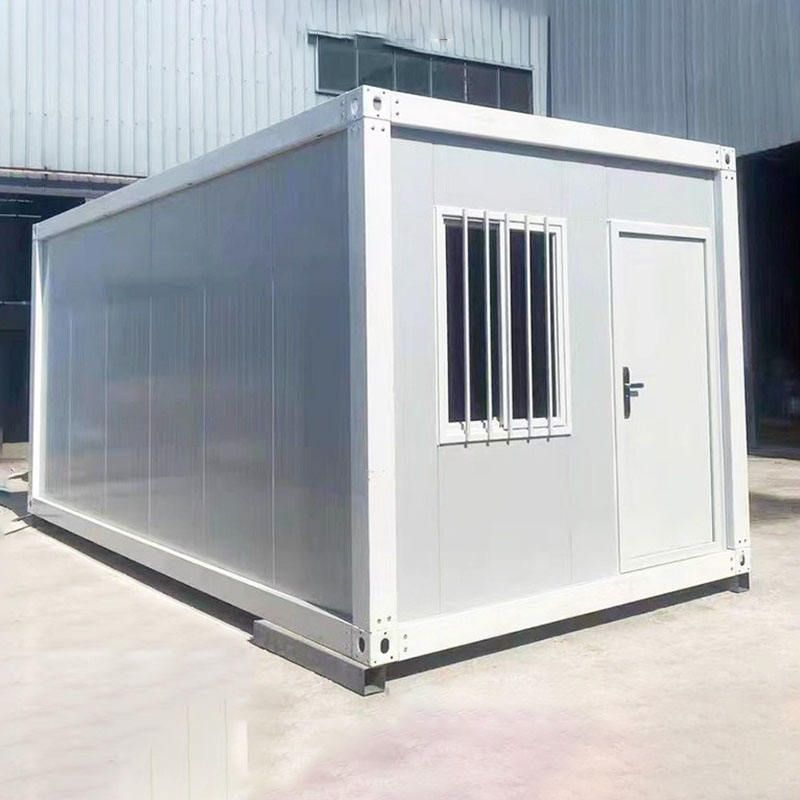
I. Product Types and Features Container mobile houses in Pingyao are centered around modular design and cover various types:
- Standard container houses: Based on 20-foot or 40-foot containers, they are transformed to provide living functions. Internally, they are equipped with thermal insulation layers, lighting sockets, and ventilation ducts. Externally, they are wrapped with galvanized steel frames or color-coated steel plates, offering both sturdiness and mobility.
- Foldable container houses: These have a stable structure with few welded parts, supporting quick installation and disassembly (operable by 2-3 people). They have low transportation costs (a 6-meter vehicle can carry 6 sets) and can be stacked in multiple layers during storage. They are fire-resistant, earthquake-resistant, and wind-resistant, with a service life of up to 500 folding cycles.
- Flat-roof mobile houses: These include modern three-story residences, double-story expandable container houses, etc. They use materials such as aluminum alloy and tempered glass, featuring luxurious designs and diverse functions, suitable for high-end temporary buildings or cultural tourism projects.
- Prefabricated modular houses: Mainly constructed with light steel structures, they support customized designs, such as 2-3 bedroom prefabricated houses and U-shaped flat-panel assembled houses, meeting different scenario requirements.
II. Application Scenarios
- Construction site temporary buildings: Used as project department offices, worker dormitories, canteens, etc., they meet the rapid deployment needs of infrastructure construction.
- Cultural tourism homestays: In tourist attractions and characteristic towns, they serve as themed homestays, creative bookstores, or mobile shops, promoting the personalized development of the cultural tourism industry.
- Emergency housing: Suitable for earthquake relief, temporary resettlement, and other scenarios, they comply with emergency housing standards.
III. Industry Advantages
- Economy: The overall cost is 10%-30% lower than that of traditional buildings, with high material recyclability and lower amortization costs.
- Environmental protection: Construction waste is reduced by more than 80%, and main materials (steel, sandwich panels) can be recycled.
- Efficiency: The factory prefabrication rate reaches 85%-90%, the construction period is shortened by 60%-70%, and the core structure can be hoisted within one week.
- Flexibility: They support customization from standard containers to complex irregular structures, adapting to different geological and climatic conditions.



