
Outdoor Row Mobile Toilets
Outdoor row mobile toilets are facilities suitable for places such as scenic spots, campsites, and parks, with advantages including mobility, combinability, and ease of transportation.
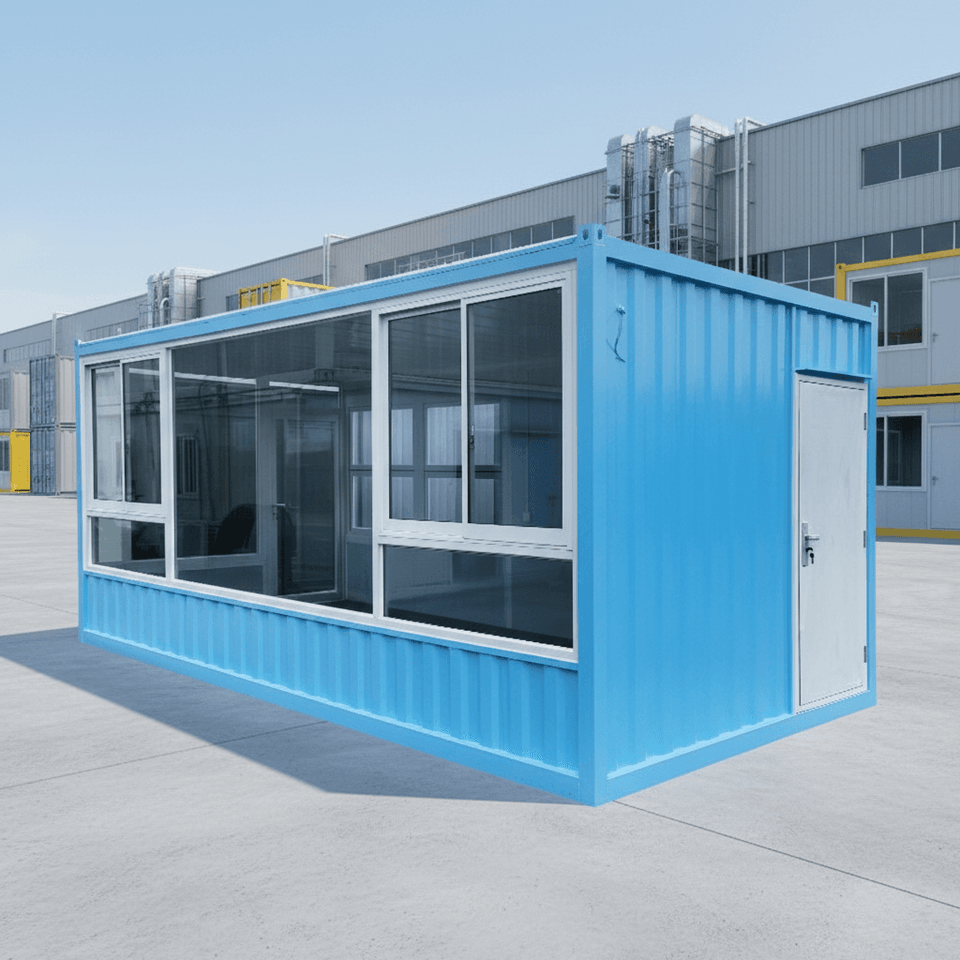
I. Structural Features The frames of row mobile toilets are mostly made of galvanized steel structures, which have high strength and corrosion resistance, ensuring the stability and long-term usability of the facilities. The wall panels are usually high-density exterior wall panels, providing good thermal insulation, sound insulation, and waterproofing properties. Some models are also equipped with waterproof asphalt shingle roofs to further enhance waterproofing. For example, a row toilet with six squatting positions in individual compartments is entirely made of a galvanized steel frame and paired with waterproof asphalt shingles, allowing it to be moved easily with a crane, offering high flexibility.
II. Internal Configuration The internal sanitary fixtures are fully equipped, typically including squatting toilets, washbasins, exhaust fans, ceiling lights, and other basic facilities. Some models also use stainless steel door locks to improve durability and safety. For example, a row toilet with six compartments has all the necessary sanitary fixtures to meet daily usage needs; a simple row toilet with three squatting positions, although designed simply, is also equipped with a complete sanitary system.
III. Classification Methods
- By structural form: They can be divided into single-structure mobile toilets and composite-structure mobile toilets. Single-structure toilets are suitable for independent use scenarios, while composite-structure toilets are more suitable for combined use to form a row layout.
- By mobility method: They include lifting and handling-type mobile toilets, powered and towed-type mobile toilets. Lifting-type toilets are moved by lifting equipment, handling-type toilets rely on manual or small machinery, powered-type toilets are equipped with engines or motors, and towed-type toilets can be connected to vehicles for transportation.
- By sewage treatment method: They are classified into water-flush and non-water-flush suction-type, circulating water-flush type, and dry-packing type. Water-flush toilets require a water connection, non-water-flush toilets treat feces through suction, circulating water-flush toilets can reuse water resources, and dry-packing toilets seal and pack feces for easy cleaning.
IV. Application Scenarios Row mobile toilets are widely used in scenic spots, campsites, parks, and other places due to their flexibility and convenience. For example, a simple row toilet with three squatting positions adopts an independent design without gender separation, resulting in higher usage frequency and suitability for areas with heavy foot traffic; a row toilet with six compartments is more suitable for large events or long-term use scenarios.



