
Quay lại blog
Bài viết
Original Shipping Container House
Quản trị 15 tháng 9, 2026
The original shipping container house uses containers as modular units, with the main building structure and internal facilities prefabricated in the factory, and then quickly assembled into a standardized house after being transported by sea to the destination.
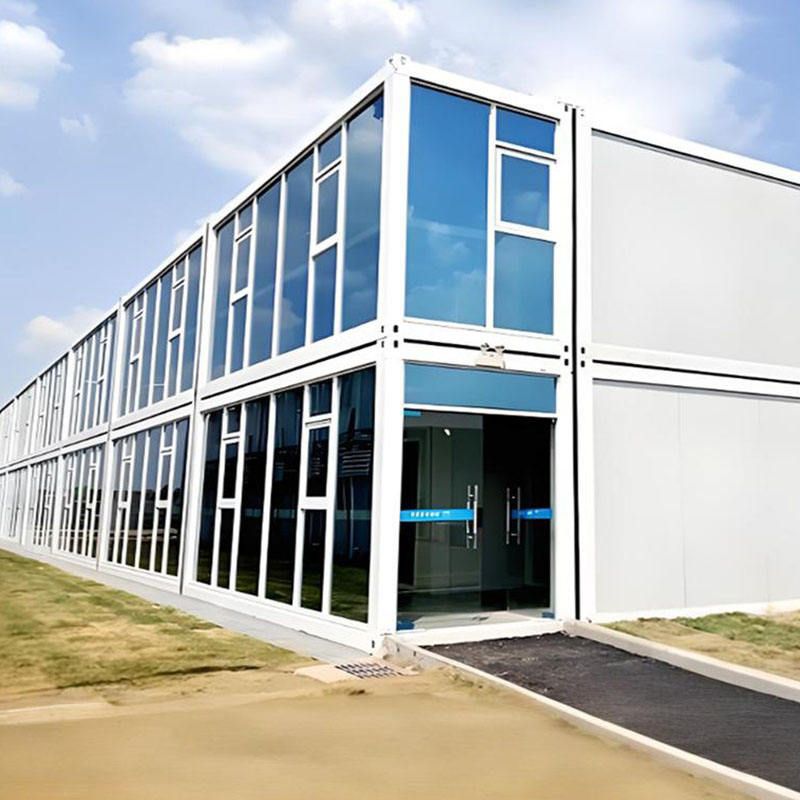
Construction Mode
- Modular Disassembly and Factory Prefabrication: The complete house is disassembled into standardized modules, such as bottom, top, and side components. Precise assembly of all processes, including the main structure, water and electricity pipelines, bathroom equipment, cabinets, and wardrobes, is completed on the factory assembly line to form independent house modules. For example, a smart factory in Guangdong can produce 50 modules per day with a manufacturing precision of 1-2 millimeters.
- Sea Transportation and On-site Assembly: The prefabricated modules are transported by container ship to the destination and quickly assembled on-site like building blocks to form a complete building. For instance, the 63 elderly apartment modules purchased by British merchants were shipped from China and completed on-site construction in just two weeks.
Technical Advantages
- Significant Reduction in Construction Time: Compared to traditional construction methods, modular construction can reduce the construction period by more than 60%. For example, a hotel project in Papua New Guinea required 14-18 months for traditional construction, while the modular solution took only 7 months.
- Substantial Cost Savings: In terms of labor costs, skilled technicians in Europe and the United States earn 200-400 yuan per hour, while only about 45 on-site personnel are needed for modular construction. Regarding material waste, the standardized CNC cutting of steel in the factory results in only 3%-5% waste, far lower than the 8%-12% on traditional construction sites.
- Improved Quality and Environmental Protection: The factory prefabrication model avoids weather impacts on traditional construction sites, ensuring more stable quality. Lightweight steel structure modules reduce the consumption of foundation materials by 60%-70%, aligning with green building trends.
Application Scenarios
- Residential and Commercial Buildings: Including elderly apartments, hotels, data centers, etc. For example, the 2312 project designed by CIMC for Malaysia is the world's first ultra-large prefabricated modular data center, with a construction period of less than 10 months.
- Temporary and Emergency Buildings: Such as construction site dormitories and post-disaster reconstruction houses. A company in Qingdao can deliver container houses within 72 hours to meet urgent needs.
- Special-purpose Buildings: Such as expandable storage spaces and mobile shops. Yashun Light Steel designed a double-wing expandable container for Chile, which can be folded into a 20-foot container for transportation and expanded to an indoor area of 36 square meters, balancing transportation efficiency and usable space.



