
One Container House
The container houses used in the Nagoya Asian Games are characterized by cramped spaces, limited facilities, and poor living experiences.
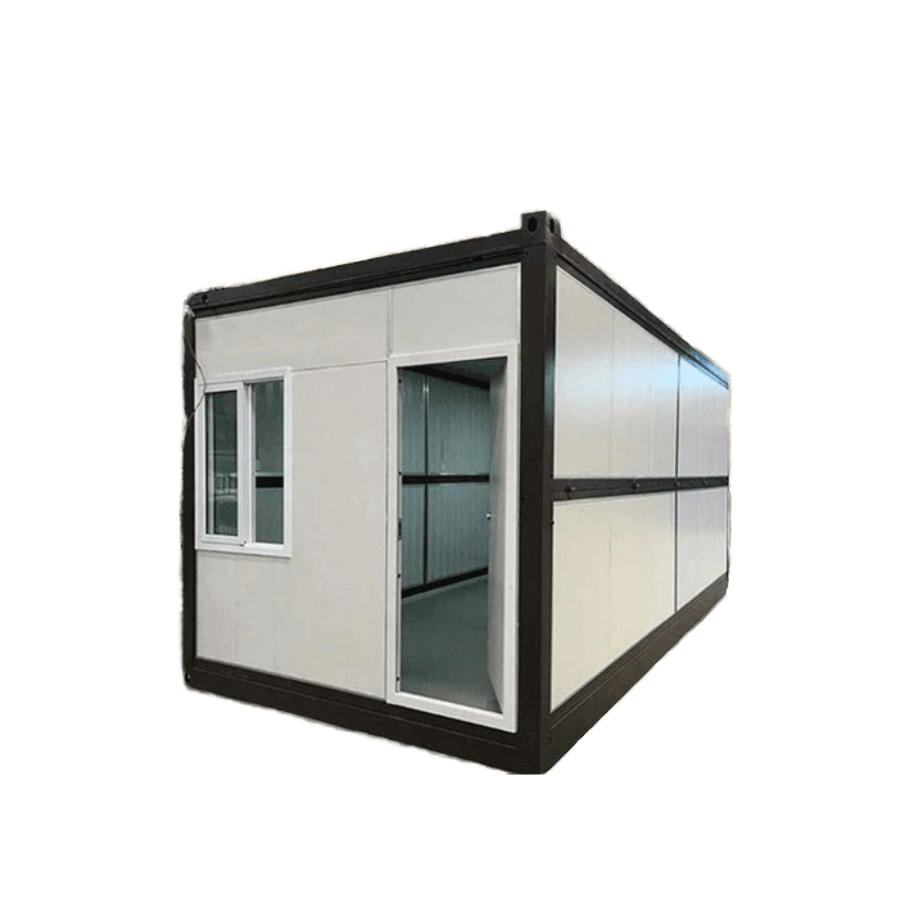
Space Design
Each unit consists of two households, with each household planned as a two-bedroom, one-living-room layout, but the overall space is narrow. The single bed measures 195 cm in length and 90 cm in width, making it difficult for athletes taller than 195 cm (such as basketball and volleyball players) to lie down without their ankles hanging off the edge, severely limiting muscle recovery. In double-bed rooms, the space between the two beds is only wide enough for one person to stand, requiring sideways movement to pass, and there is insufficient space to even squat and open a suitcase. In terms of ceiling height, a standard container has an internal height of about 2.4 meters, and after completing the ceiling and flooring, the net height may only be around 2.1 meters. Volleyball players who are 1.9 meters tall can touch the ceiling with their palms when standing, creating a strong sense of spatial oppression.
Facility Configuration
Each household is equipped with a toilet, bathroom, refrigerator, sink, washing machine, and one air conditioner, but the shared use of facilities causes inconvenience. For example, three athletes need to share one toilet and one shower room, leading to queues for morning洗漱 (洗漱 can be translated as 'ablutions' or more naturally as 'washing up' in this context, but kept as pinyin for clarity of the original term's inclusion; in full English it would be described as 'morning grooming routines'), which affects their pre-game routines. The air conditioner is only installed in the living room, and it is uncertain whether the bedrooms can receive cool air at night. The organizing committee even suggests that athletes open the door to pre-cool the room before sleeping and then close it, indirectly reflecting the insufficient power of the air conditioner. Additionally, the sound insulation is extremely poor, and the metal wall panels cannot block noise, requiring athletes to wear earplugs to sleep.
Living Experience
The container houses are highly airtight, and after being exposed to direct sunlight during the day, the interior becomes as stuffy as a 'tin can'. In September, the daytime temperature in Nagoya still exceeds 30°C, with high humidity, making it difficult to regulate the temperature with just one air conditioner. During rainstorms, the houses reveal serious flaws: On September 8, 2026, Nagoya experienced extreme precipitation, with an hourly rainfall of 104.5 mm, leading to water accumulation and backflow in the container area. More than 400 athletes were urgently evacuated, highlighting issues with water leakage in the houses and even the risk of being washed away by floodwaters.



