
Ningxia Mobile Ecological Toilet Installation
The installation of mobile ecological toilets in Ningxia must adhere to modular design, environmental adaptability, and standardized processes. The specific key points are as follows:
1. Modular Construction and Rapid Deployment
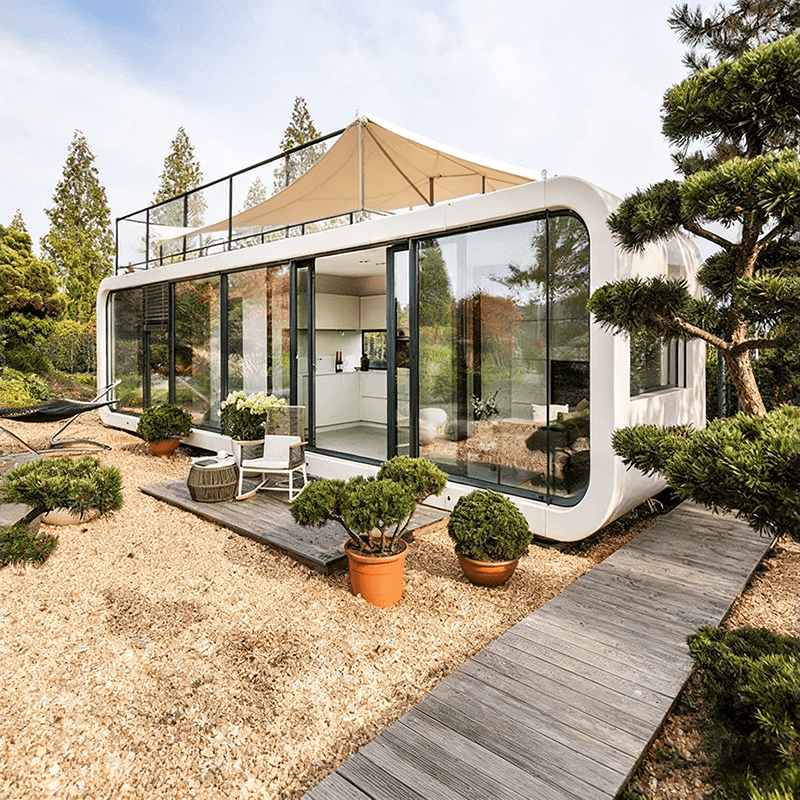
Mobile ecological toilets employ a modular design, with the main frame primarily composed of lightweight alloys or light steel structures, enabling rapid assembly and disassembly through standard interfaces. For example, a single toilet unit is designed as a 3m×6m standard module, encompassing a men's restroom (including squat toilets and urinals), a women's restroom (with an added baby care station), a dedicated restroom for the disabled, and an independent handwashing area (equipped with sensor-activated handwashing basins and storage cabinets). The entire structure supports integral lifting and relocation, with on-site installation requiring only the connection of water and electricity interfaces, enabling readiness for use within 2 hours and significantly shortening the construction period.
2. Installation Process and Key Preparations
- Technical Preparations: Prior to construction, a team must be organized to review the drawings, focusing on resolving technical issues such as low-temperature welding processes (e.g., using electric tracing to preheat pipelines when the ambient temperature in Ningxia drops below 0°C in winter) and sealed construction in windy and sandy conditions (by setting up temporary wind barriers).
- On-site Preparations: The site must be leveled and compacted to a bearing capacity of ≥150kPa, with a concrete pad poured and anchor bolts embedded, with deviations controlled within ±10mm to ensure structural stability.
3. Environmental Adaptability Design
- Temperature Control System: In summer, ventilation equipment is driven by photovoltaic panels to reduce temperatures, while in winter, the heat generated from the biological degradation process is utilized to maintain internal temperatures, reducing reliance on external energy sources.
- Wind and Sand Resistance and Insulation: The walls adopt double-layer color steel plates filled with rock wool insulation, with metal carved panels added externally; the roof is equipped with gutters and windbreaks, and the seismic design is set to withstand an intensity of 8 degrees, adapting to the extreme low temperatures (-25°C) and windy and sandy conditions in Ningxia.
4. Ecological Treatment and Resource Recycling
- Solid Waste: It enters a sealed fermentation chamber, where microbial agents accelerate decomposition, reducing odors and pollution.
- Liquid Treatment: Urine is treated using evaporation and condensation technology, while handwashing water is filtered through multiple layers and recycled for flushing, reducing water consumption by approximately 70%.
5. Transportation and Positioning
Relying on flatbed trailers equipped with hydraulic lifting systems for integral transportation, on-site positioning is achieved quickly through hydraulic devices, with installation completed by simply connecting water and electricity interfaces, making it suitable for flexible deployment in remote or temporary locations.
The above installation key points integrate design standards, construction specifications, and environmental adaptability requirements to ensure the efficient and stable operation of mobile ecological toilets in the Ningxia region.



