
Quay lại blog
Bài viết
How to Handle New-Type Mobile Toilets
Quản trị 06 tháng 10, 2026
There are various ways to handle feces in new-type mobile toilets, including water-flush and non-water-flush suction types, circulating water-flush types, dry-packing types, foam-sealing types, microbial types, chemical treatments, anaerobic digestion, compression and storage, multi-functional drainage outlets, and mechanical treatments.
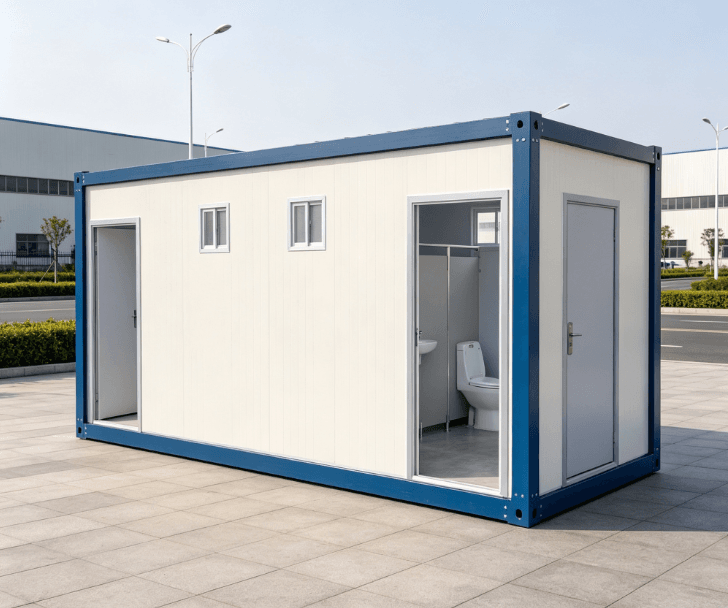
- Water-flush and Non-water-flush Suction Types: Water-flush mobile toilets use a water-flushing device from a top water tank to flush waste, with a bottom sewage tank collecting the sewage. Non-water-flush types directly receive waste in a bottom sewage tank. Both have limited sewage tank capacities and require regular suction for disposal.
- Circulating Water-flush Types: These are equipped with intermittent aerobic and anaerobic treatment devices, adding biological strains and utilizing biofilm technology to accelerate the fermentation and decomposition of fecal sewage. The treated water is then filtered and recirculated for toilet flushing, effectively conserving water resources and reducing suction frequency.
- Dry-packing Types: These have no water-flushing devices. Waste is received in biodegradable plastic bags, which are automatically replaced after each use. The used bags are then collected and transported to a treatment plant, eliminating the need for water flushing and facilitating convenient and water-saving waste collection.
- Foam-sealing Types: These use foam generated from a foaming liquid mixture to cover the inside of the toilet bowl, replacing water flushing. The foam is delivered by compressed air, and only hand-washing water needs to be collected to meet foaming requirements, greatly conserving water resources.
- Microbial Types: After solid-liquid separation, feces enter a fermentation tank where they are mixed with initial ingredients, sawdust, and biological strains for decomposition. Urine is treated into reclaimed water for flushing urinals, creating a circular utilization system.
- Chemical Treatments: Chemical agents are used to decompose and eliminate waste, controlling odors and promoting decomposition. The treated waste is then further processed through specialized equipment or discharged into the sewage system.
- Anaerobic Digestion: Anaerobic digestion systems are used to decompose waste, producing biogas and fertilizer, reducing volume, and delaying treatment needs. This is suitable for scenarios where prolonged absence from treatment facilities is expected.
- Compression and Storage: Compression is used to reduce waste volume and delay treatment needs, suitable for camping or remote construction sites where prolonged absence from treatment facilities is expected.
- Multi-functional Drainage Outlets: These are equipped with manual cleaning functions, such as fecal storage tanks or pre-buried septic tanks, requiring regular cleaning to maintain hygiene.
- Mechanical Treatments: Specialized equipment is used for solid-liquid separation, decomposition, and disinfection, reducing environmental impact and ensuring hygiene and safety.



