
New Type Container Modular Housing
The new type container modular housing is a modular architectural form that uses containers as basic units and is constructed through combination and assembly. It features a clear origin, durable materials, wide applications, and superior performance.
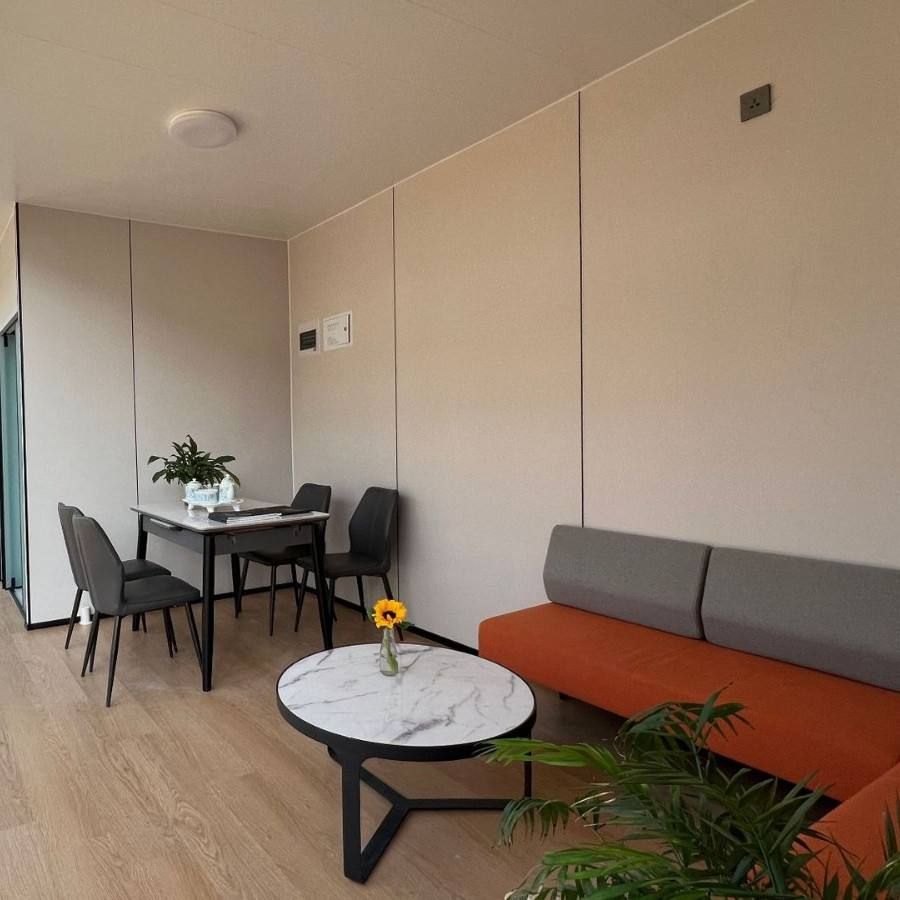
Origin and Development: The concept of new type container modular housing was first proposed by Phillip C. Clark in a modification patent in 1987. In 2006, American architect Peter DeMaria designed the first double-story container house to receive national certification, marking official recognition of its technical feasibility. After the 2008 Wenchuan earthquake, CIMC quickly built a school that could accommodate a thousand people using containers, demonstrating its efficient application in emergency scenarios. In 2010, China initiated the compilation of the 'Technical Specification for Container Modular Combined Housing' to promote standardized development in the industry; in 2012, CIMC built the world's first recyclable container hotel for the UK, further expanding its application boundaries.
Materials and Lifespan: The core materials are corrosion-resistant steel plates and eco-friendly panels, combined with shipbuilding anti-corrosion processes to ensure long-term stability even in harsh environments. Its service life can exceed 20 years, and it supports customized designs in standard sizes ranging from 20 to 60 feet to meet spatial needs in different scenarios.
Application Areas: It is widely used in residential, office, and emergency settings. In residential areas, its modular design allows for rapid construction of temporary or permanent housing; in office scenarios, it can be flexibly combined into open or independent office spaces; in emergency settings, such as post-disaster reconstruction or temporary medical stations, its rapid deployment capability is particularly prominent.
Product Evaluation:
- Portability: The folded container mobile house has a volume that is only 1/5 of its expanded state when folded. A single shipment can carry 10 folded modules, increasing transportation efficiency by approximately 233% and reducing long-distance transportation costs by about 22%; storage space occupancy is only 20% of that of same-sized expanded products, saving approximately 48,000 yuan in storage costs annually for storing 100 modules.
- Structural Stability: The all-steel frame container mobile house has passed third-party testing to meet a 12-grade wind resistance standard and an earthquake resistance intensity of 8 degrees, with a frame deformation rate of only 0.2%, complying with the GB50009-2012 Building Structural Load Specification.
- Installation Efficiency: The quick-assembly container product requires only 2 hours for a single unit installation, and a camp of 100 units can be put into use within 7 days from arrival on site; in commercial pop-up shop scenarios, customized interiors are pre-installed and then assembled on-site by hoisting, allowing for the completion of a 20㎡ shop setup in 2 days.
- Transportation, Storage, and Reusability: Folded container mobile houses can be loaded with 20 units per standard freight truck when folded, reducing transportation costs by 40% compared to unfolded products; they can be stacked up to 8 layers during storage, increasing space utilization by 60%.



