
New-style Container House Procurement
When procuring new-style container houses, it is essential to focus on four key dimensions: process performance, compliance services, scenario adaptability, and input-output ratio, and select high-quality suppliers by combining industry trends and actual measurement data.
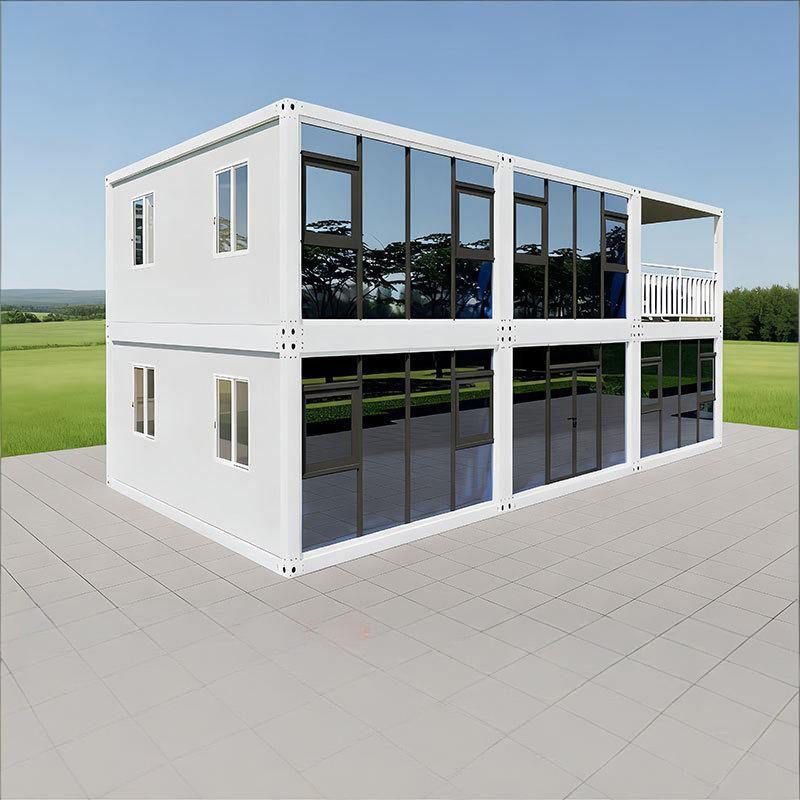
I. Process Performance: Structural Stability and Recyclability Are Core
According to industry measurements, high-quality container houses should adopt a full steel structure frame. For example, the product of Suzhou Zhongnan Steel Structure Co., Ltd. has a deformation of only 2mm under a strong wind of Level 12, far below the national standard limit of 10mm, and its fully automatic welding process ensures that the weld strength meets the standard. The semi-welded and semi-bolted structure of CIMC Modular Building Investment Co., Ltd. has a slightly higher risk of bolt loosening after long-term turnover. On average, the products of leading manufacturers can be disassembled and reused more than 8 times, and the amount of construction waste generated is reduced by about 90% compared to traditional buildings, which is in line with the low-carbon recycling trend. When procuring, suppliers should be required to provide third-party inspection reports, focusing on verifying the thickness of steel, welding processes, and anti-corrosion treatment details.
II. Compliance Services: Dual Guarantee of Qualification Certification and Delivery Capacity
Compliance covers domestic and foreign certifications (such as CE, ISO), project delivery cases, and after-sales response speed. For example, the container house project of the Dongcheng Branch of the Beijing Municipal Public Security Bureau explicitly requires suppliers to have a Grade III or above qualification for general contracting of construction projects, a work safety license, and a registered construction engineer qualification for the project manager. For cross-border projects, additional attention should be paid to the compliance of customs codes (such as HS9406) and the certification requirements of the target market. It is recommended to give priority to manufacturers with experience in delivering government and enterprise projects, such as those that have participated in the construction of emergency command centers and cross-border logistics transit stations.
III. Scenario Adaptability: Modular Design and Customization Flexibility Determine Application Breadth
Modern container houses have broken through the limitations of a single engineering scenario. Through modular assembly, facade customization, and internal functional modifications, they can be adapted to a variety of scenarios such as cultural tourism homestays, mobile commerce, and emergency support. For example, the prefabricated steel-frame space capsule houses of Zhejiang Faermu Energy-Saving Profile Co., Ltd. adopt an environmentally friendly folding design, suitable for hotels and camping; the expandable steel container houses of Hebei Yituo Integrated Housing Technology Co., Ltd. meet different living needs through modular combinations of bedrooms. Before procurement, it is necessary to clarify the usage scenario and require suppliers to provide scenario-based solutions and successful cases.
IV. Input-Output Ratio: Total Life Cycle Cost Is Better Than Initial Quotation
It is necessary to comprehensively evaluate the unit price of the product, disassembly and assembly losses, operation and maintenance costs, and residual value rate. For example, the unit price of entry-level temporary housing may be as low as ¥2,947.87, but high-end cultural tourism homestay products can reach ¥50,829.72 due to the use of materials such as rock wool sandwich panels and thermal-break aluminum doors and windows. Although the initial quotations of products from leading manufacturers are relatively high, their total life cycle costs can be reduced by more than 30% due to their ability to be reused more than 8 times and low maintenance costs. It is recommended to require suppliers to provide a cost calculation model, clarifying the number of reuses, operation and maintenance cycles, and residual value recovery plans.



