
New Material Mobile Toilet
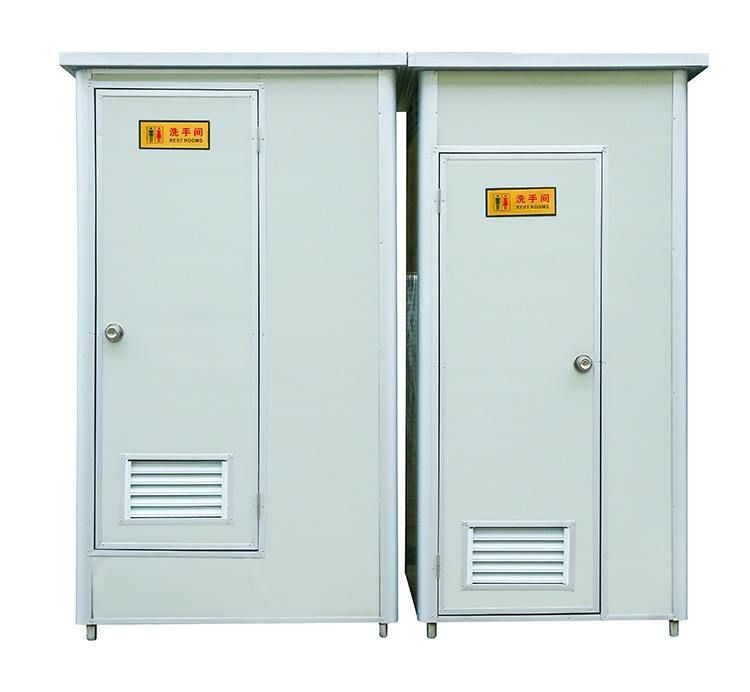
The new material mobile toilet is a public sanitation facility designed based on new materials and water-saving technology, featuring water conservation, durability, hygiene, and a wide range of application scenarios.
I. Water-saving Technology
The new material mobile toilet achieves efficient water conservation by automatically collecting hand-washing water and adding special agents. Its flushing effect is remarkable, requiring only 0.46 liters of water per person, far less than the water consumption of traditional toilets. This technology significantly reduces the water demand of public toilets by optimizing water resource recycling, making it particularly suitable for scenarios with water scarcity or the need for water conservation.
II. Materials and Structure
The toilet frame is welded using national standard steel, ensuring structural stability. The surface is covered with anti-corrosion and fire-resistant materials such as color-coated steel plates or carved panels, which not only extend the service life (up to more than 20 years) but also enhance safety. This design enables it to adapt to complex outdoor environments and reduces maintenance costs.
III. Internal Configuration and Hygiene Standards
The interior is equipped with an independent urinal and fecal pit partitioned treatment system: the urine channel utilizes gravity self-flow, while the fecal channel is cleaned by a piston-type scraper mechanical device, effectively avoiding cross-contamination. In addition, the provision of anti-slip floors, automatic flushing toilet bowls, and ventilation and lighting systems further enhances user comfort and hygiene conditions. Its design complies with the GBLT18091-92 standard, ensuring functional and safety compliance.
IV. Technological Routes and Product Forms
Since 2012, mobile toilet technology has gradually evolved, forming multiple technological routes such as waterless flushing, foam sealing, and water flushing, and covering细分品类 (sub-categories) such as antique-style, temporary construction site, and marine-use toilets. Product forms have expanded to trailer-mounted, box-type substation cabinet-style, stainless steel sentry box-style, etc., supporting vehicle-mounted and traditional public toilet renovations, flexibly meeting the needs of different scenarios.
V. Application Scenarios
The new material mobile toilet has been widely used in public places such as scenic spots, service areas, and rural areas. Its modular design and rapid deployment capabilities make it an ideal choice for temporary events, remote areas, or densely populated regions, effectively addressing the issues of long construction periods and high costs associated with traditional public toilets.



