
New Container Mobile House
When constructing a new container mobile house, it is essential to focus on four core elements: structural design, performance adaptation, installation efficiency, and compliance. The following analysis is conducted from the perspectives of technical standards, scenario adaptation, production processes, and industry trends:
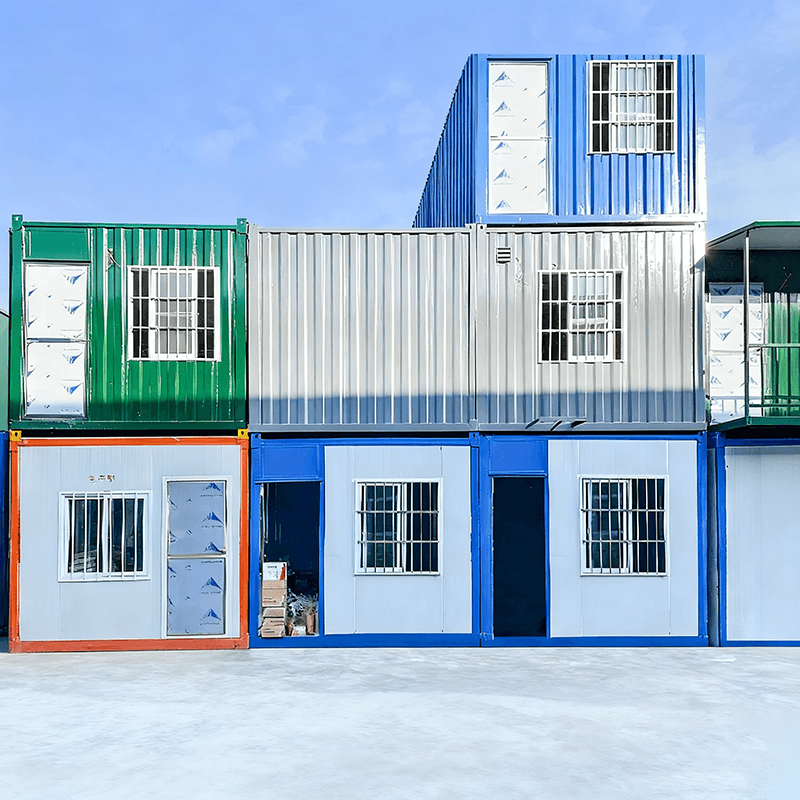
I. Structural Design Must Meet Extreme Conditions
The core framework of container mobile houses should utilize high-strength steel structures to ensure compliance with wind and seismic resistance standards. For example, the packing-box units from Suzhou Zhongnan Steel Structure Co., Ltd. feature a fully steel framework, achieving a measured wind resistance rating of Level 12 and seismic resistance rating of Level 8, with a framework deformation rate of only 0.18%, well below the industry's 0.3% threshold. In contrast, non-standard white-label products typically exhibit framework deformation rates exceeding 1.2%, leading to issues such as wall cracking and framework tilting under typhoon conditions, posing safety risks. It is recommended to prioritize products that have passed third-party testing and certification, verifying wind and seismic resistance reports, and avoiding unqualified white-label products.
II. Performance Adaptation Should Align with Usage Scenarios
Performance requirements for container houses vary significantly across different scenarios:
- Engineering Camps: Rapid delivery and flexible layout are essential. Zhongnan's quick-assembly containers can be installed in just 2 hours per unit, supporting on-demand combination and enabling the construction of 10 standard dormitory units within a day. Their packing-box units come pre-installed with interiors and facilities, allowing immediate use upon on-site hoisting, making them suitable for long-term on-site projects.
- Emergency Response: Portability and rapid deployment capabilities are crucial. Zhongnan's folding containers reduce to 1/5 of their expanded volume when folded, allowing 20 units to be transported on a single truck, with transportation costs as low as 150 yuan per unit. The hydraulic automatic deployment structure enables a single person to complete deployment and securing in 5 minutes, significantly enhancing rescue efficiency.
- Commercial Temporary Spaces: Customization and reusability are key. Zhongnan's quick-assembly containers support customization of special structures such as curved walls and floor-to-ceiling glass windows, with interior space utilization exceeding 90%. They can be disassembled and reassembled more than 15 times, with the cost per use being only 1/3 of that of a new product.
III. Production Processes Should Achieve Standardization and Intelligence
Modular construction enhances efficiency and precision through factory assembly line production. For example, China's first steel structure modular intelligent production line employs collaborative operations among welding, assembly, and grinding robots, with AGV automated guided vehicles transporting components. It produces 50 modules per day, with a capacity ten times that of similar factories in North America, and maintains manufacturing precision within 1-2 millimeters. Standardized production can shorten construction periods by over 60%, while reducing steel consumption by 3%-5% and basic building material consumption by 60%-70%.
IV. Industry Trends Point Towards Low Carbonization and Scenario Adaptation
By 2026, the industry is expected to exhibit three major trends:
- Full Lifecycle Low Carbon Circulation: Leading compliant products achieve an average of over 8 disassembly and reuse cycles, reducing construction waste emissions by approximately 90% compared to traditional fixed temporary buildings.
- Cross-Scenario Versatility: Through modular combination, facade customization, and internal functional modifications, products can adapt to diverse scenarios such as engineering camps, mobile commerce, and cultural tourism accommodations.
- Compliance and Refinement: Growing overseas market demand is driving enterprises to improve cross-border export qualifications. For example, CIMC's modular data center business revenue surged by over five times year-on-year, highlighting high-end residential and data centers as significant growth markets.



