
Quay lại blog
Bài viết
Multiple Container Creative Houses
Quản trị 14 tháng 9, 2026
The design and application of multiple container creative houses showcase the unique advantages of container architecture in terms of flexibility, cost-effectiveness, and sustainability.
I. Design Features
- Modular Combination: As standardized building units, containers can be flexibly combined through stacking and splicing to form diverse architectural forms. For example, double-story or multi-story container buildings can increase usable space to meet different site requirements; staggered stacking designs can create rich spatial layers and enhance living comfort.
- Personalized Appearance: Container buildings can utilize design elements such as painting, irregular cutting, and ambient lighting to create differentiated scenes like trendy internet-famous styles, literary retro styles, and minimalist luxury styles. For example, the Blue Container Hotel creates a leisurely atmosphere with bold color schemes and wooden decorations; the Joshua Tree Apartment showcases a sculptural feel with bright white paint and a starburst layout.
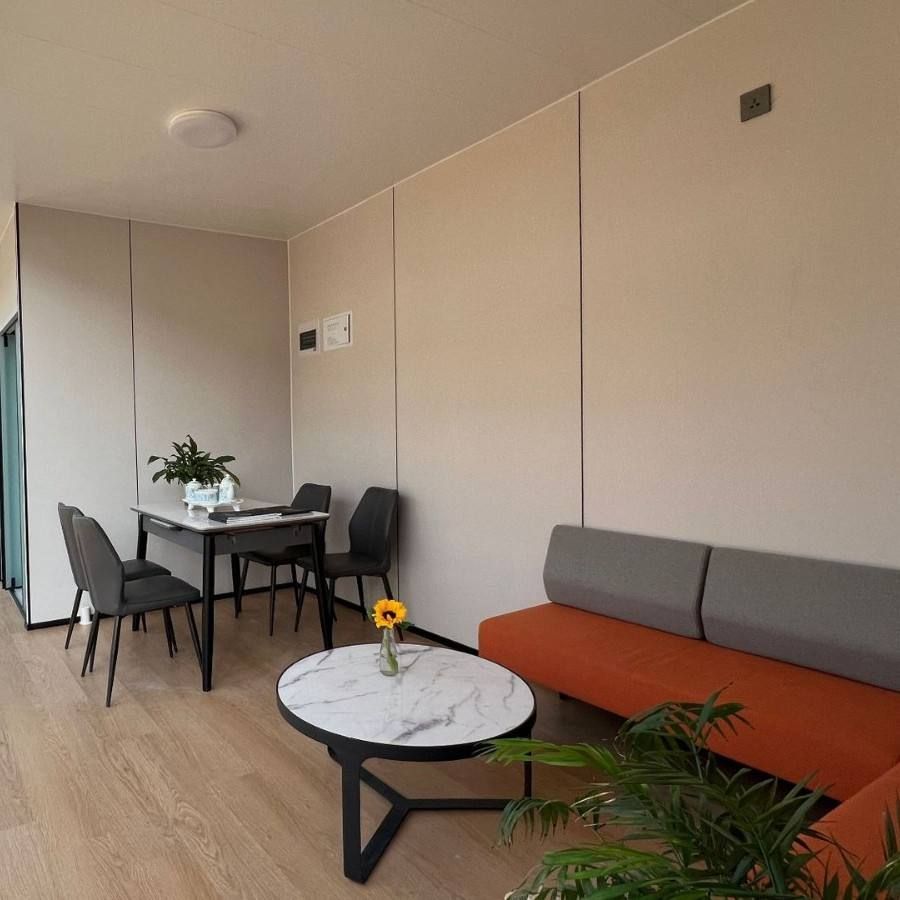
- Diverse Functions: The interior space of containers can be planned as needed into various formats such as coffee shops, milk tea shops, cultural and creative stores, retail outlets, leisure stations, and offices, meeting the composite needs of commerce, office work, and living. For example, the Starbucks Container Coffee Shop achieves brand display and functional integration in a compact space; the Container Commercial Street quickly forms a characteristic business district through modular combinations.
II. Application Advantages
- Cost-Effective: Container buildings adopt factory prefabrication and on-site modular assembly methods, featuring short construction periods and high implementation efficiency. They also do not require large-scale civil engineering modifications, significantly reducing investment costs. For example, a light luxury villa built with three containers requires only 45㎡ of space but can provide a fully functional living experience.
- Environmentally Sustainable: Container buildings often use recycled containers, reducing resource waste. Meanwhile, measures such as filling with thermal insulation materials and incorporating solar photovoltaic systems enhance energy efficiency and reduce carbon emissions. For example, the South African Eco-House integrates containers with natural landscapes to create a low-carbon and environmentally friendly living environment.
- Highly Adaptable: Container buildings can be independently constructed as single-story structures or combined into large-scale commercial streets through multi-story combinations, suitable for various scenarios such as cultural and tourism towns, creative parks, night market business districts, and camping sites. For example, the Container Commercial Street can flexibly adjust its layout and be relocated for reuse according to the operational situation of the business district, meeting the needs of business format updates.



