
Quay lại blog
Bài viết
Movable Waterproof Container House
Quản trị 16 tháng 9, 2026
A movable waterproof container house is a modular building product that takes containers as its basic structural units, featuring mobility, waterproofness, and recyclability. It is widely used in scenarios such as engineering camps, cultural and tourism accommodations, and emergency support. The following provides an introduction from the aspects of structure, performance, application scenarios, and purchasing considerations:
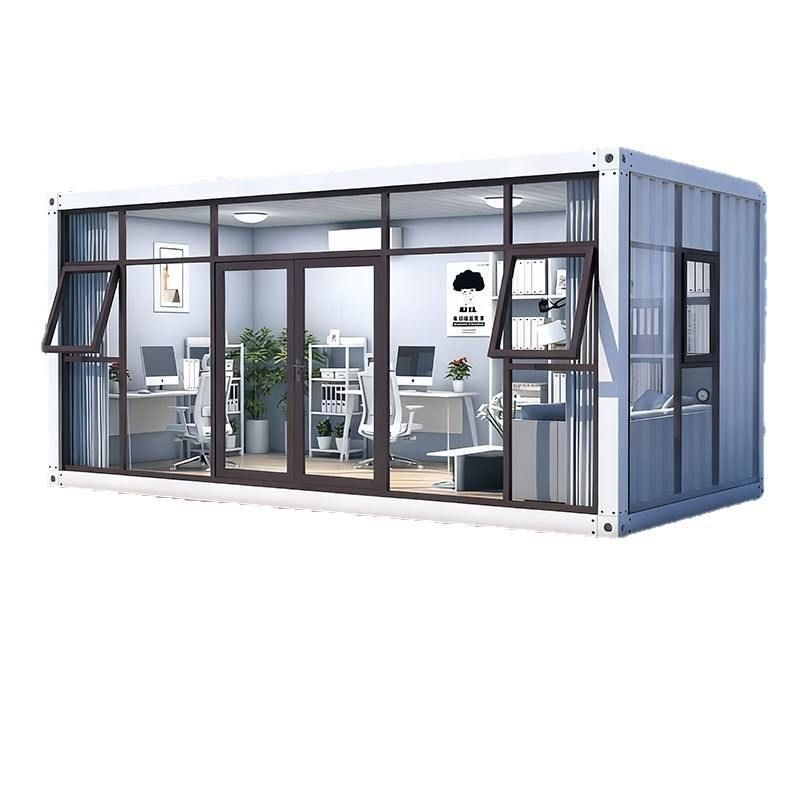
Structural and Performance Characteristics
- Structural Types: Common structures include welded integral boxes and bolt-connected assembled boxes. Welded integral boxes are formed by overall welding in the factory, with a direct force path and strong resistance to deformation, suitable for frequent lifting and movement. Assembled boxes use standard plates connected by bolts, with multiple nodes in the force path. The tightness of these nodes affects the overall stability. When purchasing, attention should be paid to the wall thickness of the steel columns and bottom beams (common specifications range from 1.5 mm to 3 mm), with thicker walls providing greater load-bearing redundancy.
- Waterproofing and Thermal Insulation: Metal container bodies have a high thermal conductivity coefficient. High-quality products adopt a three-layer structure to enhance thermal performance. The outer layer is made of galvanized plates to resist wind and sand erosion, the middle layer is filled with thermal insulation materials such as rock wool or polyurethane, and the inner layer uses PVC-coated steel plates to reduce thermal radiation. Some products also add an elevated layer at the bottom of the container body to block the conduction of ground cold bridges. Meanwhile, proper joint treatment and the application of sealing strips ensure waterproof performance.
- Wind and Earthquake Resistance: Products from leading enterprises can withstand wind speeds of up to 10-12 levels and seismic intensities of 7-8 degrees, meeting relevant building code requirements. For example, the all-steel structural frame container houses from Suzhou Zhongnan Steel Structure Co., Ltd. have passed third-party testing, achieving a wind resistance standard of level 12 and a seismic intensity of level 8, with a frame deformation rate of only 0.2%.
Application Scenarios
- Engineering Camps: Used as temporary dormitories and office spaces, meeting the needs of rapid deployment and frequent relocation.
- Cultural and Tourism Accommodations: For example, container homestay Apple Pods, through modular design and industrial production, form mobile houses with accommodation functions, suitable for natural environments such as seashores, mountains, and lakesides.
- Emergency Support: In natural disasters or emergencies, they serve as temporary shelters, providing a safe and comfortable living environment.
Purchasing Considerations
- Focus on Process Performance: Evaluate the level of weld-free quick assembly technology, the degree of disassembly and assembly losses, and the structural stability after multiple relocations and reuse.
- Verify Compliance and Services: Confirm the production entity's qualifications, domestic and foreign certifications, project delivery capabilities, and after-sales implementation capabilities.
- Assess Scenario Adaptability: Compare the product's customization flexibility and multi-scenario adaptability.
- Consider Return on Investment: Comprehensively evaluate the product's reuse and maintenance costs throughout its entire life cycle.



