
Movable Toilet Structure
The structures of movable toilets mainly include three types: integrated molding structure, water storage tank and pallet fabrication structure, and plastic bucket creative modification structure.
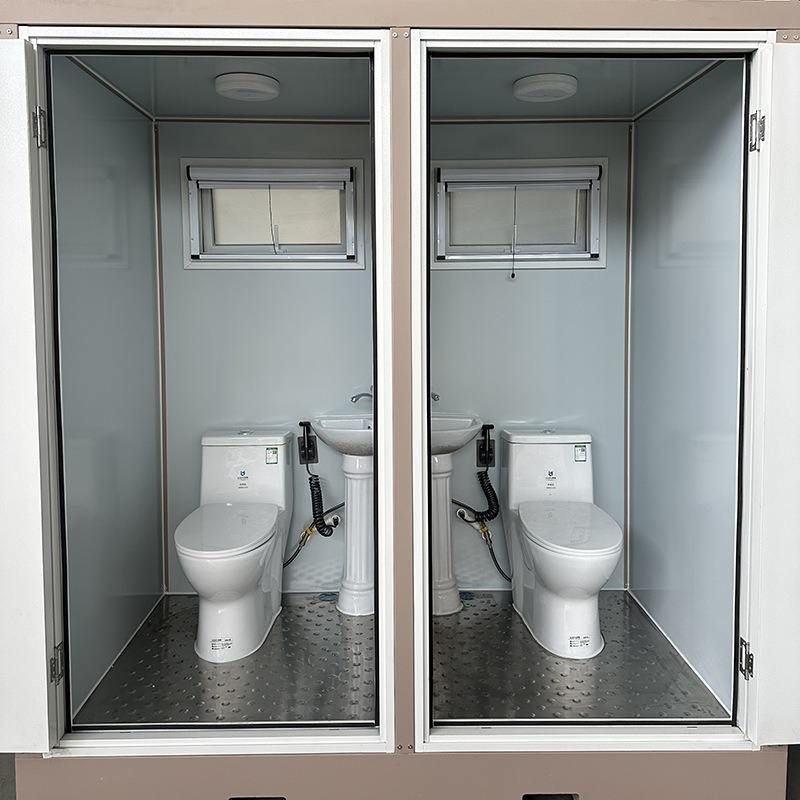
Integrated Molding Structure: This structure features an overall integrated-molded shell paired with a reinforced chassis to ensure the toilet's stability and durability. It is equipped with a vacuum squat toilet that utilizes pneumatic flushing technology, requiring only 1 liter of water per flush, saving 80% more water compared to ordinary toilets. This structure is not only water-saving and environmentally friendly but also compact in design, suitable for use in spaces with limited room. Its integrated molding characteristic also makes the toilet more aesthetically pleasing and easier to clean and maintain.
Water Storage Tank and Pallet Fabrication Structure: Based on a pallet, this structure has universal wheels fixed at each of the four bottom corners for easy mobility. A water storage tank is placed on the pallet to store flushing water. By stacking two top-open water storage tanks and securing their outer frames with self-tapping screws, the main structure of the toilet is formed. After cutting out an entrance, a drainage hole is made on the internal floor, and facilities such as a toilet, faucet, washbasin, and showerhead are installed to meet basic usage needs. A door is made from wood and fitted with a door handle, ensuring privacy and ease of opening and closing. This structure is flexible and adaptable, allowing for adjustments in facility configuration based on actual needs.
Plastic Bucket Creative Modification Structure: This structure creatively modifies plastic buckets. First, universal wheels are installed at the corners of a wooden board for mobility. Wooden strips are fixed and cut to form a door frame structure, into which aluminum sheets are embedded as partitions to enhance the toilet's stability and durability. The cut-off neck part of the bucket is placed on top, and the inner walls are painted with white cement for beautification, improving the overall aesthetic appeal of the toilet. A door panel is assembled and fixed to the door frame with butt hinges to ensure smooth door operation. Circular holes are drilled at the bottom of the bucket, and elbows and floor drains are installed for drainage. By drilling holes in the plastic bucket to connect threaded reducers, pipes are assembled and spliced, and facilities such as a toilet tank, valve switch, and showerhead are installed. The outdoor part is connected to the sewer pipe and combined with a septic tank for effective sewage treatment. A connecting elbow water pipe and bracket are installed on the door for convenience. This structure makes full use of waste plastic buckets, achieving resource reuse.



