
Installation of Movable Glass Toilets
The installation of movable glass toilets should be carried out scientifically in steps, taking into account product characteristics, regional environments, and standardized procedures. The specific key points are as follows:
I. Product Characteristics and Structural Adaptation
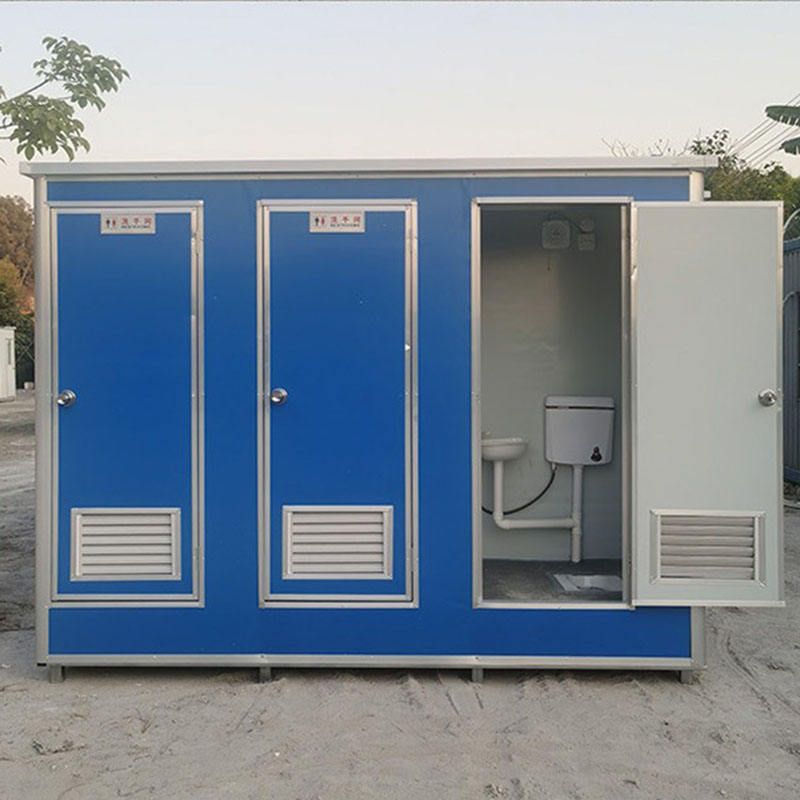
The main body of movable glass toilets is made of fiberglass-reinforced composite materials and produced through SMC molding processes. It features lightweight yet high strength, corrosion resistance, and easy cleaning. Internally, it integrates a sewage collection tank, a flushing system (foot-operated or sensor-based), mechanical ventilation, and lighting systems. All pipelines are pre-embedded in the factory, and only the main water inlet and sewage outlet need to be connected on-site for operation. Before installation, it is necessary to confirm whether the product has passed ISO standard certification and check the 48-hour full-water leak test and circuit full inspection reports from the factory to ensure a failure rate of less than one in a thousand.
II. Regional Environmental Adaptation Adjustments
- Climate Adaptation:
- In Baoding, where winters are cold and summers are hot, the toilet walls need to be filled with more than 50mm of polyurethane insulation layers and equipped with electric tracing bands to prevent pipeline freezing. The exterior walls should be coated with anti-UV coatings to extend service life.
- In Beijing, insulation performance needs to be enhanced by using high-density polyurethane insulation layers. The chassis is designed as a double-layer fiberglass structure with embedded steel frames to withstand the pressure from handling and sewage cleaning vehicles.
- Scenario Adaptation:
- Temporary sites such as high-speed rail stations and scenic spots need to reserve space for rapid deployment and ensure that the sewage outlets are compatible with municipal sewage networks (in Beijing, factory cooperation is required for compliance modifications).
- Construction sites and other scenarios require additional collision-resistant designs, such as installing steel corner guards or buffer devices.
III. Installation Process and Technical Support
- Factory Prefabrication Stage:
- Components are produced through molding processes, ensuring consistent dimensional accuracy and surface quality, reducing on-site errors.
- Customization options are available for appearance colors, internal layouts, or the addition of accessible toilet stalls and baby changing stations (in Beijing, support is provided for antique architectural styles or the installation of photovoltaic panels).
- On-site Installation Stage:
- After arrival at the site, prioritize connecting water and electricity and testing the flushing, ventilation, and lighting systems.
- Some factories in Baoding offer free delivery and installation guidance, while in Beijing, professional teams are required to complete the connection of sewage outlets.
- After-sales Support:
- Choose factories that provide 24-hour response maintenance and spare parts inventory management to ensure long-term stable operation.
IV. Quality Control and Acceptance Standards
After installation, functional tests should be conducted, including pressure tests for the flushing system, air volume tests for the ventilation system, and insulation tests for the electrical circuits. Focus on checking the sealing of sewage outlets and the working status of electric tracing bands to avoid leakage or freeze-cracking risks. It is recommended to prioritize factories with local service experience and complete qualifications to adapt to regional climate differences and reduce long-term maintenance costs.



