
Monolithic Concrete Prefabricated House
Monolithic concrete prefabricated houses are a form of pre-cast housing, produced industrially as building components and assembled on-site, offering speed, cost-efficiency, and environmental benefits.
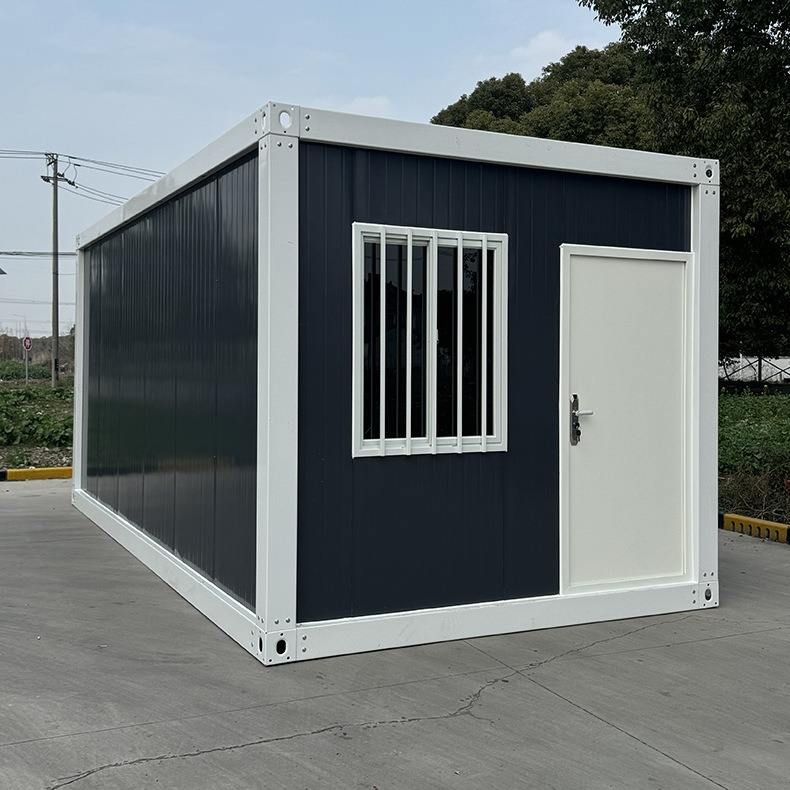
Construction Method and Speed Advantages
The core of monolithic concrete prefabricated houses lies in factory-prefabricated components + on-site assembly. The main structure of the house (such as beams, slabs, walls, and columns) is cast in concrete using molds in a factory, with steel reinforcement mesh embedded and connection fittings pre-installed. After vibration compaction and heat curing, standardized components are formed. During on-site construction, only foundation work (such as laying moisture-proof membranes and concrete bases) is required, and components are quickly assembled using bolts or welding, similar to “building with blocks”. For example, a two-story reinforced concrete shell house can be completed in about two weeks, and a 100-square-meter house can be assembled in one day, increasing construction speed by 90% compared to traditional methods, enabling “installation today, occupancy tomorrow”.
Cost and Environmental Benefits
This technology significantly reduces construction costs and environmental pollution. For the same area, prefabricated houses save about 60,000 yuan compared to brick-and-mortar structures, with construction waste reduced by 90%. Factory production minimizes on-site wet operations (such as concrete mixing and bricklaying), with regions like Fujian Province reducing construction waste by over 70% through policy support. Additionally, standardized component production improves material utilization, further reducing costs.
Applicable Scenarios and Technical Requirements
Prefabricated houses are suitable for scenarios requiring speed, such as temporary construction site housing and rural self-built houses. For long-term occupancy, additional sound insulation cotton, insulation boards, and proper roof joint waterproofing are needed. In terms of technical details, component production requires strict control of concrete mix ratios and curing conditions (such as covering with plastic sheds for heat curing to promote hydration reactions); on-site construction requires pre-installation of guide steel plates to position prefabricated piles, ensuring component assembly precision.
Market Status and Limitations
China's prefabricated housing industry has scaled up, with Guangzhou Customs reporting 1.4 billion yuan in exports of modular houses in the first four months of 2026, a 38.1% year-on-year increase, with brands like Yingchuang and Zhuoli offering diverse products. However, limitations must be considered: monotonous appearance, with less design flexibility than traditional buildings; strong transportation dependency, as box-assembly types require large cranes, limiting applications in remote areas.
Monolithic concrete prefabricated houses balance efficiency, cost, and environmental needs through industrialization and modular design, but their suitability must be weighed based on the scenario.



