
Modular Container Movable House
Modular container movable houses are modular architectural forms constructed by combining and assembling containers as basic units. They have the characteristics of rapid construction, low cost, and mobility, and are widely used in residential, office, and emergency settings.
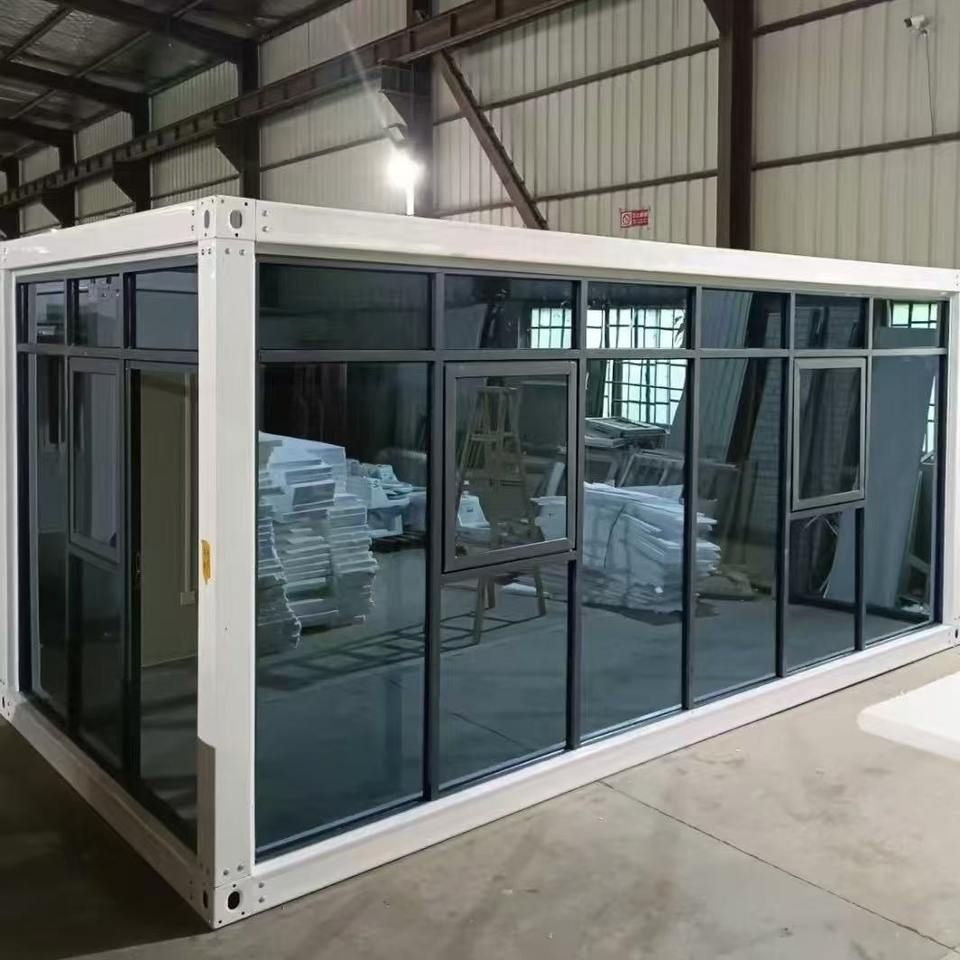
Material Characteristics
The core materials are corrosion-resistant steel plates and eco-friendly panels, combined with ship corrosion prevention techniques, providing a service life of over 20 years. They support customized designs in standard sizes ranging from 20 to 60 feet. For example, Yiqi Container Movable House Company uses high-strength weathering steel (such as Q355B grade) as the main frame of the container body, with a yield strength approximately 30% higher than that of ordinary carbon steel. When the length-to-width ratio of a single container body is close to 2:1, a self-balancing system is formed through rigid connections between corner fittings and side beams, reducing material usage by about 15% while balancing structural strength and economy.
Structural Performance Optimization
Different companies exhibit differentiated innovations in design. Yiqi Company uses longitudinal corrugated plates on the top of the container body to disperse stress and avoid local buckling. The enclosure structure adopts a three-layer composite construction of "rock wool-air layer-aluminum-zinc coated steel plate," effectively reducing the risk of condensation caused by temperature differences between the inside and outside of the container in low-temperature winter environments in Inner Mongolia, thereby extending the service life of the steel structure. The connection nodes introduce a dual-fixing mode of "wedge-shaped lock + high-strength bolt." In vibration table tests simulating rare earthquakes of magnitude 8, the displacement is controlled within 3 millimeters, which is about 40% better than the deformation amplitude of conventional welded nodes. Moreover, it facilitates repeated assembly during secondary relocation, reducing construction waste generation.
Application Scenarios and Limitations
This architectural form is widely used in large-scale events. For example, the Nagoya Asian Games once used it as a temporary accommodation area for athletes. However, practical use has also exposed issues, such as leaks under the sink in the bathroom and the length of the bed being too cramped for tall athletes, reflecting the need for further optimization of ergonomic details in design. Additionally, its modular nature provides significant advantages in emergency settings (such as post-disaster temporary accommodation) and construction site offices. However, for long-term residence, the continuous stability of sound insulation and thermal insulation performance needs to be considered.



