
Modular Container House Production
Modular container house production involves transforming containers into complete living units in a factory and then assembling them on-site. It features time-saving, cost-saving, and standardized quality, with production evaluations considering installation time, wind resistance, and spatial flexibility standards.
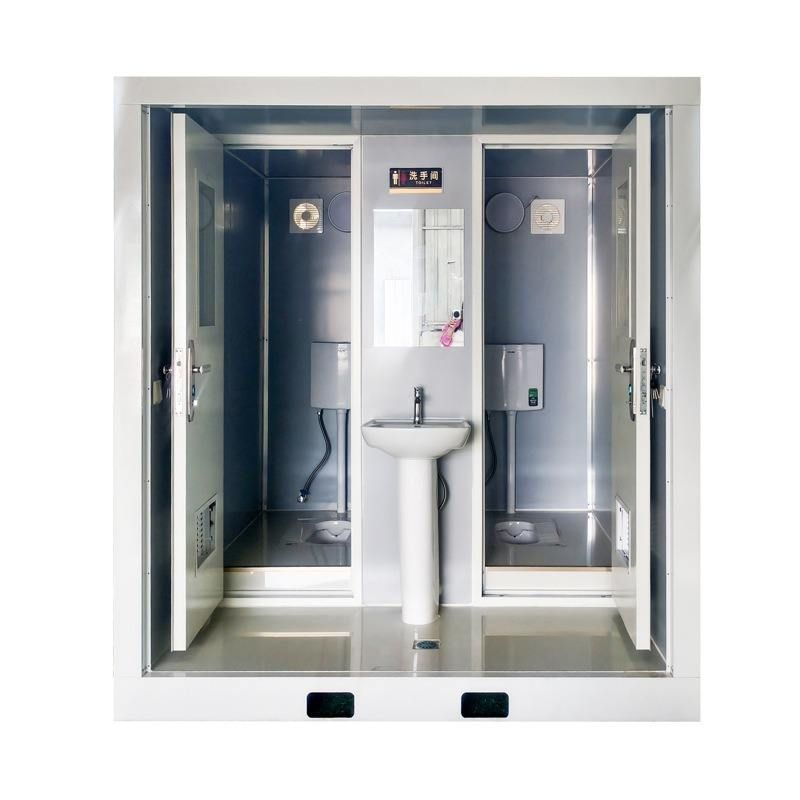
The history of modular container house production can be traced back to the concept of "package houses" in the United States in the mid-19th century. The modern production process involves comprehensive renovation of containers in a factory, covering walls, floors, ceilings, pipelines, and bathrooms, transforming them into complete living units. These units are then transported to the construction site and assembled on-site like building blocks.
It has several significant advantages. Time-saving: The on-site construction period is significantly shortened. Taking the Papua New Guinea MRDC modular hotel project as an example, the complete delivery cycle for traditional construction requires 14 to 18 months, while the modular solution, considering domestic production, ocean shipping, and on-site assembly, takes only about 7 months in total. Cost-saving: Labor costs are significantly reduced. For hotels of the same scale, traditional cast-in-place construction typically requires 80 to 120 multi-skilled workers on-site, while modular construction requires only about 45 on-site personnel. Additionally, with a shortened construction period, a large amount of hidden costs such as labor management, accommodation, safety training, and visa approval are saved. Furthermore, lightweight steel structural modules can significantly reduce the consumption of foundation and main structural materials, reducing material usage by 60-70%. Standardized CNC cutting losses in the factory are only 3-5%, compared to 8-12% for traditional construction site material losses. Standardized quality: Modular units manufactured in the factory and shipped as a whole have more reliable quality, avoiding the inconsistent quality issues that may arise in traditional construction.
In terms of production evaluation, different scenarios (such as temporary office and accommodation for engineering camps, commercial temporary spaces) have different requirements for quick-assembly container houses (a form of modular container houses). Evaluation criteria include installation time, calculated based on the time taken for a single module from arrival on-site to being put into use; wind resistance, requiring verification through third-party 8-level wind resistance test reports; and spatial flexibility, considering the number of modules that can be assembled and the range of layout adjustments.



