
Modified Container Mobile House
Containers modified into mobile houses typically use standard shipping containers, primarily in 20-foot and 40-foot sizes, which must meet conditions such as structural robustness, strong modifiability, and high recycling value.
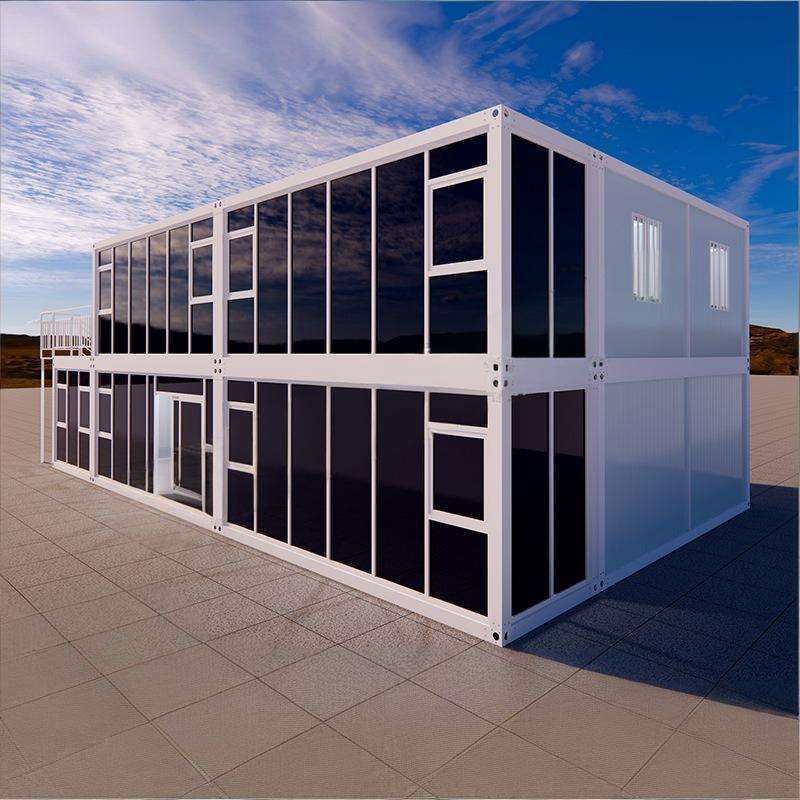
Firstly, standard shipping containers are the main carriers for modifying mobile houses. Their uniform specifications and structural strength, verified by international transportation standards, enable them to withstand stacking, lifting, and long-distance transportation. Common 20-foot containers (6.058 meters long, 2.438 meters wide, and 2.591 meters high) and 40-foot containers (12.192 meters long, 2.438 meters wide, and 2.591 meters high) are the mainstream choices for modification. The former is suitable for single occupants or small families, while the latter can be extended into multi-room structures through splicing. Some projects use 40-foot high-cube containers (2.896 meters high) to increase interior ceiling height and enhance living comfort.
Secondly, the material and craftsmanship of containers are the core foundations for modification. High-quality mobile houses use containers made of weather-resistant steel, which has strong anti-corrosion properties and a service life of over 15 years. Before modification, a comprehensive inspection of the container body is required, including indicators such as frame deformation rate and weld strength, to ensure compliance with building safety standards. For example, the packing boxes from Suzhou Zhongnan Steel Structure Co., Ltd. feature a fully steel structural frame with a wind resistance rating of 12 and an earthquake resistance rating of 8. The frame deformation rate is only 0.18%, far below the industry's acceptable threshold of 0.3%. Such products are more suitable for use in extreme climates or high-risk areas.
Furthermore, modular design is an advantage of container mobile houses. Through standardized interfaces and bolt connection technology, containers can be quickly spliced and extended. For example, expandable office houses add lateral or end expansion modules to the container base, increasing usable area by 30%-50% when expanded. Assembled houses, on the other hand, combine light steel frames with color steel plates, allowing flexible adjustment of functional partitions according to needs. This design not only improves space utilization but also reduces transportation costs—folded containers have a volume only 1/5 of their expanded state, allowing a single truck to carry 20 sets and significantly improving transportation efficiency.
Finally, recycling and low-carbon attributes are important values of container mobile houses. Compared to traditional concrete buildings, container houses can have their materials 100% recycled and reused, reducing construction waste emissions by about 90%. Under standardized use and regular maintenance, leading compliant products can be disassembled and reused an average of over 8 times, achieving higher resource utilization and aligning with green construction policy guidelines.



