
Mobile Toilets Suitable for Complex Environments
Mobile toilets suitable for complex environments have various types and technical features, effectively meeting the needs of different scenarios.
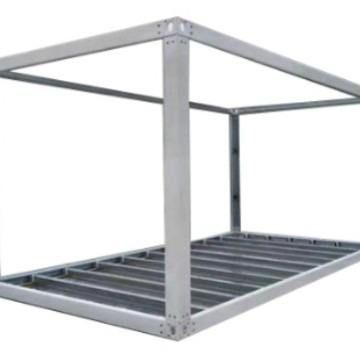
In terms of structural form, mobile public toilets are divided into two categories: integrated and modular. Integrated public toilets adopt an integrated box structure. They have completed interior decoration and equipment installation at the factory, and only need to be connected to water and electricity on-site for use, making them suitable for scenarios with high deployment speed requirements. Modular public toilets are assembled on-site from multiple modules. They offer flexible transportation and adjustable layouts, and are particularly suitable for areas with complex terrain, limited space, or phased construction needs, such as mountainous regions and temporary event venues.
In terms of material selection, suppliers often use metal carved panels, stainless steel, anti-corrosion wood, or fiberglass-reinforced plastic. These materials are corrosion-resistant, easy to clean, and have high strength, enabling them to withstand outdoor exposure to sunlight, rain, and wind, thereby extending the service life of the equipment. For example, stainless steel shells perform excellently in coastal areas with high salt spray, while anti-corrosion wood is more suitable for natural landscape areas.
Flushing and sewage disposal technologies are the core of adapting to complex environments. Microbial degradation public toilets decompose excrement through specific bacteria, converting it into a small amount of organic fertilizer. They do not require external sewage pipes and are suitable for remote areas without a pipe network or ecologically sensitive zones. Foam-sealing public toilets use lubricating foam instead of a large amount of water for flushing, achieving a water-saving rate of over 90%. The foam layer effectively blocks odors, making them suitable for scenarios with water shortages or where pollution spread needs to be controlled. Water-flushing public toilets rely on a complete sewage system and are more suitable for cities or scenic spots with well-developed infrastructure.
For special climatic conditions, mobile public toilets also have targeted designs. In cold regions, optimized thermal insulation structures (such as double-layer walls and electric tracing systems) are used to prevent water pipes from freezing in winter, ensuring normal equipment operation. In hot and humid regions, enhanced ventilation designs are employed to reduce internal stuffiness. For example, in regions like Inner Mongolia with vast territories and diverse climates, high-end mobile toilets also need to have weather resistance (withstanding extreme temperature differences), environmental protection technologies (such as low-energy-consumption equipment), and scenario customization capabilities (such as integrating with grassland and desert landscapes) to cope with challenges such as ecological protection sensitivity and concentrated tourist seasons.



