
Quay lại blog
Bài viết
Mobile Toilet Without Excavating Septic Tank
Quản trị 10 tháng 10, 2026
The mobile toilet without excavating a septic tank is a new type of sanitation facility that instantly treats excreta through physical or biochemical methods without the need to build an underground septic tank.
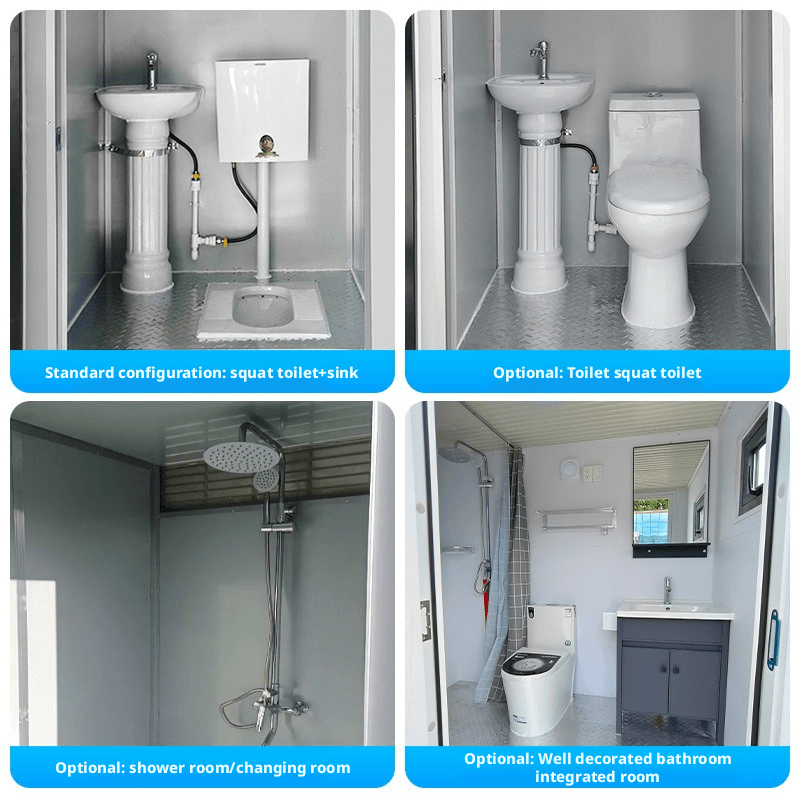
Working Principles This type of toilet adopts innovative technologies to replace traditional septic tanks. Common treatment methods include:
- Dehydration Treatment: By heating or mechanically squeezing to evaporate the moisture in excreta, ultimately forming dry solid residues that are easy to clean up subsequently.
- Microbial Decomposition: Utilizing specific microbial communities to accelerate the degradation of organic matter, converting excreta into harmless carbon dioxide, water, and a small amount of inorganic substances. Ventilation needs to be maintained to keep the microbial communities active.
- Encapsulation Technology: Sealing the excreta in replaceable containers and preventing odor and pollution diffusion through physical isolation. The containers can be directly replaced when full.
Core Advantages
- Convenience: Installation does not require excavating underground space. It only needs a flat ground for placement, greatly shortening the construction period. It is especially suitable for temporary scenarios or areas with complex geological conditions.
- Environmental Protection: It reduces the risk of sewage discharge and avoids soil and groundwater pollution caused by leakage from traditional septic tanks. Some models adopt water-saving designs to further reduce water consumption.
- Economy: Although the initial purchase cost may be higher than that of ordinary toilets, in the long run, there is no need for septic tank cleaning, maintenance, and leakage repair costs, resulting in lower overall costs.
Applicable Scenarios
- Temporary Events: Such as large-scale outdoor gatherings, sports events, music festivals, etc. They can be quickly deployed and flexibly moved.
- Construction Sites: They meet the sanitation needs of areas with a high density of construction workers and can be adjusted according to the progress of the project.
- Remote Areas: In rural and mountainous areas where there is a lack of sewage pipeline coverage, they provide sustainable sanitation solutions.
- Emergency Disaster Relief: After earthquakes, floods, and other disasters, they can quickly restore basic sanitation facilities and reduce the risk of disease transmission.
Maintenance Points
- Dehydration Type: Regularly clean up the dry residues and check whether the heating or mechanical components are functioning properly.
- Microbial Decomposition Type: Add microbial agents regularly according to the instructions to ensure that the ventilation system is unobstructed and avoid the death of microbial communities leading to treatment failure.
- Encapsulation Type: Replace the sealed containers in a timely manner to prevent overflow or container damage.
- General Cleaning: Use neutral detergents to wipe the inner and outer surfaces to avoid damage to the equipment caused by corrosive chemicals.



